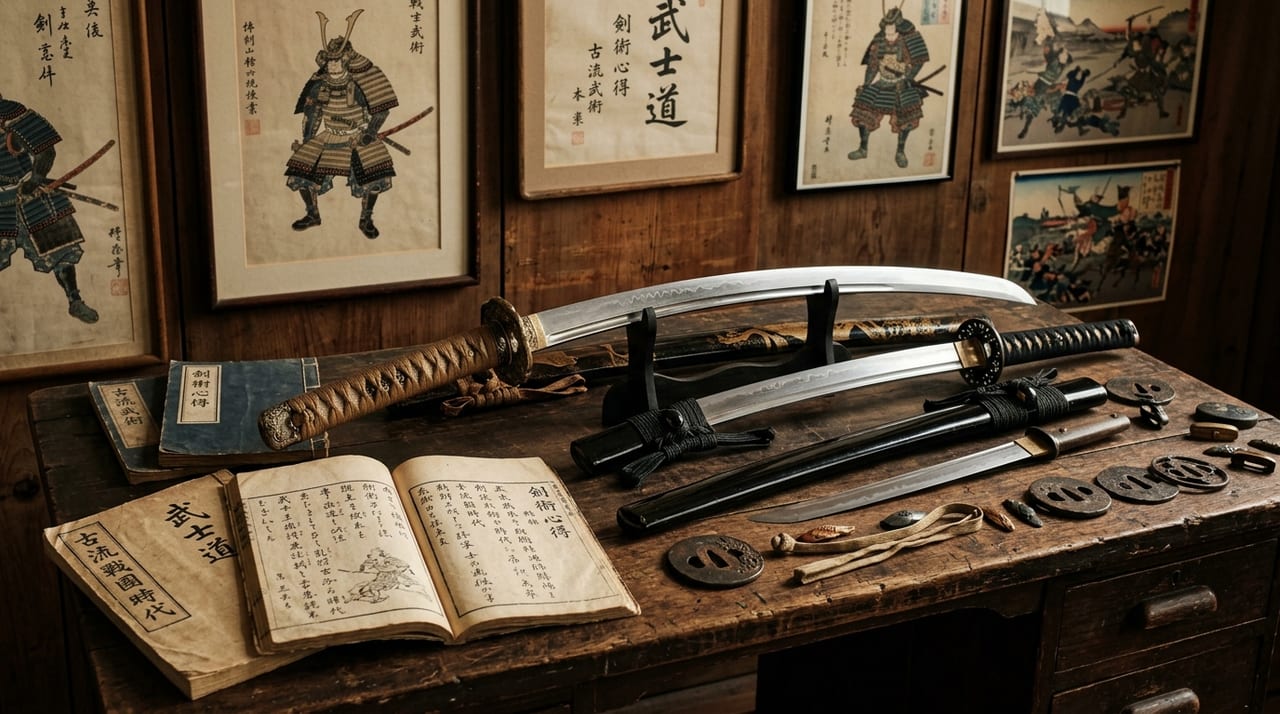
 * Image is for illustrative purposes only.
The Elusive Samurai (Nigejozu no Wakagimi)
逃げ上手の若君
TV anime based on the manga by Matsui Yuusei (serialized 2021–, Weekly Shōnen Jump), aired in 2024. The story follows Hōjō Tokiyuki, a warlord of the Nanbokuchō period (14th century) who survives a tumultuous era through the counterintuitive strategy of 'running away.' Set in the turbulent period following the fall of the Kamakura Shogunate — a transitional era in Japanese sword culture — the series features the swordsmanship and sword fittings of the transition from tachi (mounted cavalry sword) to uchigatana. The work carefully depicts the Shinto-influenced sword philosophy of key character Suwa Yorishige and the relationships between historically documented warlords of the Nanbokuchō period and their actual swords.
Description
The Elusive Samurai — Sword Culture in the Transitional Period from Tachi to Uchigatana
The Elusive Samurai (Matsui Yuusei, serialized 2021–, Weekly Shōnen Jump; TV anime 2024) depicts the story of Hōjō Tokiyuki — last heir of the Kamakura shogunate's Tokusō lineage — and his reversal through escape in the turbulent Nanbokuchō period (1336–1392). Unusually for a shōnen manga/anime, the work takes the Nanbokuchō period as its direct subject, internally incorporating the culturally historical significance of that era as "a transitional period for the Japanese sword." The Nanbokuchō period spans the transition from the tachi (the sword of the Kamakura period, worn suspended from the belt with edge down) to the uchigatana (the sword worn thrust through the belt with edge up, dominant from the late Nanbokuchō through the Muromachi period) — a time of fundamental transformation in Japanese sword form, carrying style, and swordsmanship.
### Hōjō Tokiyuki and the "Swordsmanship of Running" — The Sword Meaning of Unorthodox Tactics
The premise of protagonist Hōjō Tokiyuki — "expert at running," a warlord whose primary tactic is flight — resonates deeply with the theory of "ma" (interval) in Japanese swordsmanship. In Japanese sword schools, "maai" (management of the distance between combatants) is positioned by many traditions as a concept more important than attack. The tactic of "maintaining a distant maai to neutralize the opponent's attacks, then waiting for the moment to strike" connects to the concepts of "sen no sen" and "go no sen" in many sword schools. Tokiyuki's "running away" can be interpreted not as cowardice but as a narrative embodiment of the foundational principle of Japanese swordsmanship: "the one who controls the maai controls the sword."
### Suwa Yorishige and the Shinto View of Swordsmanship
Key character Suwa Yorishige — priest of the Suwa shrine and also a warlord — is depicted as an embodiment of "the fusion of Shinto and swordsmanship." Suwa Taisha (Suwa Grand Shrine) in Nagano Prefecture is one of Japan's oldest real shrines, enshrining the martial deity Takeminakata no Kami. The premise of Yorishige — priest of a war-deity shrine who excels in swordsmanship — reflects the actual Japanese cultural tradition of "the fusion of Shinto and martial arts": martial arts practice at shrines as ritual dedication (hōnō budō), and the custom of priests blessing weapons. Yorishige's view of swordsmanship as "art blessed by the gods" connects to the fundamental Japanese sword-faith belief that "spiritual power dwells within the sword."
### Nanbokuchō-Period Tachi — The Final Flourishing of the Mounted Warrior's Sword
The Nanbokuchō period (1336–1392) represents the last full flowering of the "tachi" — the long sword suspended from the belt with edge downward, perfected in the Kamakura period. The tachi of this era, known as "Nanbokuchō ōdachi" (great swords of the Nanbokuchō), were sometimes enormous, with blades exceeding one meter in length, used in actual combat. Characteristics include: very long blades (blade length 70–80+ cm, overall length 100+ cm); powerful hamon; deep curvature suited to the overhead downward cut from horseback. The Nanbokuchō period depicted by The Elusive Samurai is the story of this "age of the ōdachi," and the sword fittings and swordsmanship of its characters strongly reflect "the tachi culture of mounted warriors."
### Transition from Tachi to Uchigatana — The Sword-Historical Shift of Nanbokuchō to Muromachi
The Nanbokuchō period also marks the beginning of the rise of the uchigatana — worn thrust through the belt with edge upward. Contributing historical factors include: the shift from mounted combat to infantry combat (the chaos of the Nanbokuchō period saw tactical change from mounted one-on-one engagements to infantry-led mass combat, making the uchigatana — faster to draw on foot — practically advantageous over the mounted tachi); the demand for fast drawing in the "take the first initiative" sword philosophy; and the increasing dominance of foot soldiers (kachi-musha) on the battlefield, demanding sword fittings suited to infantry combat. The Elusive Samurai is set in the midst of this "transitional period from tachi to uchigatana," and the sword fittings and swordsmanship that appear provide a visual experience of the sword culture of this turning point.
### Historical Figures — Nanbokuchō Warlords and Their Swords
The Elusive Samurai incorporates many real historical figures of the Nanbokuchō period, including Hōjō Tokiyuki, Suwa Yorishige, Ashikaga Takauji, Kō no Moronao, and Kusunoki Masashige — some of whom are connected to famous actual swords. Kusunoki Masashige, the Southern Court warrior bearing the kikumon (chrysanthemum crest), is known for his last stand at Minatogawa; the "kikusuino-goshirae" (chrysanthemum-water sword fittings) became an important design motif in later sword art. Ashikaga Takauji, who founded the Muromachi shogunate, lent his name to the "Ashikaga-goshirae" style of sword fittings. Kō no Moronao — the powerful regent who held real authority in the early Muromachi period — appears in vivid battle depictions alongside impressive sword-use. The connection between these historical warlords and their swords directly relates to one of the greatest interests of sword collectors: "which swords did historical warlords actually use?"
### Perspective for Sword Collectors
The Elusive Samurai is an important pop-cultural reference for collectors and enthusiasts of tachi — especially the Nanbokuchō ōdachi — as the work that most widely spread "Nanbokuchō-period tachi culture" through shōnen anime. Surviving Nanbokuchō-period tachi are frequently designated National Treasures or Important Cultural Properties, and their powerful hamon and great blade length are evaluated as one of the historical peaks of Japanese swords. The work also contributes to the historical understanding of sword culture as an entry-level introduction to "sword culture in the turbulent Nanbokuchō period" — the intersection of the vestiges of Kamakura bushidō and the emerging Muromachi culture.
Real Swords Featured
Tachi (Cavalry Long Sword)
Nanbokuchō Ōdachi (Great Sword)
Uchigatana (Belt-Worn Sword)
See authentic Japanese swords
See authentic Japanese swordsThis page is intended to introduce Japanese sword culture and is not affiliated with any of the works mentioned.