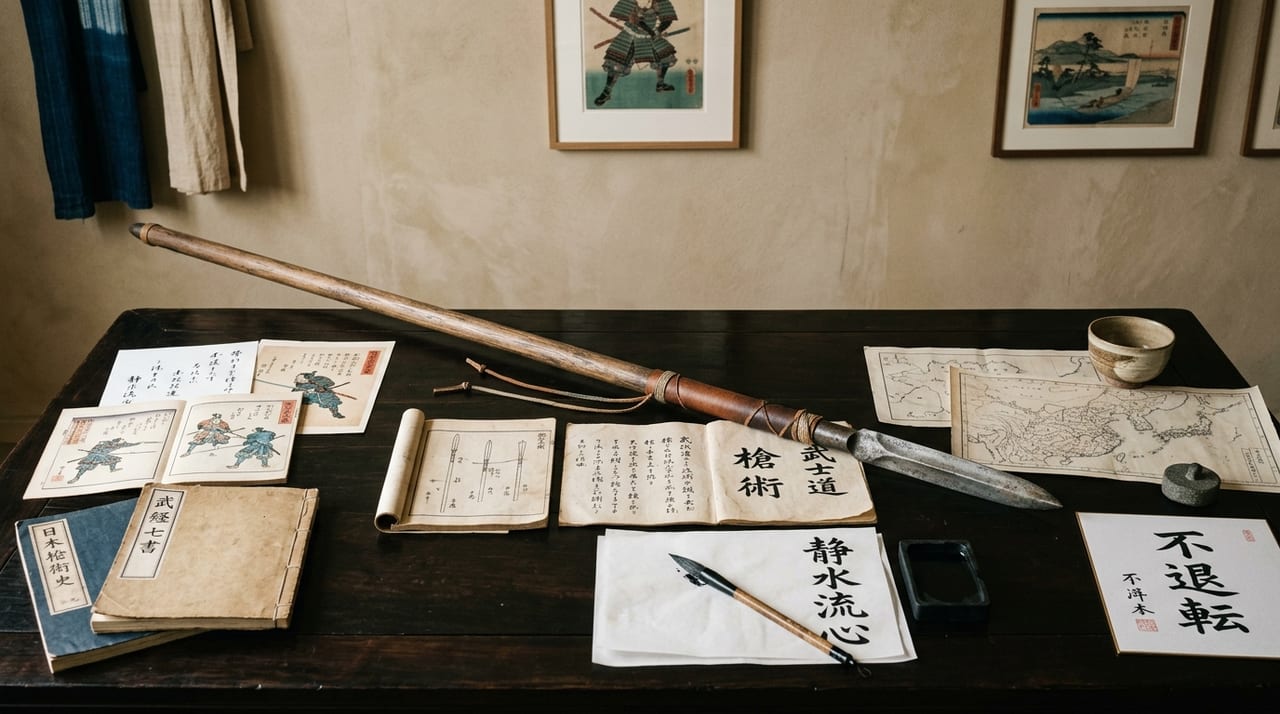
 * Image is for illustrative purposes only.
Moribito: Guardian of the Spirit
精霊の守り人
A celebrated novel series by Nahoko Uehashi, adapted into anime by Production I.G in 2007. Female bodyguard Balsa wields a spear to protect a young prince, with battle sequences widely praised for their depth and authenticity.
Description
Origins and Cultural Background
Moribito: Guardian of the Spirit is a masterpiece of children's literature by Nahoko Uehashi, a cultural anthropologist, first published in 1996. The series, known as the "Moribito Series," spans twelve volumes and constructs an extensive fictional narrative world. The protagonist Balsa is a female bodyguard in her thirties who thrives in the fictional Asian-influenced Kingdom of Yogo, living as a solitary female warrior with a short spear as her only weapon. Built upon Uehashi's knowledge of folklore and cultural anthropology, the world she created, though fictional, possesses a layered realism in which Japanese, Central Asian, and Southeast Asian cultural elements are seamlessly unified. The handling of weapons and depiction of combat maintain uncompromising realism throughout.
The Spear and Sword — Philosophy of Weapons
Balsa's weapon is a short spear (approximately 155 cm in length with a stone-capped butt end), a choice that distinguishes this work from many martial-arts and period-drama works centered on the sword. Within the narrative, Balsa embodies the philosophy that "while the sword is a tool for killing people, the spear is a tool for creating the distance that keeps people alive." This perspective consistently treats weapons not as instruments of violence but as techniques for self-defense. In classical Japanese martial arts, the spear stands as a primary weapon equal to the sword, and both share forging traditions while expressing different combat philosophies. The spear point is itself the crystallization of steel-working technique mastered by sword smiths and is inseparable from Japanese sword culture.
Anime Adaptation — Battle Depiction
The 2007 anime adaptation produced by Production I.G received high acclaim for both its series composition and artwork. Of particular note is the depiction of Balsa's combat scenes, which masterfully visualizes the essence of classical martial arts as "beautiful yet terrifying." The spear technique is informed by motion capture and consultation with actual martial arts masters, earning worldwide praise from anime fans for its grounded combat depiction that eschews Hollywood-style exaggeration. The tension of a single spear strike determining life and death, and the intelligent combat style of overcoming physical differences through technique and tactics, faithfully reflect the philosophy of classical Japanese martial arts such as swordsmanship and spear technique.
The Relationship Between Weapons and Humans
The consistent question posed throughout Uehashi's works is the fundamental inquiry: "Why do people take up weapons?" The guilt Balsa carries from eight lives taken in her past, the contradiction between protecting and killing, and her internal conflict of using violence as a means while wishing to reject violence—these pierce through the universal themes confronted by all warriors who have wielded swords and spears. The Japanese sword is both a weapon possessing lethality and, simultaneously, a symbol of Japan's spiritual culture—a dually natured entity. The weaponry philosophy presented in Moribito offers profound implications for understanding Japanese sword culture.
Awards and International Recognition
Nahoko Uehashi received the International Hans Christian Andersen Award for Writing in 2014, and the Moribito Series has been translated into English, German, French, and other languages, establishing worldwide acclaim. As a work that portrays universal human drama within an Asian-influenced worldview, the series stands as a rare achievement in elevating Japanese weapons and martial culture to the status of international literature.
Real Swords Featured
Japanese Spear Tips (Yari Kaji)
Japanese spear tips were forged by the same techniques as swords — tamahagane steel, fold-forging, clay tempering, and polishing. Spear smiths and sword smiths were often the same craftsmen or shared the same workshop. Modern Japanese sword smiths also produce spears, naginata, and tanto, representing the full breadth of Japanese forging tradition.
Naginata (Curved Polearm)
The naginata is Japan's most representative polearm, associated particularly with female warriors since the medieval period. Forged by sword smiths with a curved blade on a long handle, it forms the historical and cultural backdrop for the archetype of the female warrior embodied by Balsa. Naginata-do remains popular today as a women's martial art in Japan.
See authentic Japanese swords
See authentic Japanese swordsThis page is intended to introduce Japanese sword culture and is not affiliated with any of the works mentioned.