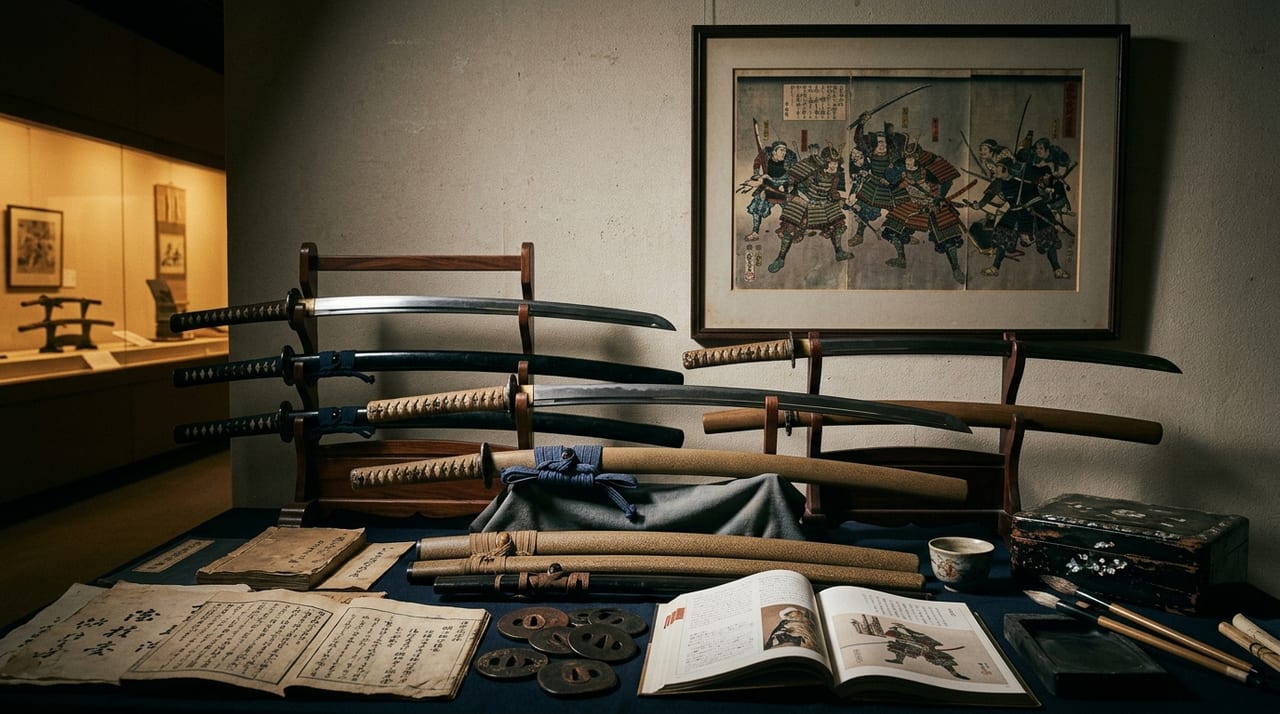
 * Image is for illustrative purposes only.
Mibu Gishi-den
壬生義士伝
Based on the novel of the same name by Jiro Asada (2000), this is a moving historical drama adapted into a film in 2003, directed by Yoji Takita and starring Takaichi Nakai. It depicts the life of Kanichiro Yoshimura, who left the Nanbu clan to join the Shinsengumi, torn between extreme poverty and the pride of a samurai. A masterpiece that portrays the poignant life of a samurai who chose the Japanese sword as a means of survival, weaving together sword combat and human emotion.
Description
Jiro Asada and the Birth of Mibu Gishi-den
Mibu Gishi-den is a historical novel published in 2000 by Jiro Asada, who won the Naoki Prize for "Poppoya" (Railway Man). Although set in the Shinsengumi, it was groundbreaking to make Kanichiro Yoshimura, a "common samurai" who left the Nanbu clan (Iwate Prefecture) to join the Shinsengumi, the protagonist rather than heroes like Toshizo Hijikata and Isao Kondo. To support his wife and children, Yoshimura sells his sword skills—his struggle to survive as a "business" of sword fighting depicts a more urgent and tragic reality of a samurai who "lives by the sword," different from Koheiji in Kenkaku Shobai, capturing the stark reality of how swordsmen make their living. Jiro Asada carefully researched the history of the Nanbu clan and the turmoil of the late Edo period, bringing the real Shinsengumi member Kanichiro Yoshimura to life with rich characterization to compensate for sparse historical records.
The Film Version and Takaichi Nakai's Performance
The 2003 film version was directed by Yoji Takita, known for the Academy Award-winning "Departures," with Takaichi Nakai playing Kanichiro Yoshimura. Within a complex structure that interweaves flashbacks and the present, Nakai delicately expressed the inner conflict of a poor yet proud samurai, winning the Japan Academy Prize for Outstanding Lead Actor. The sword fight scenes are concise and sharp, presenting the reality that "the sword is a tool of killing" without evasion, while the composition deeply appeals to the audience about why Yoshimura cannot abandon the sword—his love for his family.
The Shinsengumi and the Sword Culture of Mibu
The Shinsengumi was a public order maintenance organization of the Tokugawa shogunate based in Mibu, Kyoto, and Nishi-Hongan-ji during the late Edo period, with swordsmen representing the highest level of swordsmanship at the time as an elite unit. The swords beloved by the Shinsengumi's swordsmen include the "Kotetsu (Nagasone Kotetsu)" of troop leader Isao Kondo, the "Izumi Morikanesada" of vice commander Toshizo Hijikata, and the "Kiku Ichimonji Norimune" of Soujiro Okita, all of which are passed down to later generations as renowned blades. The actual era when Kanichiro Yoshimura joined the Shinsengumi was also the last period when such renowned blades were used in actual combat. Mibu Gishi-den depicts the final scene just before the Edict of the Sword (Haitori-rei) was enacted, when the Japanese sword still held its original meaning as a weapon.
The Nanbu Clan and the Tradition of Northeastern Bushido
The Nanbu clan (present-day Iwate Prefecture), the birthplace of the protagonist Kanichiro Yoshimura, was a clan particularly known for its strict samurai spirit in northeastern Japan. The samurai of the Nanbu clan possessed a stubborn and straightforward spiritual temperament called the "Nanbu character," capable of enduring by respecting duty while also making peace with reality. Yoshimura's actions of breaking the taboo of "deserting the clan" to support his family represent a choice to prioritize the drive to live and love for family over the formal "aesthetics of death" in bushido, embodying the pragmatic spirit of northeastern samurai. The Nanbu clan also joined the Ouetsu Reppan Alliance and fought against the Meiji government army, and Yoshimura's story resonates with the fate of all Nanbu samurai at the end of the Edo period. Swords associated with the Nanbu clan are preserved in museums in Sendai and Morioka, conveying the depth of northeastern sword culture to the present day. This region had its own swordsmiths, and there is a history of distinctive Nanbu clan sword culture being cultivated.
Swords of the Late Edo Period and the Last Swordsmen
The late Edo period, the era of Mibu Gishi-den, was the last time Japanese swords shone as weapons. The Shinsengumi swordsmen are inscribed in history as the last samurai group to wield true swords during the late Edo period, and the blades they favored still exist in many museums and private collections today. In particular, the beloved swords of central members like Isao Kondo, Toshizo Hijikata, and Soujiro Okita are among the most notable pieces in late Edo period sword collections. After the Edict of the Sword, the surviving members of the Shinsengumi were forced to part with their swords, but the emotions and history embedded in those blades continue to captivate many people. While Kanichiro Yoshimura in Mibu Gishi-den is based on a real Shinsengumi member, the depiction of his sword and swordsmanship fully embodies the reality of blades actually used in the late Edo period, supporting the core persuasiveness of the story. The attachment of the Shinsengumi swordsmen to the swords they never relinquished speaks eloquently that the sword was not merely a weapon but the very identity of the samurai.
TOUKENZA and the Swords of the Late Edo Period Shinsengumi
The era of the late Edo period and Shinsengumi depicted in Mibu Gishi-den is also an era in which TOUKENZA has a particularly rich collection. We handle numerous swords with lineage from swordsmiths actually favored by late Edo period swordsmen, such as Izumi Morikanesada, Kotetsu, Yamato Moriyasada, and Katayama Munetsugu, providing authentic blades that embody the atmosphere of the era in which Kanichiro Yoshimura lived. For those moved by the "story of a man who lived by the sword" depicted in Mibu Gishi-den, we invite you to experience a deeper dialogue with history through authentic swords from that era. When you take hold of a late Edo period sword, there dwells the living breath of samurai who once risked their lives wielding the blade. The Japanese sword does not exist only in museum display cases; it continues to live in the hands of collectors and enthusiasts today—the "story of humans and swords" told by Mibu Gishi-den continues even in the present age. Swords from the same era as those held by Kanichiro Yoshimura until the end continue to quietly speak their history in TOUKENZA's collection even today.
Real Swords Featured
Nagasone Kotetsu (Beloved Blade of Isao Kondo of the Shinsengumi)
The Kotetsu said to be favored by Shinsengumi leader Isao Kondo is transmitted to be the work of Nagasone Okitsugu (Kotetsu), and it is one of the most famous blades of the late Edo period. Kotetsu was a renowned master craftsman of Edo who flourished in the early Edo period, and the swords he forged in Musashi Province (Tokyo) bear strong influence from the Soshu tradition, characterized by bold temper patterns and wild hamon. Though there are theories that the Kotetsu possessed by Kondo was a forgery, it remains unchanged that the name Kotetsu and Kondo are inseparable in the annals of late Edo history. In the historical setting of Mibu Gishi-den, Kotetsu is an indispensable symbolic blade of the Shinsengumi.
Izumi Morikanesada (Beloved Blade of Toshizo Hijikata of the Shinsengumi)
The Norisada (Izumi Morikanesada) said to be favored by Shinsengumi vice commander Toshizo Hijikata is transmitted to be the work of Aizu swordsmith Kaniesada, and is one of the representative renowned blades of the late Edo period. It is said that even after Hijikata's death, it remained at his side until his final moment at Hakodate Goryokaku, and the Aibetsu Monument in Hakodate still sees memorial services for Hijikata. Kanichiro Yoshimura, the protagonist of Mibu Gishi-den, was a Shinsengumi member and colleague of Hijikata, and in that historical setting, Izumi Morikanesada is the most authentic symbol of a blade "actually used in combat." The hamon typically features a mixture of wavy blades and gunome patterns of fine workmanship, a renowned blade embodying both practicality and aesthetic beauty.
Kiku Ichimonji Norimune (Beloved Blade of Soujiro Okita of the Shinsengumi)
The Kiku Ichimonji Norimune said to be the beloved blade of Shinsengumi First Company Commander Soujiro Okita is transmitted to be the work of Norimune, a renowned master craftsman of Bizen in the Kamakura period. The Ichimonji school was an elite lineage of Bizen that served as official swordsmiths to Emperor Gotoba, and their blades possess the characteristic bold wavy hamon of the Fukuoka Ichimonji style. While there are various theories about whether Okita actually used this blade, the fact that late Edo period swordsmen inherited Kamakura period antique blades for practical use demonstrates the longevity and vitality of the Japanese sword. Kiku Ichimonji remains one of the pinnacles of Japanese sword collecting even today, and always draws attention when displayed in museums.
Yamato Moriyasuda (Standard Renowned Blade of the Late Edo Period)
Yamato Moriyasuda, a swordsmith of Edo and Musashi provinces, was a practical craftsman beloved by many swordsmen, including Shinsengumi members, during the late Edo period. His hamon features somewhat intense gunome patterns and bold wavy designs, characterized by a work style emphasizing cutting ability and durability. In late Edo period swordsman stories like Mibu Gishi-den, Yasuda's blades represent one of the most historically authentic options as "swords actually used in combat," and TOUKENZA regularly handles fine examples.
Nanbu Blade (Morioka and Nanbu Clan Swordsmiths)
The Nanbu clan (present-day Morioka, Iwate Prefecture) also had officially recognized swordsmiths who created distinctive blades using iron from the Nanbu region. Swords associated with the Nanbu clan, the birthplace of Kanichiro Yoshimura, are precious examples of the distinctive nature of northeastern sword culture. The museums of the Iwate and Morioka regions preserve martial equipment and swords associated with the Nanbu clan, and visiting them is worthwhile as a resource for more deeply understanding the world of Mibu Gishi-den. Works by regional clan swordsmiths have been undergoing reevaluation in recent years and represent an important category for understanding the diversity of Japanese sword history.
See authentic Japanese swords
See authentic Japanese swordsThis page is intended to introduce Japanese sword culture and is not affiliated with any of the works mentioned.