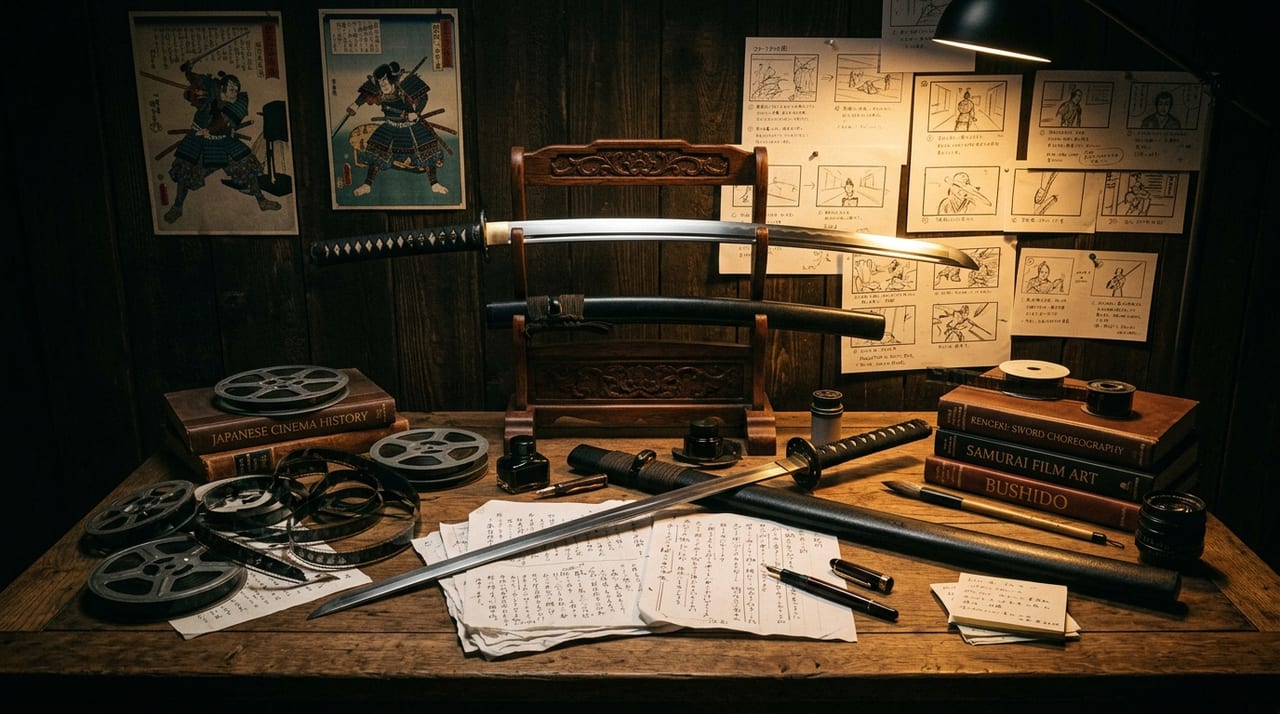
 * Image is for illustrative purposes only.
Jidai-geki: The World of Period Drama
時代劇の世界
From yakuza epics to NHK historical dramas, Japanese visual media has told history through swords for generations.
Description
Jidai-geki (period drama) is the single greatest medium for preserving sword culture in visual form. NHK's annual Taiga Drama features different eras, warlords, and swords each year, sustaining national interest in blades. In cinema, Kurosawa's Yojimbo and Sanjuro perfected the art of tate (choreographed sword fighting), while yakuza films like Battles Without Honor and Humanity portrayed the Japanese sword as a symbol that endured into the modern era. Television series such as Mito Komon, Hissatsu Shigotonin, and Onihei Hankacho each explored swords and samurai life from different angles, embedding period drama culture into Japanese homes. Tate, Japan's unique sword choreography tradition, originated in kabuki theater and evolved by incorporating techniques from real sword schools. Through jidai-geki, Japanese aesthetic appreciation for and reverence toward swords has been passed down across generations. At TOUKENZA, we carry authentic Japanese swords from every era depicted in these beloved dramas.
Real Swords Featured
Tate (Sword Choreography)
Japan's unique art of staged sword fighting in film and theater. Originated in kabuki theater and evolved by incorporating real kenjutsu techniques.
Taiga Drama and Famous Swords
NHK's annual Taiga Drama regularly features real swords such as Oda Nobunaga's Heshikiri Hasebe and Honda Tadakatsu's Tonbokiri, sparking public interest each year.
Kabuki and Swords
Swords are essential to kabuki's aragoto (rough style) performances. Legends of real swords, like the Tomokiri-maru in Sukeroku, are woven into the art form.
Shinkage-ryu
A sword school founded by Kamiizumi Nobutsuna. As Yagyu Shinkage-ryu, it served the Tokugawa shoguns, making it a frequent feature in period dramas.
See authentic Japanese swords
See authentic Japanese swordsThis page is intended to introduce Japanese sword culture and is not affiliated with any of the works mentioned.