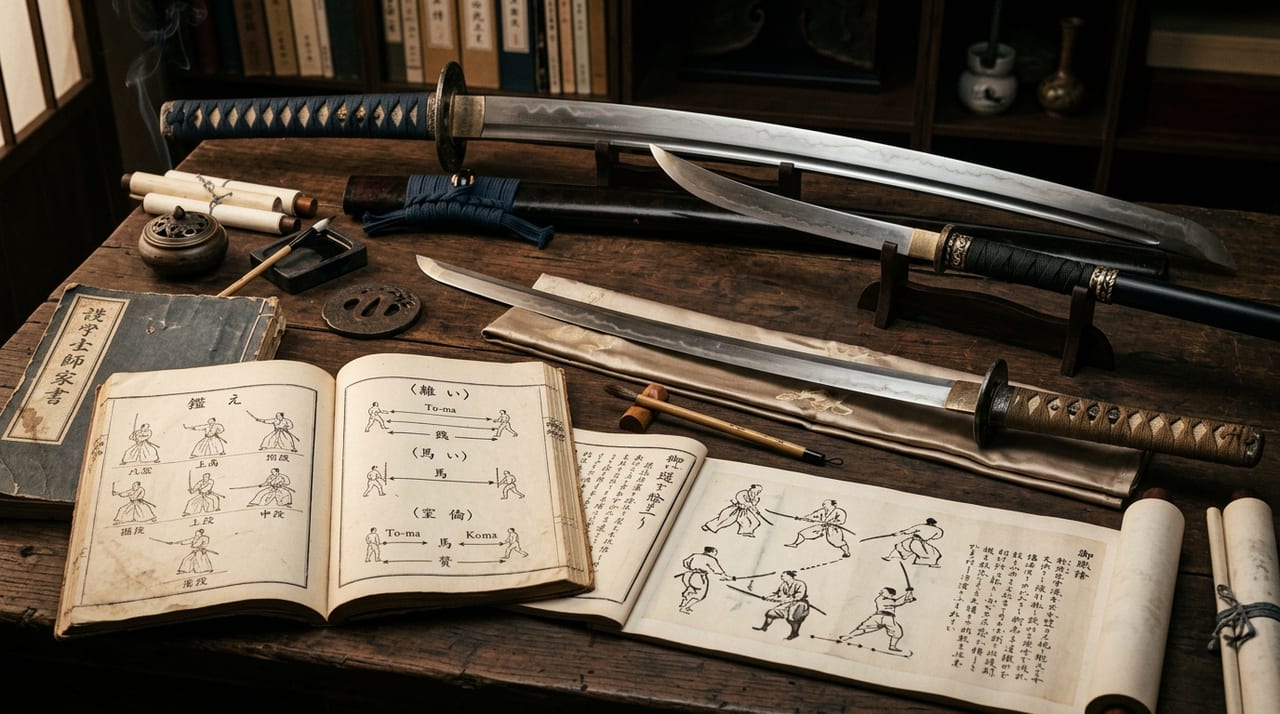
 * Image is for illustrative purposes only.
For Honor
For Honor
An action-fighting game released by Ubisoft in 2017. Set with three factions—Vikings, Knights, and Samurai (later joined by the Chinese faction "Wu")—the "Samurai" faction is depicted with a combat style centered on the Japanese sword. The unique "Arts of Battle (Aesthetics of Battle)" system reproduces sword stances, feints, and disruptions in real-time input, earning high praise from Western martial arts communities for "embodying actual swordsmanship distance theory in a competitive game." Among the Samurai faction, the "Kensei" character best embodies Japanese sword culture directly as a user of the nodachi.
Description
For Honor——A Historical Work That Embodies Swordsmanship Distance Theory in Competitive Gaming
For Honor (Ubisoft, 2017) is a player-versus-player swordsmanship game featuring three factions—Vikings, Knights, and Samurai (the Chinese faction "Wu" was added in 2018)—and its combat system "Arts of Battle (The Aesthetics of Battle)" was designed to reproduce swordsmanship distance, stances, and disruptions through real-time input. The Samurai faction in this work consists of a roster of characters with a combat style centered on the Japanese sword (katana), presenting to Western players "what Japanese sword combat style is" as a competitive game experience.
### Arts of Battle System——Embodying Swordsmanship Distance Theory in Competitive Gaming
The core of For Honor's combat system is a unique swordsmanship simulation mechanism called "Arts of Battle." The basic principles of this system are as follows. Three-direction guard (left, right, top)——reproduces the directional nature of stances and blocks in actual swordsmanship. Feints and disruption——canceling the preparatory motion (charge) of an attack to disrupt the opponent's response, the "feint" is a competitive-game interpretation of the concept of "sen" (initiative) in actual swordsmanship. Stamina management——stamina is depleted as the cost of continuous attacks and blocking, reflecting swordsmanship's theory of endurance combat: "the weight of a blow and stamina management."
These elements correspond conceptually to actual swordsmanship and martial arts distance theory——"sen no sen" (initiative of the initiative), "go no sen" (counter-initiative), "entering the inner distance," "disruption"——and are evaluated by Western HEMA (Historical European Martial Arts) communities and Japanese kendo practitioners as "the system that best reproduces the essence of swordsmanship as a competitive game."
### Kensei (Sword Saint)——The Nodachi Wielder
The character that most directly embodies Japanese sword culture within the Samurai faction is "Kensei (Sword Saint)." Kensei's weapon is the "nodachi"——a large, elongated Japanese sword——and his combat style has the following characteristics. Distance control leveraging long reach, swift draw attacks resembling iaijutsu, the presence of "charged attacks" delivered from a large stance. The nodachi is a particularly large blade among actual Japanese swords, embodying the tradition of the enlarged Japanese swords (ōdachi) from the Nanboku-chō and Sengoku periods. Kensei's game design reflects the characteristics of this nodachi——long reach, heavy striking power, overhead-cutting trajectories——as game mechanics.
### Diversity of Japanese Sword Faction
For Honor's Samurai faction features multiple characters with distinct Japanese sword styles beyond Kensei. "Shiden (Nobushi)"——a naginata wielder. The naginata is a blade connected to the tradition of Japanese female warriors and naginata users, and Nobushi's design embodies this tradition as a female character. "Oboro (Orochi)"——a ninja-like character wielding a curved blade (a curved uchi-gatana with curvature) in both hands. Characterized by swift side-steps and continuous strikes, embodying "the curved blade as the epitome of swift swordsmanship." "Shōriki (Shugoki)"——a sumo-like character wielding a massive tetsubo (iron club). Embodies the tradition of non-blade weapons——impact weapons——within Japanese martial equipment.
### Dissemination of Japanese Sword Culture to Western Players
Since its 2017 release, For Honor has attracted tens of millions of players worldwide as a competitive game. Western players who chose the Samurai faction experienced, through gameplay, the combat style of the Japanese sword——the distinctions between nodachi, naginata, and uchi-gatana, the concepts of "stance" and "disruption," and the swordsmanship philosophy of "the weight of a blow."——This "experiential learning through competitive gaming" functioned as a medium that conveyed Japanese sword culture more intuitively than abstract explanations, playing an important role as "an entry point to interest in Japanese swords" in the West.
### Evaluation from Martial Arts Communities
The HEMA community (Historical European Martial Arts——a research and practice community for historical European martial arts) positively evaluates For Honor's Arts of Battle system as "one of the systems that best embodies actual swordsmanship distance theory in a competitive game." The swordsmanship concepts of "feints and disruption," "directional stance-based blocking," and "stamina management as endurance theory" are all important concepts in actual HEMA, kendo, and iaido, and For Honor presented these to a mass gaming audience.
### A Sword Collector's Perspective
For Honor is the unique work where one can intuitively experience through competitive gaming "how Japanese sword combat styles differ from other sword cultures (Viking two-handed swords, medieval knight greatswords)." The design philosophy differences between nodachi, naginata, and uchi-gatana——length, weight, curvature, usage methods——are embodied as distinctions in the combat styles of game characters, functioning as a medium through which to intuitively understand "how each sword's design influences actual combat style."
Real Swords Featured
nodachi
naginata
uchi-gatana
See authentic Japanese swords
See authentic Japanese swordsThis page is intended to introduce Japanese sword culture and is not affiliated with any of the works mentioned.