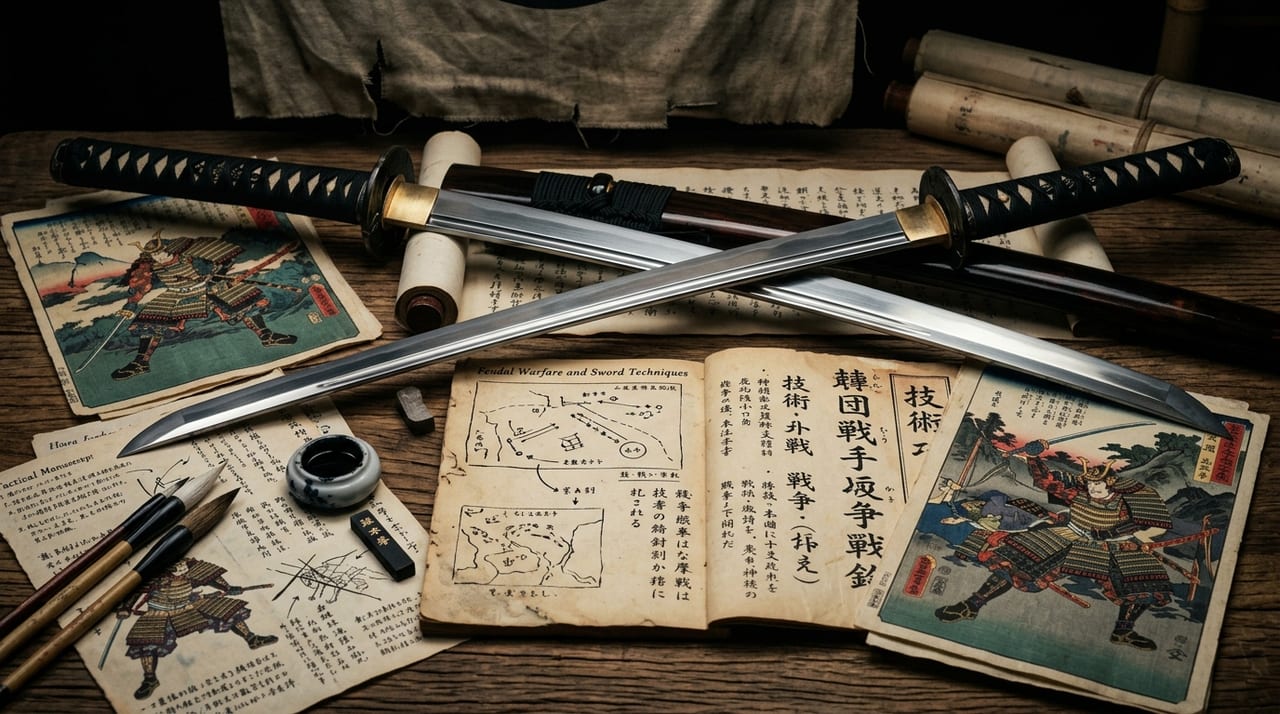
 * Image is for illustrative purposes only.
Drifters
ドリフターズ
Manga by Kouta Hirano (Young King Ours, 2009–) and anime (2016). Historical warriors including Shimazu Toyohisa, Oda Nobunaga, and Nasu no Yoichi — thought dead — are summoned to another world as 'Drifters' to fight alongside non-human races. Features vivid contrasts between Japanese swords and Western weapons, and authentic Sengoku-era sword technique.
Description
Drifters — History's Heroes Wielding Japanese Swords in a Fantasy World
Drifters is a manga work by Kouta Hirano (serialized from 2009 onwards in Young King Ours) and was adapted into anime in 2016 (produced by Drifters Production Committee, 12 episodes total). Known for "HELLSING," Hirano created this fantasy-world battle work centered on real historical figures, and it has earned high support from sword enthusiasts for its meticulous attention to Japanese swords and martial arts.
### Historical Figures and Japanese Swords
The protagonist, Shimazu Toyohisa, was a Satsuma samurai who met a glorious end as the rear guard (shinigari) at the Battle of Sekigahara (1600), a historical figure. In this work, Toyohisa embodies Satsuma Jigen-ryū swordsmanship, and his aggressive, forward-charging combat style faithfully reflects the historical characteristics of Jigen-ryū — the decisive high-speed single strike (ichi no tachi) that cuts down the opponent. Jigen-ryū held the philosophy of "deciding victory with a single stroke," prioritizing offense absolutely over defense. Toyohisa's sword technique depiction, while exaggerated in manga fashion, preserves the essence of this school.
Other Drifter characters — Oda Nobunaga, Nasu no Yoichi — embody the weapons and tactics of their respective eras, creating a structure that contrasts Japanese weapons culture across different historical periods through the fantasy-world setting.
### The Contrast Between Japanese Swords and Western Weapons
A major feature of Drifters is the explicit contrast between Japanese swords (Eastern weapons) and Western weapons and armor. The scenario of daimyo wielding Japanese swords battling Western-style soldiers presents a fundamental question about weapons: "blade sharpness and speed" versus "armor defensive capability." Although the Japanese katana was not originally designed to cut through iron armor, the work's depiction also demonstrates the importance of the thrust (tsuki) technique in sword arts, promoting understanding of the sword's versatility.
### A Perspective for Sword Enthusiasts
This work features Satsuma Jigen-ryū and Nasu no Yoichi's archery, showcasing a wide range of martial arts from the Kamakura through Sengoku periods, digesting the historical background of each martial tradition within the narrative. In particular, the portrayal of Jigen-ryū through Shimazu Toyohisa has contributed to renewed modern attention to this school among sword and martial arts enthusiasts. Many readers came to take interest in Satsuma's weapons culture and the history of the Shimazu clan through Drifters, and its educational aspects are also valued.
Real Swords Featured
Jigen-ryū Swords of Satsuma
Jigen-ryū (示現流), the preeminent sword school of the Satsuma domain, prizes the speed and force of the ichi no tachi — a single decisive cut delivered from the 'dragonfly' (tonbo) overhead stance. Blades used tended to be longer (around 70–73 cm), allowing maximum force in the initial strike. The school's influence persisted through the Bakumatsu and into the Satsuma Rebellion of 1877.
Keichō Battle Swords
The swords carried at Sekigahara were early Keichō shin-tō (new swords) — robust blades built for battlefield endurance, with relatively shallow curvature and powerful hamon patterns. Swords associated with the Shimazu clan are preserved at Kagoshima Shrine and local museums in Kyushu.
See authentic Japanese swords
See authentic Japanese swordsThis page is intended to introduce Japanese sword culture and is not affiliated with any of the works mentioned.