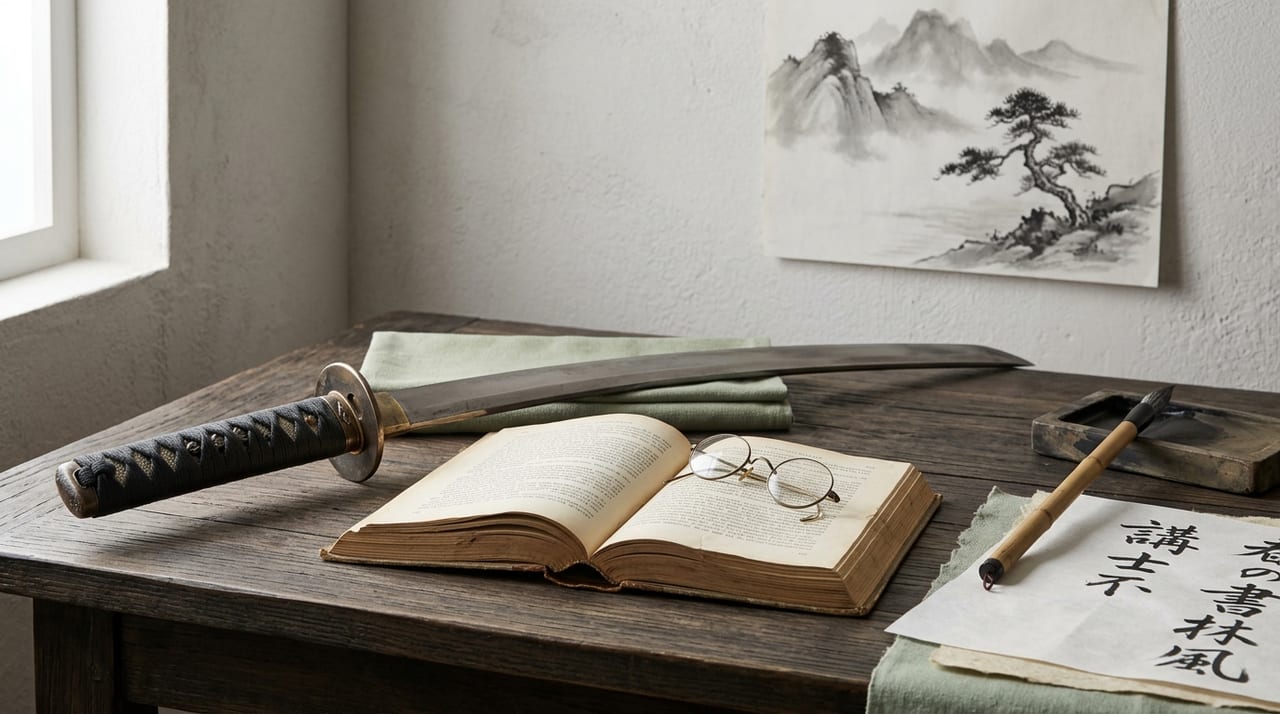
 * Image is for illustrative purposes only.
Claymore
クレイモア
Manga series (2001–2014) created by Norihiro Yagi, serialized in Monthly Shonen Jump and Jump SQ, 27 volumes total. A dark fantasy set in a medieval European-style world where half-human, half-demonic female swordsmen called 'Claymores' battle demons (Yoma) with great swords. The practical combat application of the great sword 'Claymore'—the Organization's system of sword-forging, management, and warrior training—constructs a unique worldview from the perspective of sword culture and weapon manufacturing. Adapted into an anime by Madhouse in 2007.
Description
Claymore—The Aesthetics of the Great Sword and the Weapon Culture Depicted by Sword-Forging and Management Systems
Claymore (2001–2014, created by Norihiro Yagi, serialized in Monthly Shonen Jump and Jump SQ, 27 volumes total) is a dark fantasy manga set in a medieval European-style fictional world, centered on half-human, half-demonic female swordsmen who wield silver great swords called 'Claymores' forged and managed by 'the Organization.' The series was adapted into a 26-episode anime by Madhouse in 2007. The reason this work is noteworthy from the perspective of sword culture is that it "precisely constructs, as a fictional worldview, the practical aspects of great-sword design, forging, management, and combat techniques."
### Claymore Design Aesthetics—The Sword-Combat Logic of 'Size' and 'Power'
The "Claymore" which gives the series its title derives from the historical Scottish Highlands great sword "Claymore" (Claidheamh Mór, meaning 'big sword'). In the manga, Claymores are depicted as giant silver two-handed swords, wielded practically only by half-human, half-demonic female warriors possessing youki (demonic power) due to their specific weight and size.
This concept of "weapon design synchronized with the user's abilities" shares an identical logical structure with Japanese sword philosophy, where "a katana's weight, length, curvature, and blade thickness vary according to the user's physique, school, and purpose." In Japanese sword tradition, the ōdachi (great sword—blades exceeding two feet in length) were not wielded by ordinary samurai but by those possessing exceptional strength and skill. Claymore's premise that "only half-human, half-demonic warriors can wield such a great sword" embodies this concept of "compatibility between weapon and user's ability" within the fictional world.
### The Organization's Sword-Forging and Management System
The work's distinctiveness lies in the existence of "the Organization"—an institution dedicated to forging and managing weapons and training warriors. The Organization maintains a monopoly on Claymore forging and management, and centralizes control over warrior training, deployment, and retirement (or retirement through disposal). This "hierarchical management system between weapon-forgers and users" can be understood as a conceptual parallel to "the relationship between toukou (sword crafters) and bushi (samurai)" in Japanese sword culture.
In Japanese sword-forging, "toukou (craftsmen who forge swords), togishi (craftsmen who polish and refine blades), sayashi (craftsmen who craft scabbards), and shiroganeshi (craftsmen who forge tsuba, hilts, and fittings)"—these specialized craftspeople collaborate through division of labor to complete a single Japanese sword. The Organization's system of "forging, managing, and distributing Claymores to warriors" can be read as a fictional-world expression of this "specialized division-of-labor system in sword-crafting."
### The Number System (Ranking)—Sword Rankings and Sword Evaluation Culture
The Organization ranks Claymore warriors as "No. 1 through No. 47," managing their combat-ability rankings. This "ranking of swordsmen" is linked to "ranking of swords," embodying the logic that "superior warriors receive superior Claymores."
This "linking of sword and user rankings" corresponds to Japanese sword culture's evaluation system—"National Treasure, Important Cultural Property, Specially Important Sword, Important Sword"—and the historical reality that "high-ranking swords are possessed by high-ranking warlords." The work exhibits cultural logic aligned with this historical precedent.
### Silver Weapons and Demon-Slaying—Resonance with Japanese Spiritual Weapon Concepts
The premise that Claymores are forged from "silver" derives from Western belief that "silver possesses spiritual power to defeat supernatural beings" (silver bullets, legends of silver blades). However, this concept of "spiritual material creating spiritual weapons" resonates profoundly with Japanese sword culture's understanding of "spiritually-potent weapon materials."
Japan's "tamahagane" (jewel steel)—the raw material of Japanese swords, whose refining process itself is regarded as a sacred ritual performed in the tatara furnace—embodies the concept that "spiritually pure materials produce spiritually superior weapons." Claymore's premise that "silver Claymores can defeat Yoma (demons)" expresses this universal weapon-culture logic of "the union of spiritual material and spiritual weapons" within a fictional world.
### A Perspective for Sword Collectors
Claymore is a work that, from four perspectives—"the aesthetics of great-sword design and user relationship," "organized systems of weapon-forging and management," "sword ranking and evaluation systems," and "spiritual weapons forged from spiritual materials"—allows exploration of the universal logic of sword culture through a fictional world. Though set in a medieval European-style world, its weapon and sword-culture design logic deeply resonates with Japanese sword culture's concepts of "the relationship between toukou and bushi," "the spiritual significance of tamahagane," and "sword ranking systems," offering sword collectors a unique perspective through "comparative Eastern and Western sword-culture analysis."
See authentic Japanese swords
See authentic Japanese swordsThis page is intended to introduce Japanese sword culture and is not affiliated with any of the works mentioned.