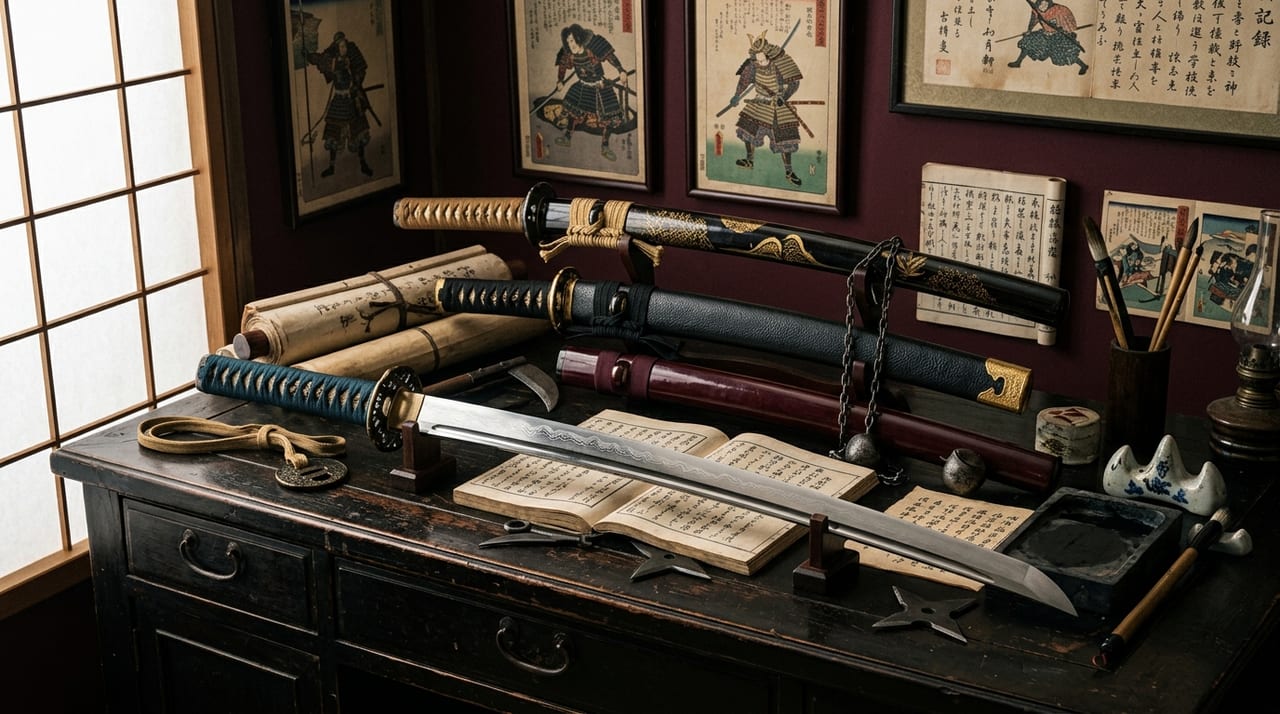
 * Image is for illustrative purposes only.
Brave 10
BRAVE10
Manga by Kairi Shimozuki (serialized 2006–2011) and anime (2012). With Sanada Yukimura as the protagonist, legendary ninja and swordsmen of the Ten Braves of Sanada are active during the era surrounding the Battle of Sekigahara. Characterized by diverse weapons and combat styles rooted in Sengoku martial culture.
Description
BRAVE10 and the Legend of the Sanada Ten Braves — Swordmasters Who Raced Through the Final Era of the Sengoku Period
BRAVE10 is a manga work by Kairi Shimozuki (serialized 2006–2011, published by MediaFactory) and was adapted into a television anime in 2012. Centering on Sanada Yukimura as the protagonist, the work depicts the exploits of the legendary "Sanada Ten Braves (Sanada Jūyūshi)" unfolding before and after the Battle of Sekigahara (1600). Through the diverse combat styles of ninja, swordsmen, and assassins who lived at this historical inflection point, the work vividly portrays the weapons culture and role of swords at that time. Though it is a shōjo manga publication, it earned high support from male readers as well for the precision of its battle depictions and the depth of its historical portrayal.
### The Sanada Ten Braves — The True Nature of Legendary Warriors
The "Sanada Ten Braves" is a legendary retainer band constructed through Edo-period lectures and novels, said to comprise ten ninja-warriors including Kirigakure Saizō, Sarutobi Sasuke, and Unno Rokurō. Their historical reality is uncertain, but they have appeared in numerous popular culture works as symbolic embodiments of the Sanada clan's exceptional intelligence and strategic capabilities. BRAVE10 reinterprets this legend through contemporary manga expression, giving each character a distinctive weapon and combat style to vividly portray the diversity of martial arts culture in the late Sengoku period. The swordsmanship of the protagonist Sanada Yukimura is depicted as a fictional sword technique called "Tenryū," but its movements are designed to be practical, incorporating elements of iai-jutsu (quick-draw technique).
### The Japanese Sword and Diverse Weapons Culture
The position held by the Japanese sword in BRAVE10 carries special meaning distinct from other Sengoku manga. Because many of the work's main characters are ninja and intelligence operatives, surprise attacks, assassination, and the use of diverse weaponry are emphasized more than frontal sword duels. However, Sanada Yukimura himself, as a military commander, embodies orthodox swordsmanship and spear technique, demonstrating the formality and practicality of the Japanese sword as a samurai's primary weapon.
The Keichō era (1596–1615) surrounding Sekigahara represents a critical transitional period in sword history — the early phase of the shin-tō (new sword) age. The Keichō shin-tō swords, manufactured during the transition from the battle-oriented Sengoku period to an emphasis on art and formality, combine sturdy construction to withstand intensive battlefield use with elegant hamon patterns that signal the shift toward a peaceful era. Horikawakunihiro, Igagumikanemichi, and Echizenyasushitsugu are known as representative sword smiths of the Keichō period. The swords said to have been used by Sanada Yukimura encapsulate the samurai culture of this era.
### The Diversity of Late Sengoku Martial Arts Culture
What makes BRAVE10 particularly interesting is that diverse schools of ninjutsu, swordsmanship, and martial arts converge in one work. The gathering of those who employ ninjutsu involving water, those who wield fire escape techniques, and specialists in unique weapons such as chain sickles, kunai, and throwing stars reflects the cultural background of the diverse martial arts schools that actually existed in the Sengoku period. Through manga exaggeration, it vividly portrays the martial arts culture of the age of turmoil before the early Edo period, when various schools were still competing and merging, making this work also function as an introduction to the history of martial arts. The various ninja schools of the time—Koga-ryū, Iga-ryū, Negorore-ryū, and others—each possessed their own independent technical systems that were mutually incompatible, and this is reflected in the diverse character designs of the work.
### Anime Adaptation and Visual Expression
The 2012 television anime (12 episodes) was produced by Studio Sakimakura and expressed the distinctive combat styles of each character through video. Utilizing the unique line art style and bold composition of the original manga, it achieved high-standard sword-fighting scenes as a Sengoku-era anime of that time. The way swords are used in combat—the speed of drawing, the maintenance of distance, the expression of zanshin (follow-through)—is evaluated as depiction based on period-drama historical research. The voice cast was also distinguished, with Morikawa Toshiyuki voicing Sanada Yukimura and leading an idiosyncratic cast that brought life to the Sengoku warlords and ninja.
### The Sanada Clan and Japanese Sword Culture
Sanada Masayuki and his son Yukimura are renowned as among the Sengoku period's most formidable strategists, and many legends remain regarding the swords they wielded. The legendary military record of the Sanada clan—the repulsion of Tokugawa forces at Ueda Castle (the First and Second Ueda Campaigns)—is often discussed together with their relationship to sword smiths of Shinano and Kōzuke provinces. Yukimura's Sanada Mon, the "six coins," derives from rokudō-sen (the coins with which the dead pay the ferryman when crossing the River Sanzu), and represents the samurai spirit of "facing death without fear." BRAVE10 utilizes such historical background as the foundation of its creative work, becoming a work that conveys the significance of sword culture in the final years of the Sengoku period.
### Points of Interest for Japanese Sword Enthusiasts
For aficionados of the Japanese sword, BRAVE10 functions as a visual introduction to understanding the weapons culture of the Keichō period. The historical setting in particular, around the time of Sekigahara, coincides with a critical turning point in sword history—the transition from the practical swords of the Sengoku period to the formal swords of the Edo period—and offers an opportunity to consider both the sword as weapon and the sword as cultural artifact. The contrast between the diverse weaponry depicted for ninja and the orthodox sword depictions for military commanders illustrates the rich diversity of weapons culture of that era. With the Battle of Sekigahara, Japan's greatest battle, as its backdrop, this work serves as an introductory work combining both entertainment and historical perspective for all those interested in the swords and martial arts of that age.
Real Swords Featured
Keichō Shin-tō — Swords of the Sekigahara Era
The Keichō period (1596–1615) encompasses Sekigahara and the Osaka Sieges — the final campaigns of a century of civil war. Keichō shin-tō (new swords) are the earliest phase of the shin-tō era, displaying a distinctive style: robust sugata, powerful steel, and construction designed for battlefield endurance. Swords associated with Sanada Yukimura typically date from this period. Notable Keichō smiths include Horikawa Kunihiro, Iganokami Kinmichi, and Echizen Yasutsugu.
Ninja Weapons — Kunai and Short Blades
The kunai, familiar as a ninja weapon, originated as a multipurpose utility tool before serving as a throwing and thrusting defensive weapon. Its short blade and balanced weight distribution combined portability with immediate readiness, suited to a ninja's intelligence-gathering and assassination missions. The ninjatō (ninja sword) is said to be shorter and straighter than a standard uchigatana, designed for use in confined spaces.
See authentic Japanese swords
See authentic Japanese swordsThis page is intended to introduce Japanese sword culture and is not affiliated with any of the works mentioned.