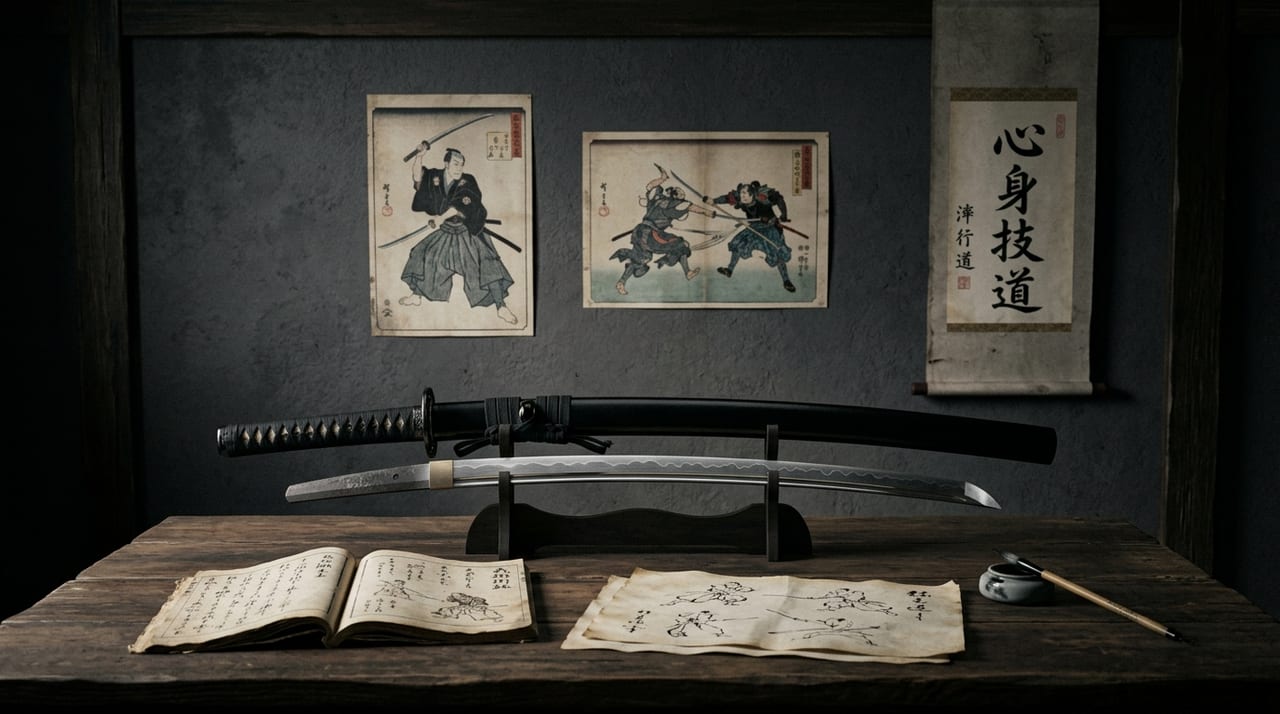
 * Image is for illustrative purposes only.
Azumi
あずみ
A manga by Yuu Koyama depicting the lone battles of Azumi, a girl raised as an assassin in early Edo-period Japan. Adapted into a live-action film in 2003 starring Aya Ueto.
Description
Overview and Creation
"Azumi" is a jidaigeki (period drama) manga by Yuu Koyama, serialized in Big Comic Superior from 1994 to 2008, a monumental work spanning 48 volumes. The setting is the early Edo period, several years after the Battle of Sekigahara. To firmly establish peace under heaven, a secret society of assassins existed to purge the daimyo who threatened Tokugawa rule. Ten orphans, raised in the mountains by an old man named Jii, were drilled in swordsmanship from childhood and grew together fostering love and friendship. But on the eve of adulthood, Jii imposes a cruel trial: "Slay the one you love most." Only those who survive this ordeal gain the right to become true assassins. This is the story of the girl Azumi, who survives that trial and, alongside her comrades, cuts down the enemies of the shogunate one after another, living amid solitude and inner conflict.
Swordplay Depiction and Aesthetics
Azumi's sword is both graceful and severe. The unique swordsmanship taught by Jii is founded on speed and the principle of one decisive strike with minimal movement. Yuu Koyama excels at depicting the dynamism of human motion; Azumi's sword combat scenes are rendered with vibrant compositions and sharp linework. Particularly striking is the contrast between the stillness of the moment when Azumi kills her emotions and draws her blade, and the sense of loss that follows. This character design—where strength and sorrow are two sides of the same coin—represents a pinnacle in the "female swordsman" genre.
Film Adaptation and Media Expansion
The 2003 film adaptation, directed by Ryuhei Kitamura and starring Aya Ueto, became a subject of intense discussion for its overwhelming action sequences. At 18 years old, Aya Ueto underwent approximately four months of sword and combat training before filming, and the high-speed swordwork emanating from her slender frame amazed many viewers. The film was also a commercial success, and in 2005 the sequel "Azumi 2: Death or Love" was released. The choreography and stage combat of the film were based on actual iaido techniques, earning high acclaim for its powerful visualization of combat with the Japanese sword.
Historical Setting and Japanese Sword Culture
The work's historical period—the Keicho and Genna eras (early 17th century)—marks the dawn of "shin-to" (new blades) in sword history. In the aftermath of the upheaval surrounding Sekigahara, swordsmiths found themselves in an era when the meaning of the sword was shifting from a practical weapon to a spiritual symbol of the warrior, and they explored new balances between beauty and utility. The working assassin blades carried by Azumi and her comrades were practical tools that abandoned ornament in favor of cutting power and durability, tending toward simple black-lacquered sheaths and wrapped hilts rather than elaborate fittings.
Genealogy of Female Swordsmen and Cultural Significance
"Azumi" inherits the genealogy of "female swordsmen" in Japanese popular culture while simultaneously greatly renewing that tradition. Inheriting the inescapable solitude of Ittoh Ogami from "Lone Wolf and Cub," and the fusion of vengeance and beauty from "Lady Snowblood," Azumi directly confronts the question "For what do I cut?" The deaths of comrades, the bond with those to be protected, love and hate toward Jii—these complexities interwoven in psychological portrayal grant the work a literary depth that transcends mere sword-fighting entertainment.
Contemporary Evaluation
"Azumi" continues to be reprinted and remains a classical masterpiece of jidaigeki manga read across generations. Through international streaming of the film, it has sparked interest abroad in Japanese period drama aesthetics and the theme of the female swordsman. For practitioners of stage combat and iaido, the aesthetic sensibility embedded in Azumi's swordsmanship often becomes practical motivation for training, and the work is highly regarded as one that has broadened the reach of Japanese sword culture.
Real Swords Featured
Practical Uchigatana, Keichō–Genna Period
The type of blade Azumi and her fellow assassins would carry corresponds to the practical uchigatana of the early Edo period (c. 1600–1624). These workman's swords prioritized cutting performance and durability over ornamentation, typically measuring 66–70 cm. Plain black-lacquered mounts were preferred by operatives who needed function over display.
Blades by Echizen Yasutsugu
Echizen Yasutsugu was the official sword maker to Tokugawa Ieyasu and Hidetada and the first smith permitted to use the Tokugawa hollyhock crest. His blades from the Keichō–Genna era represent the pinnacle of early Edo practical sword-making — the very standard a shogunate assassin of Azumi's era would aspire to carry.
See authentic Japanese swords
See authentic Japanese swordsThis page is intended to introduce Japanese sword culture and is not affiliated with any of the works mentioned.