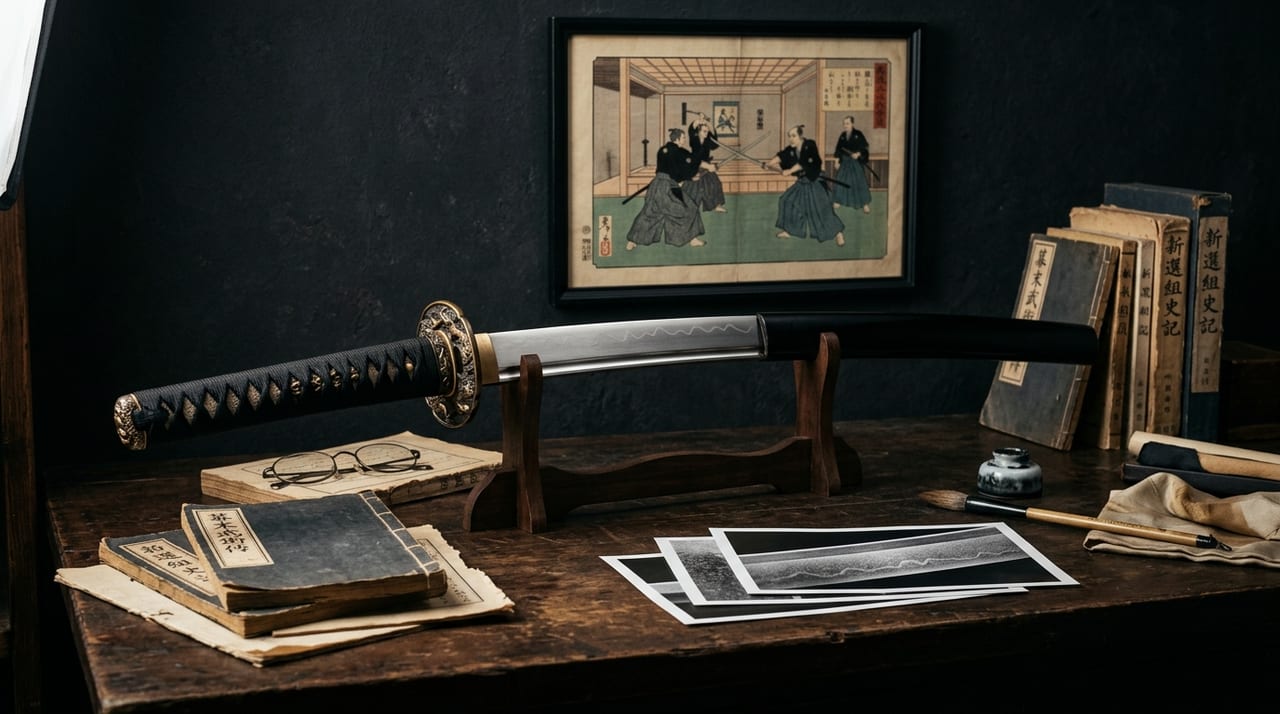
 * Image is for illustrative purposes only.
Ao no Miburo (Blue Miburo)
青のミブロ
Manga by Yasuda Takeshi (ongoing since 2021, serialized in Kodansha's Weekly Shonen Magazine). A historical coming-of-age sword drama set in Bakumatsu Kyoto, depicting the era of the Mibu Roshigumi, the precursor to the Shinsengumi. The protagonist meets Hijikata Toshizo, Kondo Isami, and Okita Soji, learning swordsmanship and way of life from them. Anime adaptation aired in 2024 (Season 1, 12 episodes). The series carefully depicts the Shinsengumi's swordsmanship, squad regulations, and historical background, strongly resonating with readers interested in Hijikata Toshizo.
Description
Ao no Miburo — A Coming-of-Age Sword Drama on the Eve of the Shinsengumi's Formation
Ao no Miburo is a manga by Yasuda Tsuyoshi serialized in Kodansha's Weekly Shonen Magazine from 2021 onwards, with a TV anime first season (12 episodes) broadcast in 2024. Set in late Edo period Kyoto, the story uniquely begins with the Mibu Roshigumi — the precursor organization to the Shinsengumi. The work vividly depicts in shonen manga form how historical figures such as Hijikata Toshizo, Kondo Isami, and Okita Soji grew as swordsmen. A young man enters that world, and through him readers witness the youthful forms of Hijikata Toshizo, Kondo Isami, Okita Soji, Yamanami Keisuke, and Nagakura Shinpachi.
### The Mibu Roshigumi as the Narrative's Foundation
This work focuses not on the "Shinsengumi famed throughout the realm" depicted in most creative works, but on its precursor stage: "a gathering of nameless swordsmen." In Bunkyō 2nd year (1862), the Mibu Roshigumi — commissioned by the Tokugawa shogunate to guard Kyoto Protector Matsudaira Katamori — was an organization composed of low-ranking ronin and sons of farmers. A young man enters that world, and through him readers witness the youthful appearances of Hijikata Toshizo, Kondo Isami, Okita Soji, Yamanami Keisuke, and Nagakura Shinpachi.
The portrayal of Hijikata Toshizo is one of the work's greatest highlights. A native of Tama's farming families, Hijikata trained in Tennen Rishin-ryu and is depicted as a young man filled with anger and contradiction before becoming the commanding officer known as the "Demon Vice-Commander." The work portrays both the ferocity of the swordcraft he honed and the coldness required to maintain organizational discipline in a form that modern young readers can empathize with, embodying the Shinsengumi demand documented in GSC with nine impressions for "hijikata toshizo."
### Tennen Rishin-ryu and Shinsengumi Swordsmanship
Many of the members from the Mibu Roshigumi who later formed the Shinsengumi were practitioners of "Tennen Rishin-ryu." Kondo Isami was the headmaster of Tennen Rishin-ryu, while Hijikata Toshizo, Okita Soji, and Yamanami Keisuke were his distinguished disciples. The work naturally reveals in its action sequences the characteristics of this school — training with heavy wooden swords, practical swordcraft emphasizing striking power over form, and an open door to farmers and commoners.
Tennen Rishin-ryu placed greater emphasis on "sparring matches" than on "kata," and this philosophy directly connects to the Shinsengumi's practical and results-oriented combat spirit. The training scenes and match depictions in this work embody this pragmatic sword philosophy, and they form a source of affinity for the Shinsengumi felt by modern sword enthusiasts and martial artists.
### Connection with Japanese Swords — Hijikata Toshizo's Izumi-no-Kami Kanesada
The "Izumi-no-Kami Kanesada (いずみのかみかねさだ)," the sword used by Hijikata Toshizo as his beloved blade, is one of the most famous Japanese swords among works taking the Shinsengumi as their subject. This sword is said to have been forged by the eleventh-generation smith Izumi-no-Kami Kanesada of the Aizu domain during the Keio era (1860s), and is currently transmitted as a relic of Hijikata Toshizo together with other materials in the vicinity of the Hekketsu Monument in Hakodate.
An uchigatana with a blade length of approximately 2 shaku 4 sun (approximately 73 cm), the steel has a fine ko-itame grain, and the hamon displays gunome mixed with small midare, with bright nie-based temper. The tang (nakago) bears the two-character signature "Kanesada," and has subsequently received treatment akin to an Important Cultural Property as the "beloved sword of Hijikata Toshizo," becoming a symbol of Japanese sword culture. Since Ao no Miburo depicts the young Hijikata of the Mibu Roshigumi era, anticipation has grown among readers for the moment at which this beloved sword appears.
Also, the "Kikuichimonji Norimune (菊一文字則宗)" — traditionally said to be the beloved sword of Okita Soji, though historical accounts vary — serves as an important gateway for readers of this work, which depicts Okita as a major character, into the world of Japanese swords.
### The Exquisite Balance Between Historical Fact and Shonen Entertainment
A major strength of this work is the simultaneous achievement of historical accuracy in character depiction and entertainment value as shonen manga. It naturally incorporates historical context — the political tensions of the late Edo period (sonnō jōi versus sabaku) — the social conditions of Kyoto, and questions of status among the ronin into the growth narrative of its protagonist. The thrill that arises from readers knowing that historical events (the Ikedaya Incident, the Kinmon Incident, and others) await ahead in the story creates a distinctive intersection of fiction and historical fact.
In comparison with celebrated works featuring the Shinsengumi such as "Hakuoki" (otome game, 2008) and "Mibu Gishi Den" (film, 2002), Ao no Miburo is a rare work depicting the Shinsengumi from the perspective of male-oriented shonen manga, and through its serialization in Magazine — which reaches a vast readership — it fulfills a cultural role in cultivating the next generation of sword and Shinsengumi enthusiasts.
### Anime Adaptation and Future Prospects
The TV anime first season (12 episodes) broadcast in 2024 was aired on MBS/TBS networks, with OxT — who provided opening and ending themes for "Re:CREATORS" and "Overlord" — handling the theme songs. It received praise for its faithful reproduction of the original manga's artistic style and its careful depiction of the atmosphere of late Edo period Kyoto through its art design. The serialization continues, and further attention is expected as the story progresses toward the Ikedaya Incident and the establishment of the Shinsengumi.
### A Perspective for Sword Enthusiasts and Shinsengumi Fans
Among works taking the Shinsengumi as their subject, Ao no Miburo stands out by directly engaging with "the process of sword training." The accumulated practice before Hijikata Toshizo becomes the "Demon Vice-Commander," Okita Soji's emergence as a genius swordsman, and Kondo Isami's qualities as an instructor are depicted carefully through the sword. For readers interested in the beauty of swords and the depth of swordcraft, the formation process of the Mibu Roshigumi — a gathering of swordsmen — is an ideal gateway, and this work presents that gateway in a compelling manner.
Real Swords Featured
Tennen Rishin-ryu
A school of practical swordsmanship (kendō) founded by Kondo Kurazounosuke and originating in the Tama region of Musashi Province. Characterized by emphasis on live sparring and combat practice over formal kata, with training centered on the use of heavy wooden swords (bokutō) measuring three shaku three sun—approximately one sun longer than standard. The school accepted students from farming and merchant families. Under its fourth master, Kondo Isami, notable practitioners including Hijikata Toshizo, Okita Soji, Sannan Keisuke, and Nagakura Shinpachi trained here. The school formed the foundation of the Shinsengumi's renowned practical combat prowess, definitively demonstrated during the Ikedaya Incident of 1864.
Izumi-no-Kami Kanesada
A long sword (katana) forged around 1865 during the Keio era by the eleventh-generation Izumi-no-Kami Kanesada, official swordsmith of the Aizu Domain. The blade measures approximately 73 centimeters in length, with fine itame grain in the body metal and a gunome blade pattern with small irregularities, displaying a bright, clear finish with prominent nie. Renowned as the beloved sword of Hijikata Toshizo, carried through the Boshin War and Hakodate War. The tang bears the two-character signature "Kanesada" and remains in private ownership. It is known as a representative example of masterwork blade culture from the final era of the Bakumatsu period, alongside other relics of Hijikata Toshizo.
Kikuichimonji Norimune
A tachi (curved long sword) forged by Ichimonji Norimune, a renowned Bizen master smith, in the early Kamakura period (13th century). Celebrated for its distinguished quality, bearing the imperial chrysanthemum crest that identifies it as a work of the privileged smiths (gōban-kaji) appointed by Emperor Go-Toba, as documented in historical records. While traditionally transmitted as the beloved sword of Okita Soji, historical evidence for this attribution is sparse and remains debated. The blade exhibits characteristic Bizen tradition features: a distinctive clove-blossom irregular blade pattern (chōji-midare) and vivid, bright blade finish with fine nie and nioidesu. These qualities make it highly valued by sword collectors as a masterwork of its age.
The Ikedaya Incident (1864) and Shinsengumi Blades
On June 5, 1864 (Genji 1), Shinsengumi members led by Kondo Isami and approximately ten others conducted a sudden raid on the Ikedaya inn at Sanjo Kiyamacho in Kyoto, where members of the sonnō-jōi (revere emperor, expel foreigners) faction were in secret deliberation. During the fierce nighttime combat, the Shinsengumi slew nine adversaries and captured more than thirty. Okita Soji, debilitated by a flare-up of his chronic tuberculosis, withdrew from combat midway through the fighting. Kondo, Hijikata, Nagakura, and other senior members sustained hours of close-quarters combat. Historical records document that several Shinsengumi blades bent or broke during this prolonged indoor combat on a summer night, providing historical evidence of both the limitations and extraordinary resilience of Japanese steel in actual warfare, and serving as a significant reference in sword history research.
See authentic Japanese swords
See authentic Japanese swordsThis page is intended to introduce Japanese sword culture and is not affiliated with any of the works mentioned.