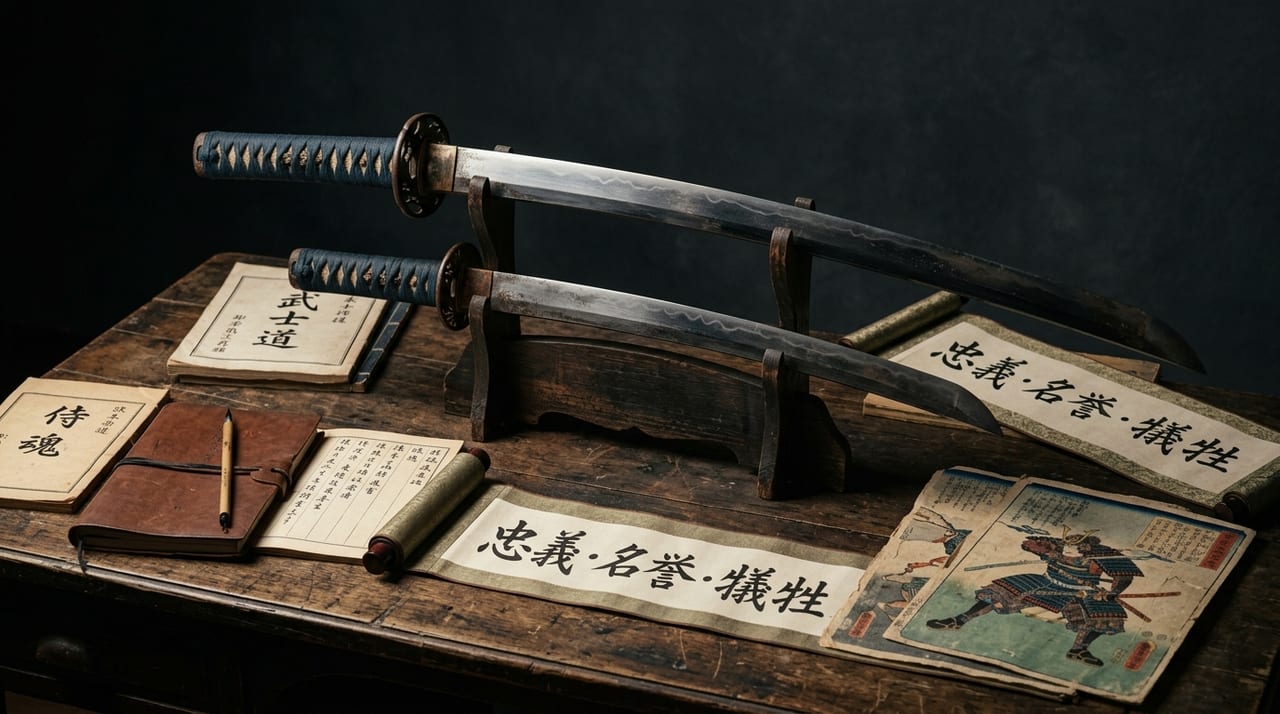
 * Image is for illustrative purposes only.
47 Ronin (2013)
47RONIN
Hollywood film directed by Carl Rinsch, starring Keanu Reeves (2013). Reconstructs the story of the Ako Ronin (the 47 Ronin / Chushingura) as a supernatural fantasy world populated by demons and witches. The most widely known English-language film adaptation of the Chushingura story, presenting the Japanese concept of the 'loyal swords' — the Bushidō spirit of dedicating one's blade to one's lord — fused with Western fantasy. The film's depiction of samurai sword-wearing culture and the visual design of the swords (habaki, nakago) during the night raid represents a Hollywood interpretation of Japanese warrior culture that has documentary value for sword-culture history.
Description
47 Ronin (2013) — The Hollywood Chushingura That Brought the "Loyal Swords" and Bushidō to a Global Audience
47 Ronin (directed by Carl Rinsch, 2013) reconstructs the story of the Ako Ronin — the forty-seven loyal retainers who avenged their lord Asano Naganori in the night raid of 1703 — as a supernatural fantasy world inhabited by witches, tengū, and dragons. Starring Keanu Reeves as Kai, a mixed-blood outsider who joins the ronin, it is the most widely distributed English-language film adaptation of the Chushingura story. The film presents the core Bushidō concept of the "loyal sword" — the blade dedicated to serving one's lord, drawn for the purpose of avenging his dishonor — to global audiences through a Western fantasy lens.
### The Chushingura — The Most Dramatic Historical Example of "Sword as Bushidō Embodiment"
The Chushingura story represents, within Japanese sword culture, the most theatrical historical instance of the concept "the sword embodies the samurai's Bushidō spirit." The forty-seven retainers who endured two years of dissemblance before striking at Kira Kozukenosuke embody the principle that the blade is drawn only in service of one's lord's honor — the sword as instrument of absolute loyalty. The actual blades used in the night raid of 1703 — including Bizen and Settsu swords associated with the Matsudaira and Ikeda clans' suppliers — are preserved at Ōishi Shrine (Ako) and Sengakuji Temple (Shinagawa) as cultural artifacts, representing real sword-history value as "the loyal retainers' blades."
### Hollywood's Visual Interpretation — Sword Fittings and Warrior Dress
One of the most notable aspects of the 2013 film's art direction is its attention to the visual design of sword fittings (tōsō) — the habaki, kashira, tsuba, and kōgai of the mounted blade. The costume and weapons design team worked with Japanese martial arts and armor experts to base the forty-seven ronin's armament on Edo-period rōnin dress: the standard daishō (long and short sword) pairing, correct sword-wearing height and angle at the hip. The visualization of "rōnin's sword fittings" — practical, unadorned blades reflecting the character's masterless status — represents a Hollywood record of how Edo-period everyday sword-wearing culture was interpreted and visualized.
### Keanu Reeves and the "Outsider Internalizing Bushidō" Motif
The narrative structure in which Kai (Reeves), as a mixed-blood outsider, comes to embody Bushidō values alongside the ronin is one of the commercially most successful film expressions of the "Westerner drawn into and transformed by Bushidō" pattern — a variant of the structure also employed in The Last Samurai (2003). This narrative device serves as a cinematic apparatus for English-language audiences to experience Bushidō as "personally relevant" — making the values of the loyal sword emotionally accessible to viewers with no prior exposure to Japanese sword culture.
### The Divergence Between Japanese Chushingura Culture and the Film's Interpretation
The 2013 film drew criticism from Japanese Chushingura devotees for its supernatural elements and the insertion of Keanu Reeves's mixed-blood character — changes seen as diluting the Bushidō purity of the original story. This very criticism demonstrates how sacred the Chushingura narrative is within Japanese Bushidō culture — and paradoxically proves the depth of cultural weight carried by the concept of "the loyal retainers' swords."
### Perspective for Sword Collectors
47 Ronin (2013) is valuable as a cultural record of how the Chushingura — the most important loyal-swordsman legend in Japanese sword culture — was visualized by Hollywood. The loyal retainers' blades, drawn for the explicit purpose of avenging their lord's dishonor, are the purest symbol of "the meaning of the sword within Bushidō." The surviving artifacts at Ōishi Shrine and Sengakuji represent genuine sword-history cultural property. Understanding how Hollywood interpreted this legend provides an important perspective on how the Japanese sword and Bushidō circulate within global popular culture.
See authentic Japanese swords
See authentic Japanese swordsThis page is intended to introduce Japanese sword culture and is not affiliated with any of the works mentioned.