The Sakai Incident
March 8, 1868 (Keiō 4, 2nd month, 15th day)
Sakai, Izumi Province (present-day Sakai, Osaka Prefecture); the seppuku took place at Myōkoku-ji
- Date
- March 8, 1868 (Keiō 4, 2nd month, 15th day)
- Location
- Sakai, Izumi Province (present-day Sakai, Osaka Prefecture); the seppuku took place at Myōkoku-ji
- Result
- The new government accepted the French minister's demands and ordered Tosa samurai to commit seppuku. After eleven had done so the French side ordered a halt, and the remaining nine were returned to Tosa.
Forces
Tosa troops (guarding Sakai on the new government's orders)
Sailors of the French warship Dupleix
About 4 min read
Overview
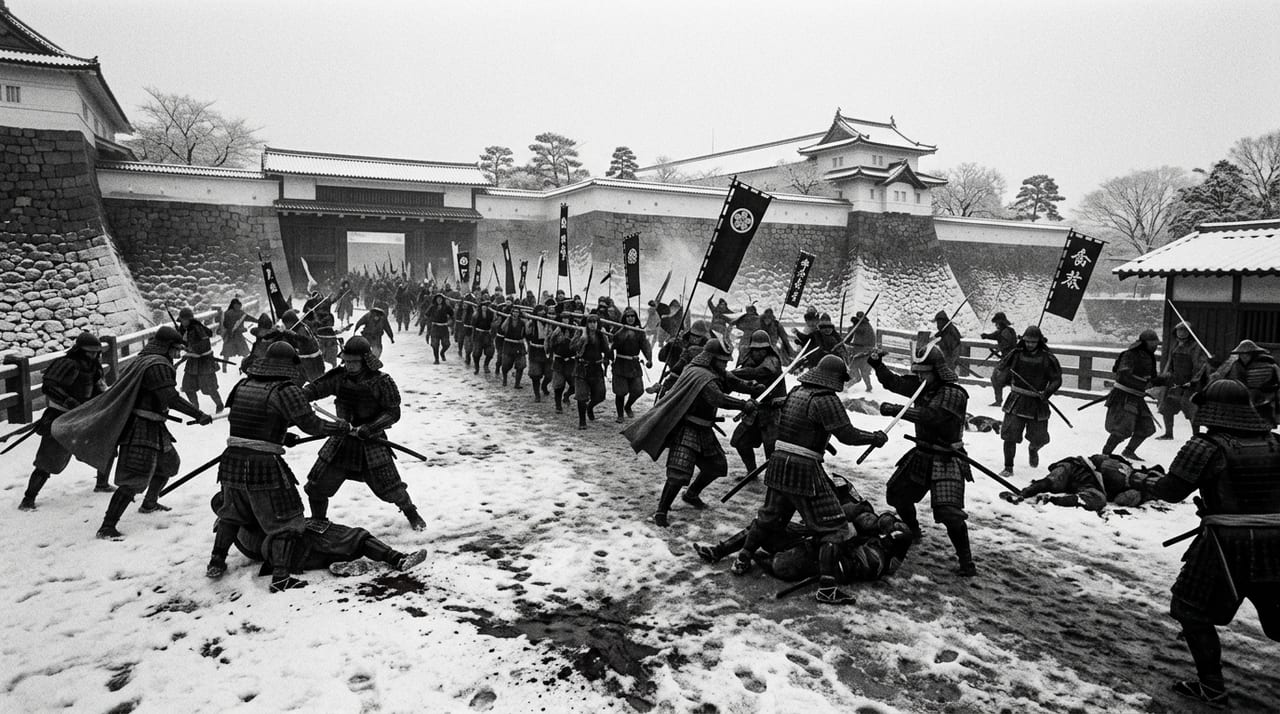
On the 15th day of the 2nd month of Keiō 4 (March 8, 1868), sailors from the French warship Dupleix who had landed at the port of Sakai clashed with Tosa troops who were guarding the town on the orders of the new government, and eleven Frenchmen were killed or wounded. The incident became a diplomatic problem for the newly formed government and ended with the seppuku of Tosa samurai.
How the Clash Began
A clash broke out between the sailors who had landed at Sakai and the Tosa troops on guard, turning into a gunfight, and eleven of the French died.
The French Minister's Demands
On the 19th day of the 2nd month, the French minister Roches submitted five demands to the new government:
- The execution of those responsible - An indemnity of 150,000 dollars - An apology by an imperial prince - An apology by the lord of Tosa - The removal of armed Tosa men from the treaty ports
The new government accepted these demands, and Tosa samurai were ordered to commit seppuku.
Seppuku at Myōkoku-ji
On the 23rd day of the 2nd month, twenty men including the commander Minoura Inokichi were to commit seppuku in the garden before the main hall of Myōkoku-ji. When eleven had done so, the French side ordered it stopped, and the remaining nine were returned to Tosa as convicts. It was the French captain Petit-Thouars who is said to have called for the halt. The nine were later sentenced to exile and afterwards pardoned.
Aftermath
The eleven who committed seppuku were buried in the grounds of Hōju-in, just north of Myōkoku-ji. The tombstones were erected by the Tosa lord Yamauchi Toyonori, and the "Tomb of the Eleven Tosa Martyrs" was designated a national historic site on August 8, 1938. The seppuku took place at Myōkoku-ji, whereas the graves are at Hōju-in, a separate temple.
Myōkoku-ji is the setting of Mori Ōgai's novel Sakai Jiken. In his 1975 essay "Embellishment and Fabrication in Mori Ōgai: On Sakai Jiken," Ōoka Shōhei criticized the work's handling of historical fact, and the same motive led him to write his final work, Sakaikō Jōi Shimatsu.