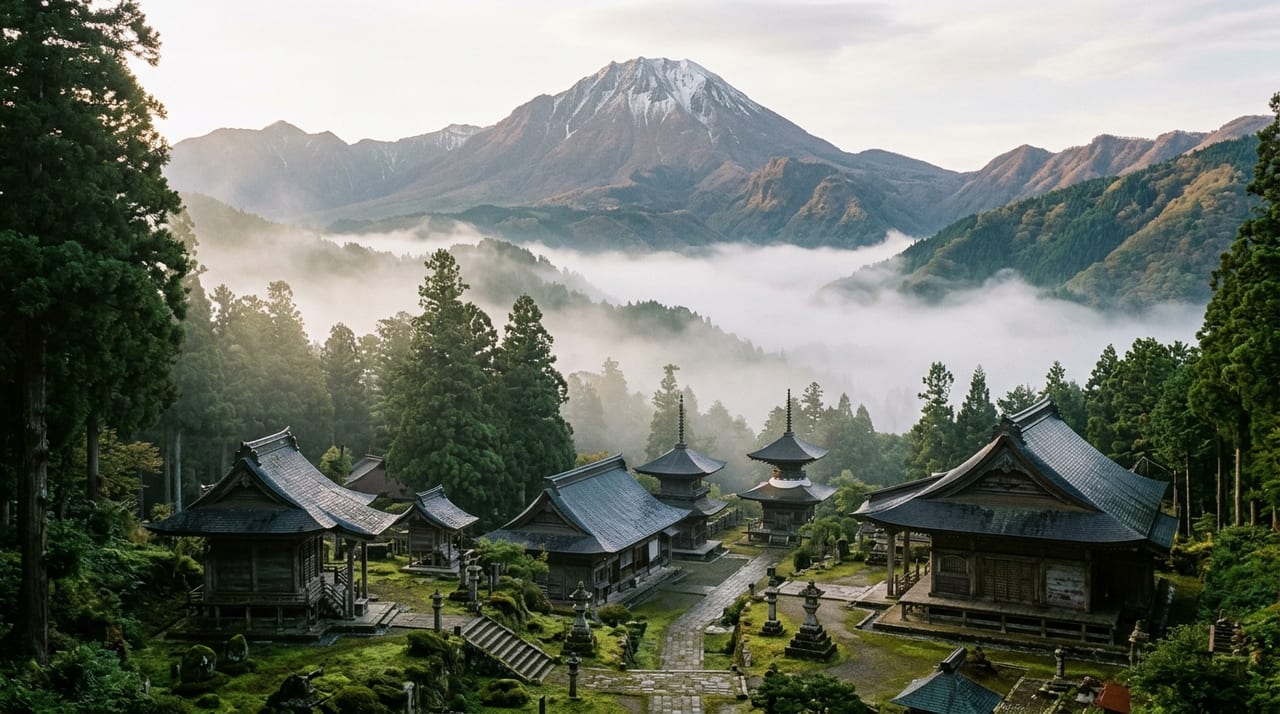
 * Image is for illustrative purposes only.
Ko-Hōki (Ancient Hōki)
古伯耆
One of the oldest sword-making traditions in Japan, based in Hoki Province (modern Tottori), producing masterworks including blades ranked among the Tenka-Goken (Five Greatest Swords).
Description
Geography and Iron Production Base of Hoki Province
Hoki Province (present-day central-western Tottori Prefecture) is a region blessed with abundant iron sand and charcoal resources in the Chugoku Mountains. The iron sand ore beds spreading at the foot of Daisen have been utilized as raw material for iron production since ancient times, providing stable supplies of iron sand—the raw material for tamahagane, the high-carbon steel essential for sword production. This geographical condition became the foundation for nurturing an outstanding group of swordsmiths in the late Heian period.
Yasutsuna and the Establishment of Ko-Hōki
The representative swordsmith of Ko-Hōki is "Oohara Yasutsuna." Yasutsuna, believed to have been active in the late Heian period (10th–11th centuries), is recorded in historical documents as one of Japan's earliest swordsmiths, and his works are famously known as "Doujigiri Yasutsuna," one of the "Tenka-Goken" (Five Greatest Swords). The Doujigiri Yasutsuna is a tachi blade said to have been wielded by Minamoto no Raikō in beheading an oni (the demon Shuten-dōji) on Mount Ōeyama. It was transmitted to the Matsudaira clan during the Edo period and is now preserved as a National Treasure in the Tokyo National Museum.
Yasutsuna's blades are characterized by an elegant form with shinogi-zukuri structure and strong koshi-zori curvature. The steel body features a grain of itame mixed with mokume, with ji-kage interspersed and lustrous reflections standing out, demonstrating meticulous forging. The hamon is based on ko-midare, presenting an archaic and serene elegance. These characteristics are regarded as the distinctive style of Ko-Hōki, distinct from the Yamato-den and Bizen-den.
Arituna and His Successors
Among swordsmiths who continued Yasutsuna's lineage is "Arituna." Arituna, also believed to have been active in the Heian to Kamakura periods, inherited Yasutsuna's techniques while developing his own distinctive style. Swordsmiths of Ko-Hōki generally favored gentler irregular hamon patterns over the straight-edged suguba preferred in the Yamato tradition, and tended to employ itame-dominant forging in their steel bodies.
However, historical records for the Ko-Hōki swordsmith group are scarce, and many details of the genealogy remain unclear. Information recorded in later sword treatises (such as the "Kyōhō Meibututsuchō") and assessments based on extant blade signatures and authentication certificates serve as the primary evidence.
Technical Characteristics of Ko-Hōki
Ko-Hōki blades display the typical tachi form of the late Heian period. They feature pronounced koshi-zori curvature and predominantly small kissaki, with elegant curved beauty throughout. The forging grain exhibits prominent itame and mokume, with fine, uniform jinie scattered across the steel. The hamon centers on ko-midare and small-pattern guno-me, possessing a distinctive quiet elegance that conceals sharpness beneath restraint.
While sharing an ancient tradition comparable to the Bizen tradition (Okayama) and Yamato tradition (Nara) by region, Ko-Hōki maintained its own distinctive character reflecting the identity of the northern San'in region.
Influence on Later Periods
The lineage of Ko-Hōki declined rapidly after the mid-Kamakura period. However, the name of Yasutsuna continued to be revered in later sword authentication as a supreme ancient blade, and the Muromachi-period authenticator Utsunomiya Mikawa-nyūdō also places Yasutsuna at the head of the top-ranked ancient swordsmiths.
Characteristics of This Era
- Elegant tachi shape with pronounced koshi-zori (waist curvature)
- Steel with mokume grain mixed into itame (flat-sawn) grain, with chikei (ground-pattern) lines
- Quiet ko-midare or ko-gunome hamon
- Fine, even ji-nie throughout the blade
- Ko-kissaki (small point) typical of Heian-period style