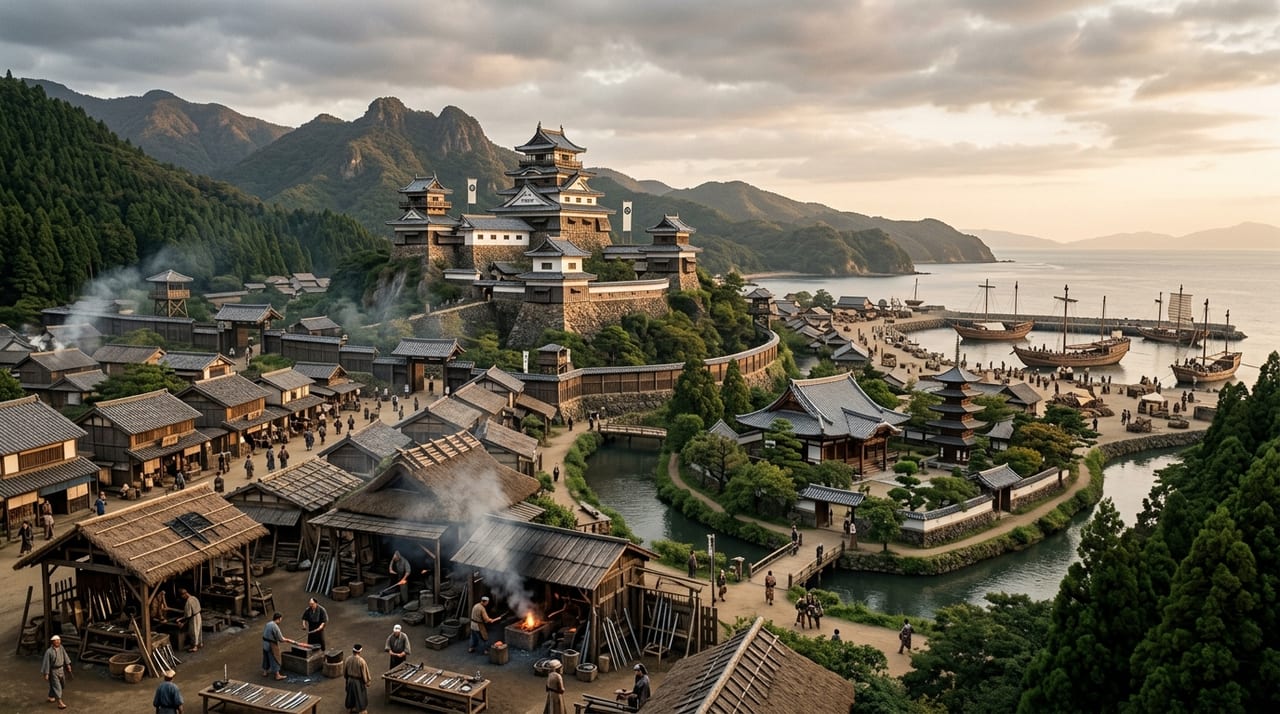
 * Image is for illustrative purposes only.
Bungo Tradition
豊後伝
The swordsmithing tradition that flourished in Bungo Province (present-day Ōita Prefecture) under the powerful patronage of the Ōtomo clan. Bungo sword culture reflects the province's role as a continental trade hub and the singular influence of the Christian daimyo Ōtomo Sōrin.
Description
Bungo Province, occupying the eastern coast of Kyushu (present-day Ōita Prefecture), prospered as a conduit for continental trade since ancient times. Though situated at the periphery of the Hakata-centered overseas trade network, Bungo maintained its own maritime routes that brought cultural influences from the continent and the Korean peninsula. This geopolitical position gave Bungo sword culture a character distinct from other Kyushu smithing centers such as Hizen and Satsuma.
Bungo smiths are documented from the late Heian period, initially adapting Yamato and Bizen techniques to the material conditions of Kyushu. During the Kamakura and Nanbokuchō periods, Bungo's swordsmithing tradition developed steadily, with smiths such as Bungo Yukihira leaving works of recognized quality. Yukihira in particular is widely known as the representative smith of Bungo, characterized by a ko-itame jihada with masame and a whitish (shirake) quality, a suguha-based hamon mixed with ko-gunome and ko-midare, and horimono such as kurikara dragons and bonji.
Bungo-den's golden era coincided with Ōtomo clan dominance (14th–16th centuries). The Ōtomo built a major Kyushu power centered on Bungo Funai (present-day Ōita City), creating one of western Japan's great cultural centers. Active Ōtomo patronage of smiths produced a concentration of production near Funai, and Bungo blades achieved wide appreciation among warriors from Kyushu and western Honshu alike.
The figure of Ōtomo Sōrin (1530–1587) adds a singular dimension to Bungo sword culture. As a Christian daimyo — in contact with Francisco Xavier and deeply interested in European culture — Sōrin showed intense interest in Western weapons, particularly firearms brought by Portuguese and Spanish vessels.
With the dispossession (kaieki) of the Ōtomo clan in 1593 (Bunroku 2), Bungo was placed under the domain system of the Edo period. Sword demand contracted, but Bungo's smithing tradition was maintained in reduced form through the mid-Edo period. Today, some works by Bungo Yukihira have been designated Important Cultural Properties and are held in collections such as the Tokyo National Museum.
Characteristics of This Era
- Archaic temper — gentle suguha-style hamon with small gunome and small midare, over jihada with masame and a shirakegokoro (whitish) quality
- Intensive Ōtomo patronage — organized smith communities centered on Bungo Funai
- Continental trade connection — maritime trade and absorption of continental cultural influences
- Ōtomo Sōrin's Christian era — Nanban trade and reception of Western culture
- Yukihira's representative style — carvings such as kurikara dragons and bonji, defining the canonical Bungo blade