Budget-Based Guide to Your First Japanese Sword Purchase: How to Choose in the ¥100K, ¥500K, and ¥1M+ Price Ranges
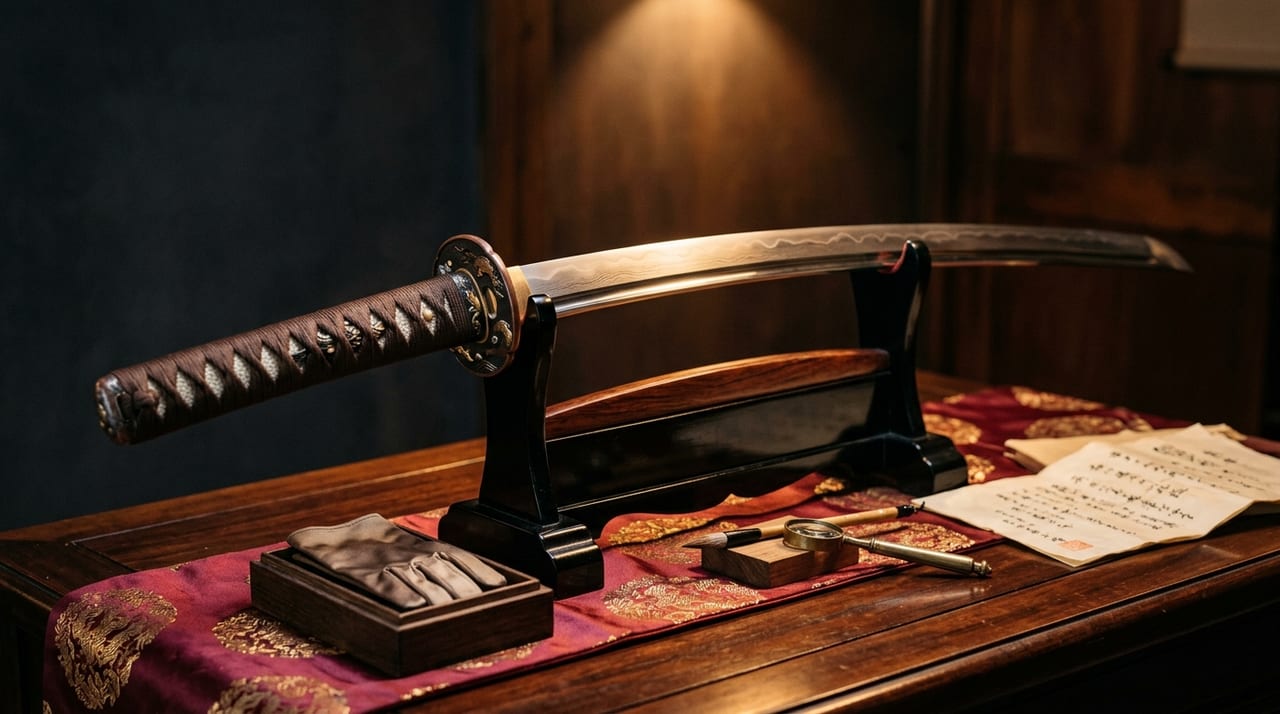 * Image is for illustrative purposes only.
Table of Contents
Your First Japanese Sword Purchase—Where to Start
"I'm interested in Japanese swords, but I don't know where to start"—a common question among beginners. The world of Japanese blades weaves together specialized terminology, authentication systems, and legal procedures in complex ways, making the entry barrier feel high.
This guide provides practical information to help beginners purchasing their first blade make rational choices suited to their budget.
First Steps: Three Non-Negotiable Principles for Beginners
Principle 1: Verify the Registration Certificate
Possessing a Japanese sword requires a "Firearms, Swords, and Blades Registration Certificate." Swords without this certificate cannot be legally owned. Always verify the registration certificate exists before purchasing.
Principle 2: The Value of NBTHK Authentication
Swords with NBTHK authentication at the "Preserved Sword" level or above are guaranteed to meet certain quality standards. For beginners, the authentication certificate functions as a "quality guarantee."
Principle 3: Choose a Trustworthy Seller
For your first purchase, we strongly recommend buying from established sword dealers or NBTHK-certified vendors. Marketplace platforms like Yahoo Auctions carry high risks of authenticity issues.
Budget ¥100K–¥300K—How to Choose Beginner-Level Swords
What You Can Expect at This Price Range
- Unsigned Tachi and Wakizashi: Unsigned blades of unknown date or from the late Edo period
- NBTHK Preserved Swords: Accompanied by the lowest-tier authentication certificate proving quality standard compliance
- Condition: Fair to Good: May show light rust or need re-polishing, or already re-polished in good condition
Important Considerations at This Price Range
The ¥100K range marks the entry point to Japanese sword collecting. Seeking "authentic works by famous smiths" at this price is unrealistic. However, it has value as an introduction to understanding Japanese swords as art.
Recommended Selection Approach
- Choose an unsigned tachi with an NBTHK "Preserved Sword" authentication certificate
- A standard tachi with a blade length of 65–70 cm (shinogi-zukuri construction) offers high versatility
- Choose a blade where the temper line (hada) is clearly visible (well-polished)
- Prioritize those with a shirasaya (plain wooden sheath) for proper storage
Recommended Sellers
- Specialty e-commerce sites such as Touken World
- Sword dealers who are NBTHK regular members
- Established regional antique dealers specializing in swords
Budget ¥500K–¥800K—Beginning a Serious Collection
What You Can Expect at This Price Range
- Edo-period Signed Blades: Works by ordinary Edo smiths (not master smiths, but bearing signatures)
- NBTHK Specially Preserved Swords: Meeting higher quality standards
- Fine Antique Swords (Muromachi–Edo Period): Blades with historical significance and distinction
- Swords with Fine Steel and Beautiful Temper Lines: The price range where artistic value begins to increase significantly
The Appeal of This Price Range
The ¥500K range is where you can authentically experience the beauty of Japanese swords. Specially Preserved-level blades show dramatically improved steel quality and temper patterns, and the pleasure of appreciation increases dramatically.
Recommended Selection Approach
- Make an NBTHK "Specially Preserved Sword" authentication certificate your minimum standard
- Choose blades with beautiful temper lines—clove-form patterns (Bizen-school) or straight temper (Yamashiro or Shinto styles)
- Ensure excellent polish condition with no rust or flaws
- Seek swords with shirasaya plus koshirae mounting (original mounts add further value)
Notable Smiths to Watch
Notable smiths available at this price range (Specially Preserved class):
- Edo-period Bizen-school (even regional minor smiths produced beautiful steel characteristic of Bizen)
- Regional smiths from Echizen (Fukui) and Kaga (Ishikawa)
- Satsuma-school Shinto blades (ordinary smiths within Satsuma Shinto tradition)
Budget ¥1M and Above (¥1M–¥3M)—Gateway to the World of Master Smiths
What You Can Expect at This Price Range
- Authentic Works by Renowned Smiths (NBTHK Important Sword Class): Specially Preserved to Important level works by smiths such as Katayama Sosuke and Taikei Naoki
- Antique Swords from the Kamakura to Nanboku-Chō Periods (Specially Preserved to Important): Antique blades with historical significance valued as artworks
- Fine Works by Contemporary Smiths (Specially Preserved to Important): Including disciples of Living National Treasure-level smiths
Selection Strategy at This Price Range
Above ¥1 million, selection should balance investment value with appreciation:
- NBTHK Important Swords or Above: At this price tier, an Important-class authentication certificate should be the minimum standard
- Verify the Smith's Reputation: Confirm the smith's standing through NBTHK certificates and smith reference materials (sword art journals, etc.)
- Check Resale Value: Consider whether the smith and condition offer future resale potential
Recommended Categories in the ¥1M+ Range
Master Works of the Late Shinto Period (¥1M–¥3M Important Swords): Important-class blades by the greatest Late Shinto smiths—such as Katayama Sosuke and Minamoto Kiyomaro—can sometimes be found at these prices.
Antique Swords from the Muromachi to Sengoku Periods (Specially Preserved): Fine-condition Muromachi antiques from Mino, Bizen, and Yamato schools can be found even in the ¥1M range.
Care and Costs After Purchase
Regular Maintenance
Japanese swords require regular maintenance:
- Removing Old Oil with Uchiko (polishing powder): Monthly or bi-monthly
- Applying Choji Oil: Apply thinly after using uchiko
- Storage in Shirasaya: Keep the sword stored in its plain wooden sheath
Polishing Costs
If polishing is needed (for rust or flaws), expect additional costs:
- Standard Polishing: Approximately ¥20,000–¥50,000
- Art Polishing: ¥100,000–¥300,000+ (depending on blade length and condition)
Storage Conditions
- 50–60% humidity is ideal (prevents rust)
- Avoid direct sunlight
- Use a katana stand (toukaekae) to avoid horizontal storage
Conclusion—Choose Your First Blade with Care
Japanese swords are a profound world where the entry point to collecting can become a life-changing passion. Making rational choices suited to your budget and beginning with a trustworthy seller is the first step toward a long and rewarding collecting life.
Choosing your first blade with care and building a foundation of appreciation becomes the beginning of a rich relationship with Japanese swords.