The Meiji Modernization and the Nihonto Crisis: Sword Prohibition, Trade Transformation, and Artistic Rediscovery
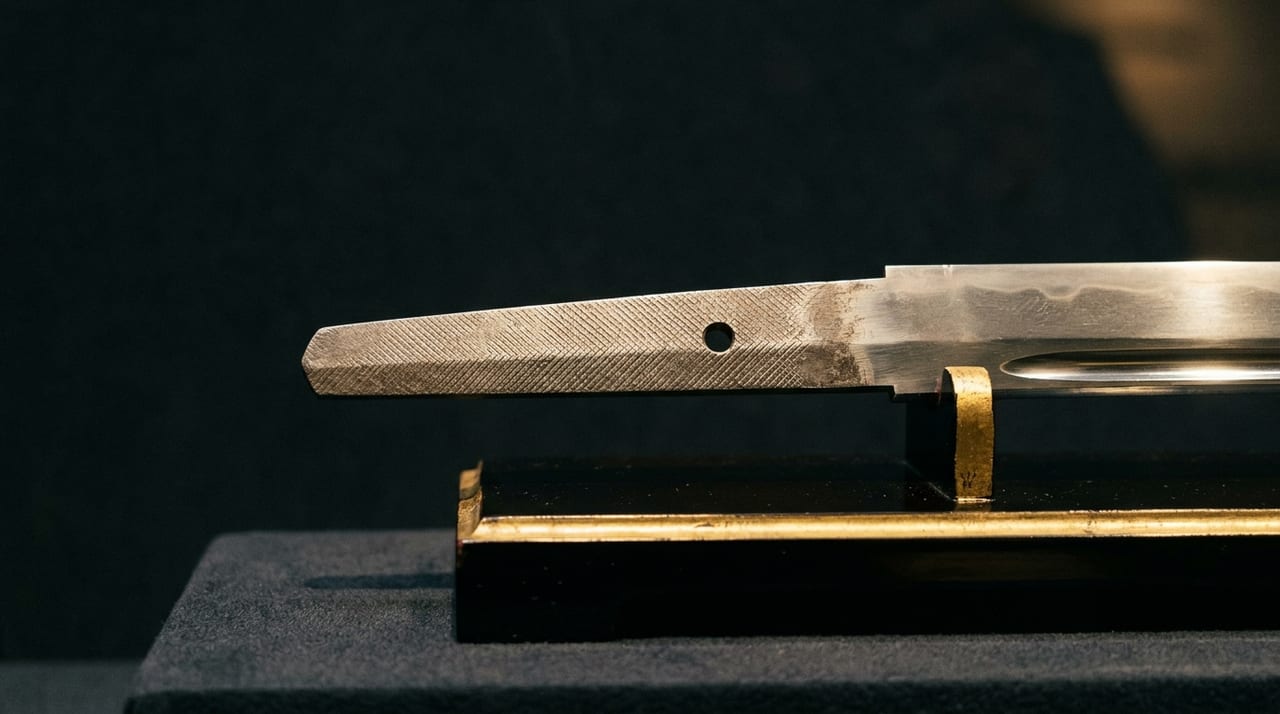 * Image is for illustrative purposes only.
Table of Contents
The Shock of the Sword Abolition Edict (1876)
On March 28, 1876 (Meiji 9), the Dajōkan issued the Sword Abolition Edict. With the exception of ceremonial dress occasions and when worn as uniforms by military personnel, police officers, and government officials, this edict prohibited the general public from carrying swords. More than a mere cultural shock, this law dealt a profound economic blow to the entire Japanese sword industry. Even before the edict was issued, demand had already begun to decline; the number of swords forged in Meiji 2, 3, and 4 (1869-1871) had plummeted to approximately 10% of late Edo period levels, and swords bearing dates from Meiji 6 (1873) onward had become increasingly rare.
The sword makers facing drastically reduced demand as a result of the Sword Abolition Edict were forced to make the following choices:
- Closure of business: The path taken by the majority of sword makers
- Conversion to agricultural and carpentry tools: Transforming production to leverage metalworking skills
- Entry into military sword manufacturing: Capitalizing on sword demand accompanying military modernization (particularly from the 1890s onward)
- Continuation of artistic sword production: Some master craftsmen continued production to meet collector demand and to create offerings for the imperial household
The Imperial Artisan System and Sword Makers' Survival
In Meiji 23 (1890), the Imperial Household Ministry established the "Imperial Artisan" system. This system granted lifetime stipends and imperial patronage to individuals recognized as possessing the highest level of technical skill in various crafts and arts including lacquerware, painting, and sculpture. It served a crucial role in maintaining the lifeline of traditional crafts whose very survival was in jeopardy.
Only two sword makers were appointed as Imperial Artisans: Tsukiyama Sadaichi (first generation, 1836-1918, from Shiga Prefecture) and Miyamoto Kanenori (1830-1926, from Tottori Prefecture). Tsukiyama Sadaichi had his work purchased by the Meiji Emperor in Meiji 18 (1885) and was appointed as an Imperial Artisan in Meiji 39 (1906). Miyamoto Kanenori was a sword maker who had mastered the Bizen transmission technique and was appointed the same year as Tsukiyama Sadaichi. The system continued until its abolition in Showa 22 (1947), but sword maker appointments were limited to these two individuals. The fact that the Meiji Emperor himself held deep affection for Japanese swords is considered one reason that sword-making culture did not completely disappear following the Sword Abolition Edict.
The Transformation of Sword Dealers into Art Merchants
Before the Sword Abolition Edict, sword dealers primarily dealt in practical, functional swords for wearing. After the edict, some dealers recognized the value of old swords and celebrated blades as "works of art" and transitioned their business to become art merchants catering to collectors, museums, and foreign travelers. This transformation occurred in conjunction with the "Japonisme" movement and the boom in Japanese art in the West during the Meiji period, and the overseas outflow of old swords began in earnest. While the outflow of old swords to Western museums and private collectors was viewed as a loss of cultural heritage, it also elevated the international appreciation and recognition of Japanese swords.
The Imperial Museum and the Institutionalization of Sword Appreciation
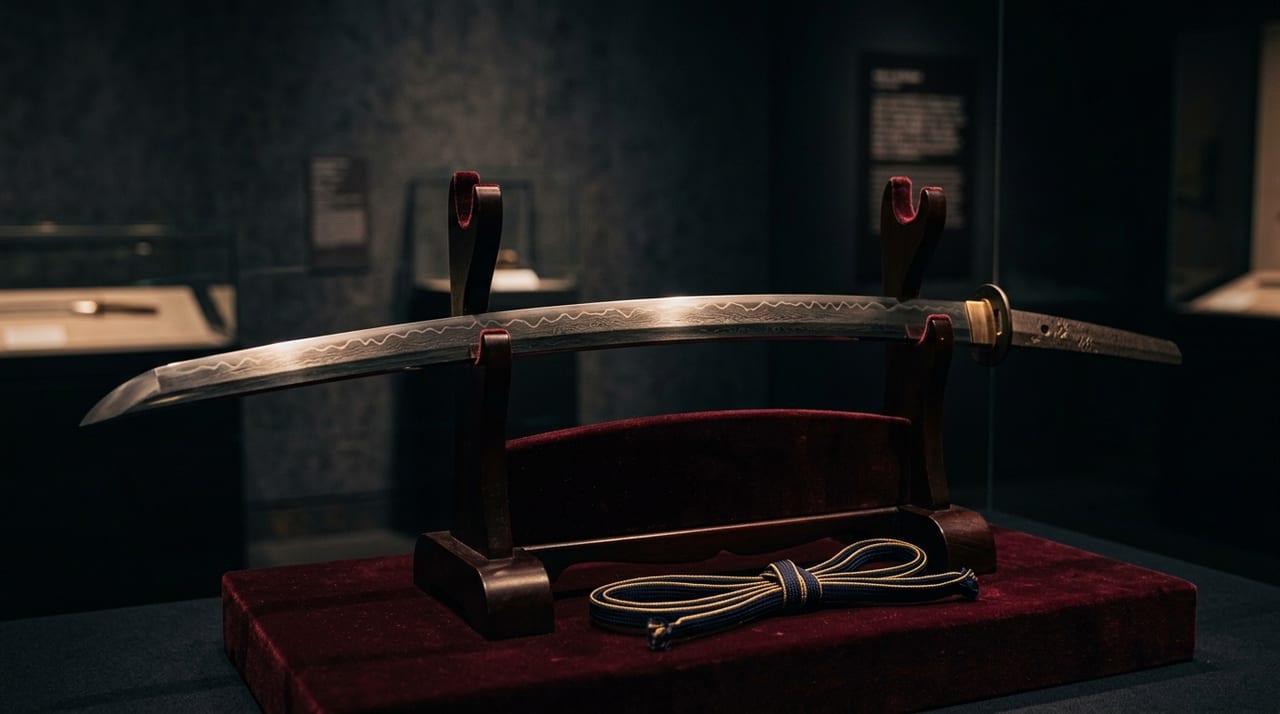
The Imperial Museum (now the Tokyo National Museum) established in Ueno, Tokyo, became a center for the systematic collection, study, and exhibition of old swords and celebrated blades as "national cultural treasures." This established the scholarly foundation for sword authentication and evaluation, and created the institutional framework that would later lead to the founding of the NBTHK (Japanese Art Sword Preservation Association).
The Ancient Temples and Shrines Preservation Law and the Beginning of Cultural Heritage Designation
The Ancient Temples and Shrines Preservation Law, promulgated in Meiji 30 (1897), was legislation that stipulated matters concerning the preservation of buildings and treasures of ancient temples and shrines. Under this law, buildings and treasures belonging to temples and shrines that served as "symbols of history or models of artistic excellence" were designated as "specially protected structures" or "National Treasures," with the government providing subsidies for preservation expenses. The law's establishment was led by Okakura Kakuzō (Tenshin) and Kuki Ryuichi, and drew upon the cultural heritage protection systems of Britain and France at the time.
However, this law's scope was limited to structures and treasures "belonging to ancient temples and shrines," and privately owned swords and those handled by sword dealers were not direct subjects of protection. Subsequently, the system developed through the National Treasure Preservation Law of Showa 4 (1929) (which simultaneously repealed the Ancient Temples and Shrines Preservation Law) and the enactment of the Cultural Properties Protection Law in Showa 25 (1950), establishing the current system in which Japanese swords, regardless of temple or shrine ownership, are designated as "Important Cultural Properties" or "National Treasures."
The Establishment of the Concept of Artistic Swords
Over the half-century following the Sword Abolition Edict, the Japanese sword underwent a fundamental transformation in meaning—from a practical and spiritual symbol of "the samurai's soul" to a cultural symbol representing "the crystallization of Japanese beauty." Following the development of cultural heritage protection systems beginning with the Ancient Temples and Shrines Preservation Law of 1897, the Japanese sword established its legal and social position as a "work of fine craft" rather than a "weapon," completing the foundation of modern Japanese sword culture. Without this transformation, the contemporary systems of Japanese sword preservation, research, and distribution would not exist.
The Sword Market and Foreign Demand After the Sword Abolition Edict
As the Meiji government pursued modernization, Japanese art sparked the "Japonisme" boom following the Paris Exposition of 1867, and wealthy Western collectors competed to acquire Japanese crafts. Japanese swords became objects of this collecting frenzy, and while old and celebrated blades flowed overseas, sword fittings (tsuba, menuki, kogai) were exported in large quantities as relatively affordable works of art. As a result of the Meiji government's inaction regarding this situation, numerous exceptional swords and sword fittings from the Meiji and Taisho periods are now housed in Western collections, and Japanese sword collections can still be seen in European and American museums today.
In reflection of this outflow, restrictions on the overseas export of swords were established when the Showa period began, and the post-war Cultural Properties Protection Law (1950) prohibited the overseas transport of Important Cultural Properties and National Treasures. The transformation from "weapon to work of art" created by the Sword Abolition Edict inadvertently elevated international appreciation of Japanese swords and became the foundation of the current cultural property protection system for swords.