The Curved Tachi of the Heian Period: Why the Japanese Sword Transitioned from Straight to Curved Blades
 * Image is for illustrative purposes only.
Table of Contents
From Straight Swords to Curved Tachi — The Fundamental Transformation of Blade Shape
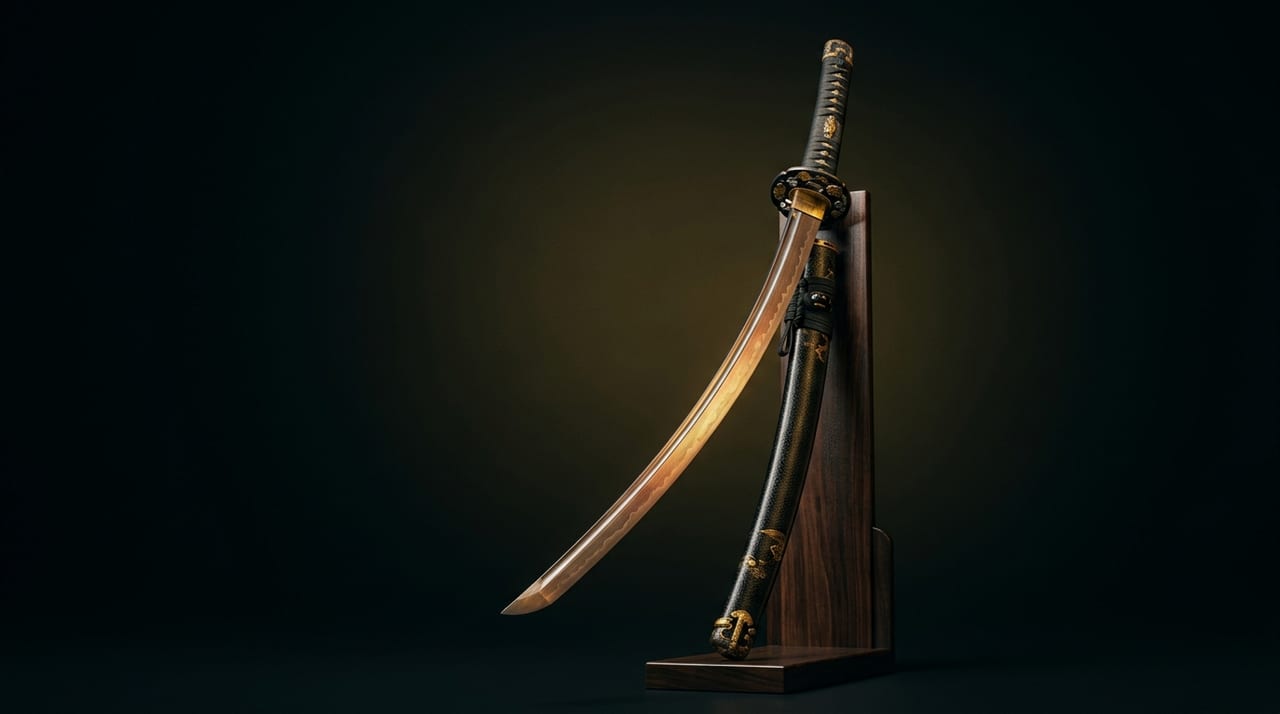
From the Nara through early Heian periods, straight swords (chokutou) transmitted from the continent (Tang dynasty) were the mainstream of Japanese weaponry. These blades with straight edges, whether double-edged or single-edged, and with hilts and blades forming nearly a straight line, derived from continental cavalry tactics and dense infantry combat. However, from the mid-ninth century onward, a distinct "curve" (sori) began to appear in blade forms, and from the tenth through eleventh centuries, Japan's unique curved tachi became established. This transformation was not merely an aesthetic change but was deeply connected to the evolution of Japanese combat methods.
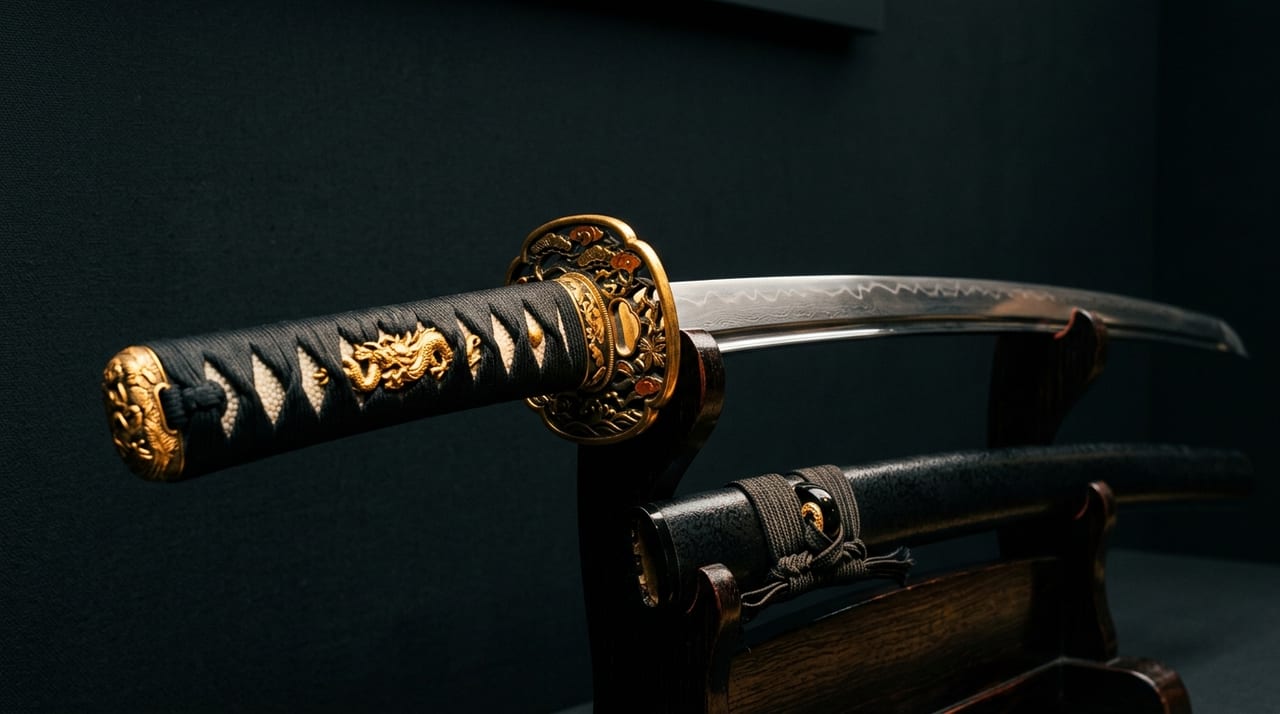
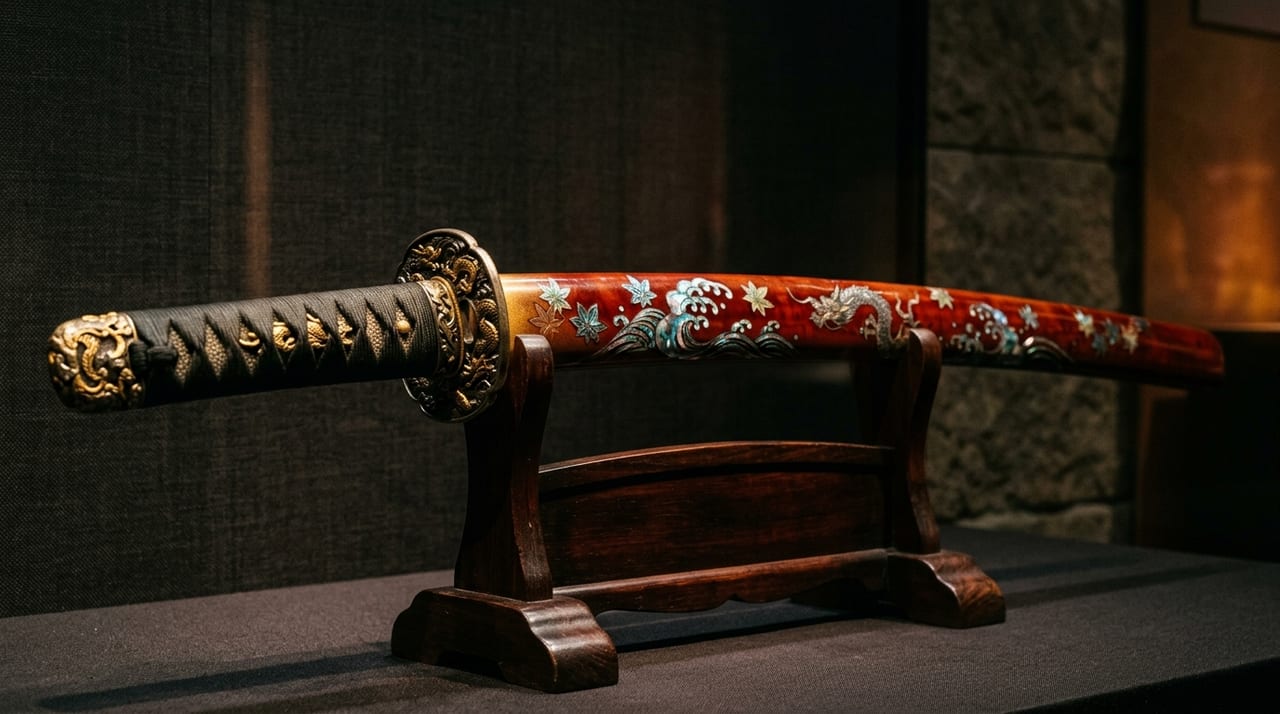
The greatest practical advantages of curved blades lay in "speed of unsheathing" and "cutting efficiency." When drawing a tachi from a suspended position at the waist (worn with blade facing downward), the curve of the blade slides smoothly along the inside of the scabbard, allowing it to be drawn quickly with less force than a straight sword. Furthermore, the curved blade made the motion of pulling cuts (drawing and slicing) natural and effective, functioning especially well when mounted samurai approached enemies while moving on horseback.
The Rise of Eastern Military Clans and Mounted Combat
From the mid-Heian period onward, in the eastern provinces (Kanto and Tohoku regions), local lords began forming independent military clans. Their primary combat style was mounted archery, executing mobile warfare by shooting arrows from horseback and then striking with a tachi. This combat style is believed to have directly created demand for curved tachi.
In mounted combat, different mechanics applied than in infantry combat with feet on the ground. To utilize the energy of a galloping horse and execute strikes while leaning the body sideways required blades with appropriate curvature. Straight swords had their points facing too far forward and were unsuitable for diagonal draw-cuts. The curved tachi was the blade form that matched the physical movements of mounted warriors.
In mounted warfare, there were many instances of targeting armored opponents, requiring strikes at gaps in helmets and seams in armor. While straight swords excelled at piercing thrusts, curved blades maximized blade length through draw-cutting, making downward and horizontal draw-cuts across armor seams highly effective.
Various Theories on Blade Curvature — Material Theory, Forging Technology Theory, and Functional Evolution Theory
Regarding the causes of blade curvature in tachi, several influential theories have been proposed among scholars.
- Forging and Cooling Contraction Theory: This attempts to explain curvature through the blade-making process. As iron is repeatedly heated and cooled during forging, the edge side (hagane) and spine side (munegane) of the blade experience different rates of contraction. The theory states that during quenching (yakiire), the edge side cools and hardens rapidly while contracting, creating a physical mechanism that produces curvature. However, this theory struggles to answer the question of "why did technology develop intentionally to enhance curvature?"
- Functional and Tactical Origin Theory: This explains curvature through its relationship to mounted combat mentioned above and is currently the most widely supported theory. Looking at actual archaeological findings of Heian-period tachi and records of armor, the period of increased curvature coincides with the rise of eastern military clans, and many scholars emphasize this correlation.
- Material Evolution Theory: This links the stabilization of tamahagane production from the mid-Heian period onward to the development of curved tachi. Tamahagane is refined iron material with controllable carbon content, and it facilitated "composite forging" in which blade and spine are constructed by combining hagane and ji-gane. According to this theory, this technology enabled intentional differentiation in properties between blade and spine, making curvature control possible.
Characteristic Heian Tachi Forms and Surviving Examples
Surviving Heian-period tachi display distinctive morphological features compared to later swords. Blade length often measures around 2.5 shaku (approximately 76 centimeters), with pronounced waist curvature (the highest point of the curve near the blade base) and wide shinogi (ridge). The blade tip (kissaki) is small, and the typical form shows the shinogi-zukuri cross-section tapering toward the edge.
Among the swords housed at the Shosoin, straight swords from before the Nara period are also included, making them valuable resources for understanding the transition in the early Heian period. Additionally, temples such as Kasuga Taisha and Itsukushima Shrine possess tachi from the Heian through Kamakura periods as votive offerings, allowing the evolution of blade forms to be confirmed through actual artifacts.
From the perspective of blade-smith lineages, the Sanjo and Gojo schools of Yamashiro Province (present-day Kyoto Prefecture) are known as the centers of sword manufacturing during the Heian period. Sanjo Munechika is regarded as a master craftsman of the late Heian period, and the "Kogitsune-maru"—reportedly his creation, now lost and known only in legend—is a famous sword that appears in kabuki and other works. Surviving Sanjo-school tachi retain the characteristic features of the deeply curved Heian style.
Morphological Changes from the Late Heian through Kamakura Periods
From the late Heian period's Genpei Wars (Jisho-Juei War, 1180–1185) through the early Kamakura period, tachi morphology underwent further changes. As mounted warfare intensified, while blade curvature was maintained, the form evolved from the slender and elegant "Heian style" to the more rugged and practical "Kamakura style." Kamakura-period tachi saw changes in the position of waist curvature, with "mid-curve" (nakazori)—curvature distributed evenly across the entire blade—becoming the mainstream.
The width of the blade (edge width and body width) also changed over time. In the late Heian period, a tendency toward "fukura-kare" (narrowing toward the point) was evident, with point width clearly narrower than the base, and small, slender points (ko-kissaki) being the typical form. From the early through mid-Kamakura period, broad blade width with a shortened point—the "inokubi kissaki" (boar-neck point)—became characteristic, with powerful curvature and broad blade width becoming mainstream, foreshadowing the direction toward the later "odachi" (great sword).
This transition from Heian to Kamakura was the era when the Japanese sword as a blade form acquired its unique aesthetic and functional refinement unparalleled in the world. The birth of the curved tachi was not merely a technological evolution but a product of cultural transformation integrated with the formation of Japanese samurai society.