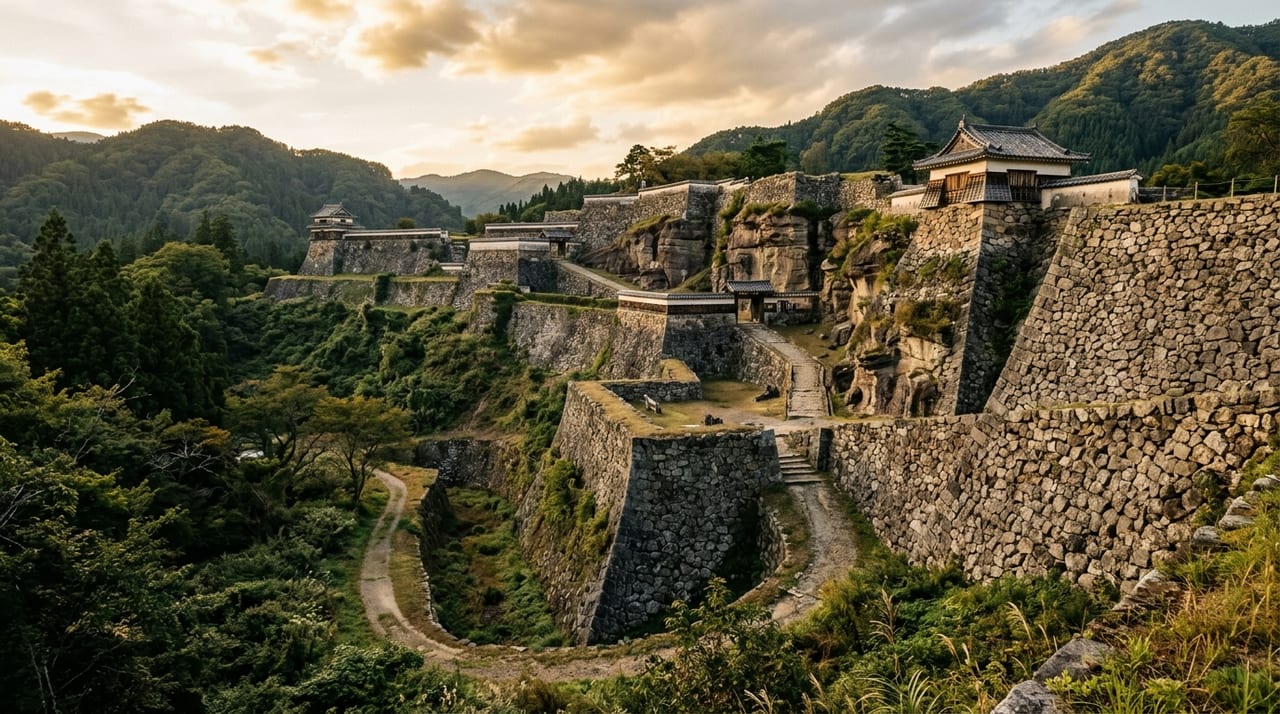
 * Image is for illustrative purposes only.
Shinori-tate (Shinori Fort)
志苔館
- Lord
- Kobayashi Yoshikage (1st), Kobayashi Yoshisada (2nd), Kobayashi Yoshiharu (3rd)
- Era
- Date of construction unknown (one theory holds the latter half of the 14th century); reportedly fell to an Ainu attack in 1512 (Eishō 9)
- Designation
- National Historic Site (designated August 9, 1934; area expanded 1977); Continuation of Japan's Top 100 Castles (No. 101)
- Location
- Shinori-chō / Akasaka-chō, Hakodate, Hokkaido
- Access
- About a 5-minute walk from the "Shinori" bus stop on the Hakodate Bus Shimo-kaigan Line (no parking on site)
Shinori-tate (Shinori Fort) is a historic castle in the Hokkaidō region (Date of construction unknown (one theory holds the latter half of the 14th century); reportedly fell to an Ainu attack in 1512 (Eishō 9)). Its lord was Kobayashi Yoshikage (1st), Kobayashi Yoshisada (2nd), Kobayashi Yoshiharu (3rd).
Overview
Overview
Shinori-tate (Shinori Fort) is a medieval fortified residence built on the edge of a coastal terrace in Hakodate, Hokkaido, and is one of the Twelve Forts of Southern Hokkaido (Dōnan Jūni-tate). Of the twelve fortified residences built by Wajin (ethnic Japanese) lords along the southern coastline of the Oshima Peninsula, it is the easternmost.
Construction and History
The date of construction is unclear, and one theory holds that it was built in the latter half of the 14th century. The lords of the fort were of the Kobayashi clan. The Shinra no Kiroku records the lord in Chōroku 1 as Kobayashi Yoshikage. In 1457 (Chōroku 1), Shinori-tate became one of the main battlegrounds of the Kōshamain War, an uprising led by the Ainu chief Kōshamain, and it fell as most of the Dōnan Jūni-tate forts fell. According to the Shinra no Kiroku, in 1512 (Eishō 9) the fort was again attacked by the Ainu and fell, and the lord Kobayashi Yoshisada, said to be the son of Yoshikage, died in battle. However, excavations have found no traces of use in the 16th century.
Structure and Remains
Situated on a hill overlooking the sea, the fort has a nearly square (rectangular) layout enclosed on all four sides by earthen ramparts and dry moats. The earthen ramparts are about 4 to 4.5 meters high on the north side and about 1 to 1.5 meters high on the south side, and dry moats are provided outside the north and west sides. Post-hole building remains and well remains have been confirmed inside the fort. In 1968, during road construction about 100 meters southwest of the fort, a buried jar containing about 387,000 Chinese coins was discovered, and it is considered among the largest finds of old coins from a single site in Japan.
Current Status and Access
Preserved as a national historic site, it was selected in 2017 as No. 101 in the Continuation of Japan's Top 100 Castles (Zoku Nihon Hyakumeijō). It is now developed as a historic park. It is about a five-minute walk from the "Shinori" stop on the Hakodate Bus Shimo-kaigan Line.
Highlights
- Easternmost of the “Twelve Forts of Southern Hokkaido” built on the southern Oshima Peninsula
- One of the main battlegrounds of the Kōshamain War of 1457 (Chōroku 1)
- Roughly 387,000 Chinese coins unearthed in 1968 during road construction near the fort, among the largest single finds of old coins in Japan
- National Historic Site; selected in 2017 as No. 101 in the Continuation of Japan's Top 100 Castles
* Opening hours and admission fees are subject to change. Please check the official website before visiting.