最新消息 — 最新入荷資訊請查閱商品目錄。 查看 →
深入了解日本刀知識與文化的見解
Japanese swords are broadly divided into three eras: "koto" (old swords), "shinto" (new swords), and "shinshinato" (newest swords). This article systematically explains the chronological divisions, forging techniques, steel surface patterns, and blade temper characteristics of each era, along with representative sword smiths and schools. This is essential foundational knowledge for authentication and collecting.
The sword culture of Kyushu—particularly Satsuma (Kagoshima)—developed independently centered on the Namihira School (Namihira-ha), which originated in the Heian period. From the Shimazu clan's protective policies toward swordsmiths, to continental iron acquired through South China Sea trade, to the Satsuma blades cherished by Boshin Restoration warriors, this text details a sword culture region that stands as an independent tradition on par with the Five Schools (Gokaiden).
Muromachi sword morphology, divided before and after the Onin War (1467): the transition from reduced Nanbokucho forms to uchigatana dominance, the establishment of bo-hi (groove), and the morphological signatures of Bizen Osafune mass production versus quality pieces. How blade geometry responded to the shift from mounted to infantry warfare.
Nanbokucho-period swords (1336–1392) represent the most dramatic morphological divergence in nihonto history: extreme elongation, very wide kissaki, revival of koshi-zori, and the enbun-suguha form. How measurement data from surviving examples reveals the forces driving blade expansion and the subsequent Oei-era contraction.
An analysis of Japanese sword folding and forging from materials science perspective. Details the relationship between forging repetitions and layer count, optimal temperature ranges, carbon homogenization mechanisms, and impurity removal processes, while explaining degradation phenomena caused by over-folding.
Shinogi-zukuri is the representative cross-sectional shape of the Japanese sword. The process of precisely forging the complex polyhedron formed by the blade edge, ridge plane, ridge line, and spine is where a swordsmith's highest technical skills are tested. This article explains the specific forging processes—from initial drawing-out through fire shaping, rough shaping, finishing forging, soil application, and hardening—that create the shinogi-zukuri cross-section.
Silver metalsmiths (shirogane-shi) are craftspeople who specialize in creating "habaki" (blade collar) and "setppa" (spacer plates) that connect the blade to the handguard of a Japanese sword. This article explains the techniques and history of these artisans who precisely process gold, silver, and copper alloys, as well as the current shortage of successors.
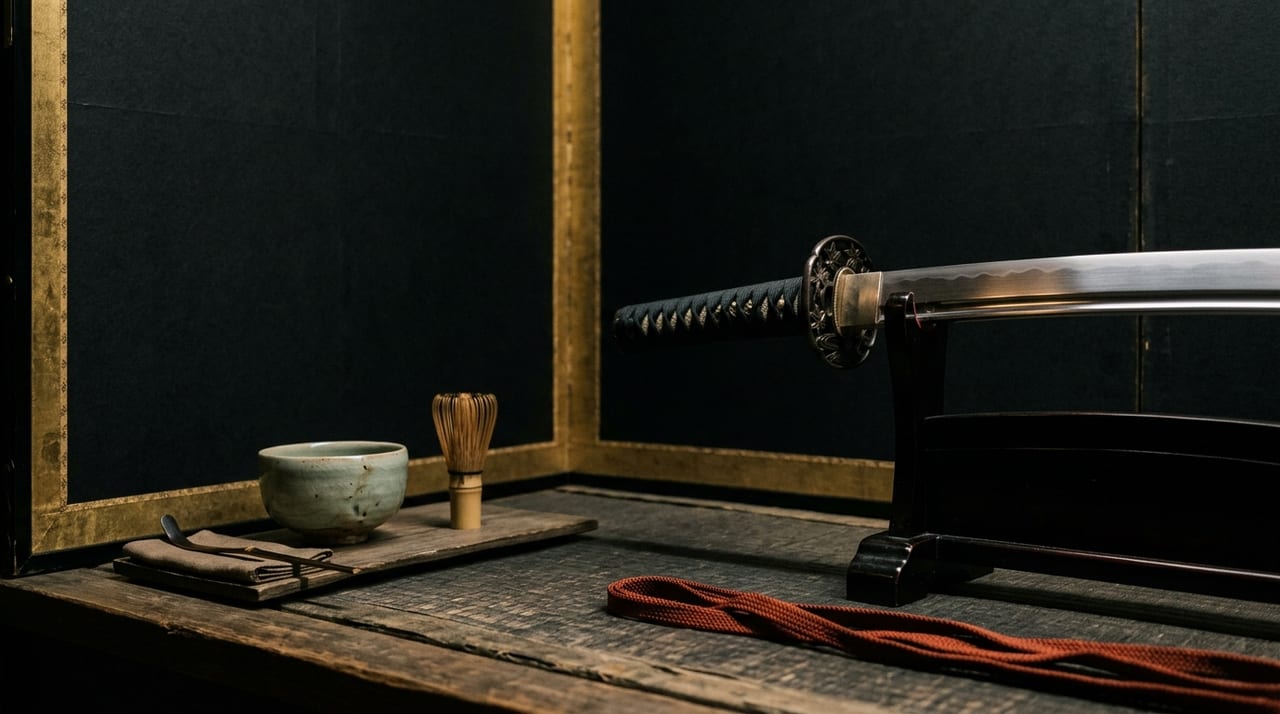
From the Sengoku period through the Edo period, the Japanese sword and the Way of Tea (wabi tea) developed in parallel as the two pillars of samurai culture. This essay explores the relationship between Nobunaga and Hideyoshi's "tea politics" and sword collecting, anecdotes about blades exchanged at tea gatherings hosted by Rikyū and military leaders, and the aesthetic resonance between sword smiths and tea utensil craftsmen.
The curvature (sori) of Japanese swords is a crucial indicator reflecting era, purpose, and school of forging. This essay provides expert analysis of the differences between heel sori, middle sori, and tip sori; the changes in curvature from Heian to Kamakura blades; and techniques for reading curvature in sword appreciation.
Japanese sword blade length (hasaki) varies greatly depending on function, era, physical height, and martial school. From the standard length of the katana (approximately 2 shaku 3 sun) to the oversized tachi of the Northern and Southern Courts period (3 shaku or longer), to the wakizashi and tantō, this explanation clarifies how blade length choices connected to actual combat, formal attire, and iaijutsu.
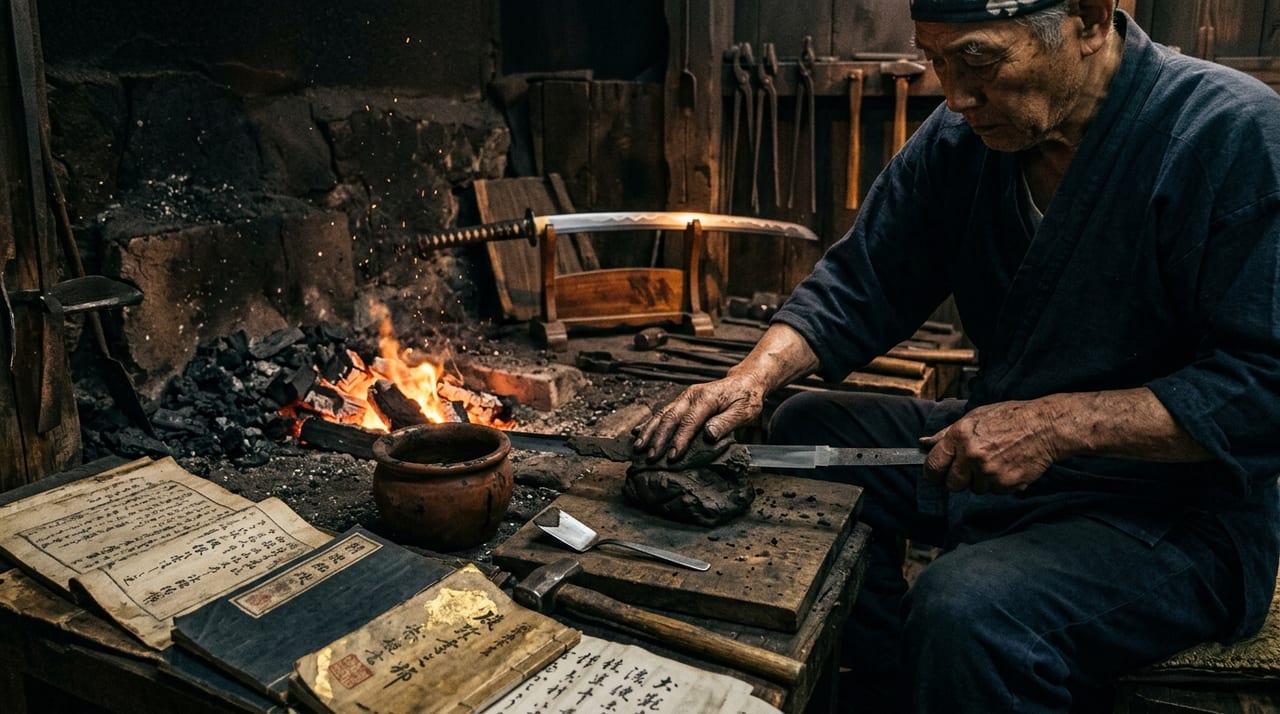
The manufacturing techniques of Japanese swords have been transmitted through both 'kuden' (oral transmission—direct instruction from master to apprentice) and 'hidensho' (secret technical documents—written technical records). What was recorded in writing, and what was intentionally left unwritten? This explores the philosophy and history of technical transmission.
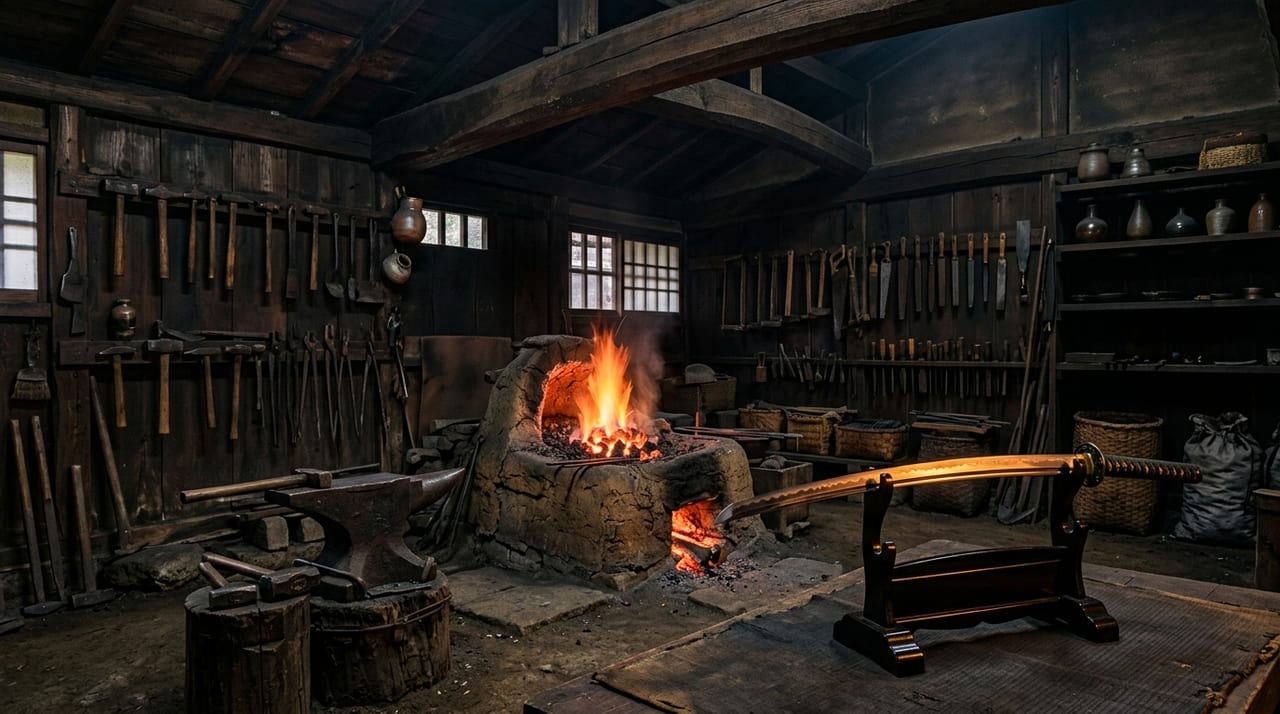
The world of sword makers was built upon a strong community called the "ichmon." This article provides a detailed introduction, based on historical sources, to the master-apprentice relationship, annual rituals at forges (furnace opening, first forging, and hammer awakening), and the social structure of "sword-making villages" where sword makers lived together.