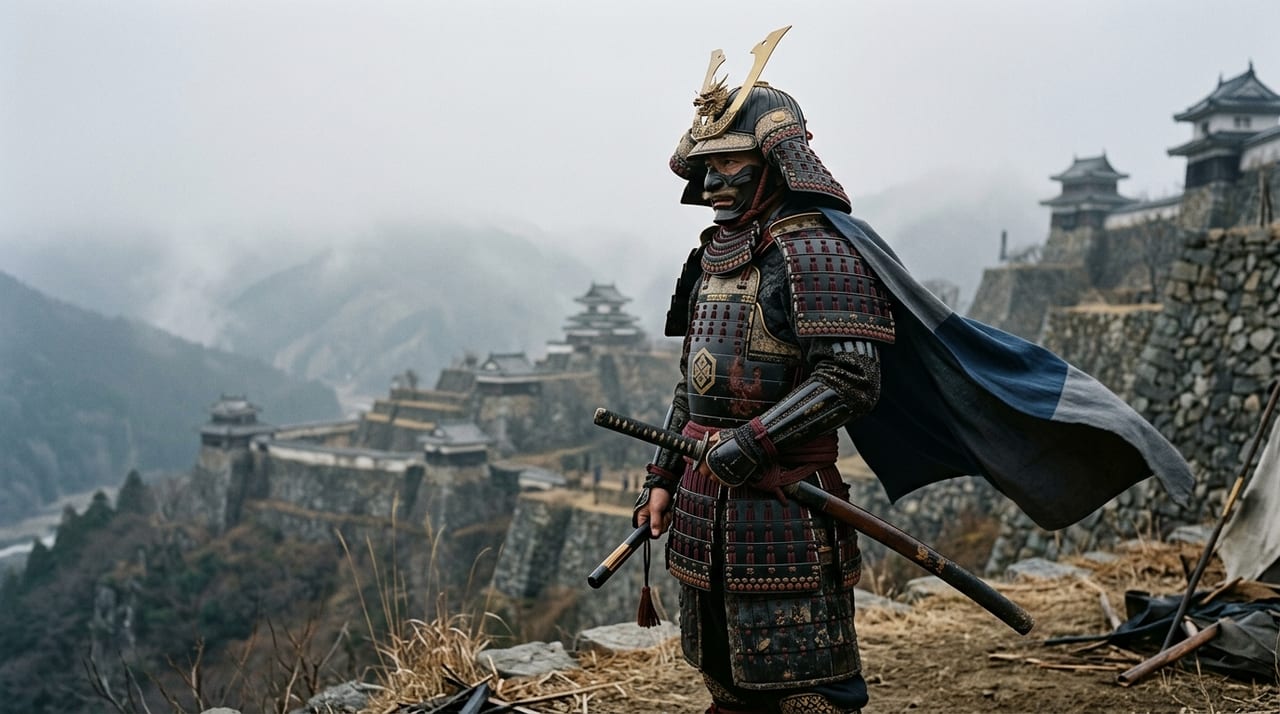
 * Image is for illustrative purposes only.
Yuki Tomomitsu
結城朝光
Founder of the Shimosa Yuki Clan, Ten-Time Sword Bearer at Tsurugaoka Hachimangu
- Era
- Kamakura Period
- Lifespan
- 1168-1254
- Associated Sword Tradition
- First head of the Shimosa Yuki clan (Oyama branch of the Fujiwara no Hidesato line, third son of Oyama Masamitsu)
Description
Yuki Tomomitsu was an early Kamakura-period gokenin and is regarded as the first head of the Shimosa Yuki clan. He was born in 1168 and died in 1254 at the age of 87. As a close retainer of Minamoto no Yoritomo, he is known for having served ten times as the sword bearer (gyoken-yaku) at Tsurugaoka Hachimangu, as recorded in the Azuma Kagami.
Origins
He was the third son of Oyama Masamitsu, a powerful local lord of Oyama in Shimotsuke Province, and a member of the Oyama clan of the Fujiwara no Hidesato line. His mother was Sangami-ama, who served as a wet nurse to Yoritomo and was the daughter of Hatta Munetsuna.
Submission to Yoritomo
In 1180, through his mother's mediation, he submitted to Yoritomo, who had raised an army, and his coming-of-age ceremony was performed with Yoritomo as his eboshi-oya. In 1181 he was chosen as one of the men who guarded Yoritomo's bedchamber. He is said to have served as gyoken-yaku at Tsurugaoka Hachimangu ten times, the most among all gokenin.
The Jishō–Juei War and the Ōshū Campaign
In 1183, at the Battle of Nogimiya, he remained in Kamakura with Yoritomo and predicted the defeat of the combined forces of Shida Yoshihiro and Ashikaga Tadatsuna, and his prediction proved accurate. After the battle he was rewarded with the post of jitō of Yuki District. He then followed the armies of Minamoto no Noriyori and Yoshitsune, fighting from the Battle of Uji River to the Battle of Dan-no-ura. In the Ōshū campaign of 1189, he killed the enemy commander Kongō Bettō Hidetsuna at the Battle of Atsukashiyama, and as a reward he was granted the three districts of Shirakawa in Ōshū. The following year he also took part in suppressing the Ōkawa Kanetō rebellion.
Career in the Kamakura Shogunate
At the Tōdaiji reconstruction dedication ceremony in 1195, he skillfully mediated a brawl among monks and was praised for his "beautiful appearance and clear eloquence." He also fought in the Jōkyū War, was appointed assistant governor of Kōzuke in 1229, and became a member of the Hyōjōshū in 1235.
Later Years
From a young age he was devoted to the nenbutsu and took refuge in Hōnen and Shinran. In his later years he became a monk, styling himself "Yuki Kōzuke Nyūdō Nichia," and founded Yuki Shōmyōji. When the Hōji War (1247) destroyed the family of his old acquaintance Miura Yasumura, he is said to have gone to Kamakura and wept while meeting Hōjō Tokiyori. In 1248, over the form of a letter exchanged with the Ashikaga family, he was treated as a lesser party, angrily sent a reply, and an anecdote also survives that he prevailed by Tokiyori's ruling.
Theories Regarding His Origins
Some Yuki family genealogies hold that he was an illegitimate son of Yoritomo, but this does not appear in sources such as the Sonpi Bunmyaku, and it has not been confirmed as historical fact.