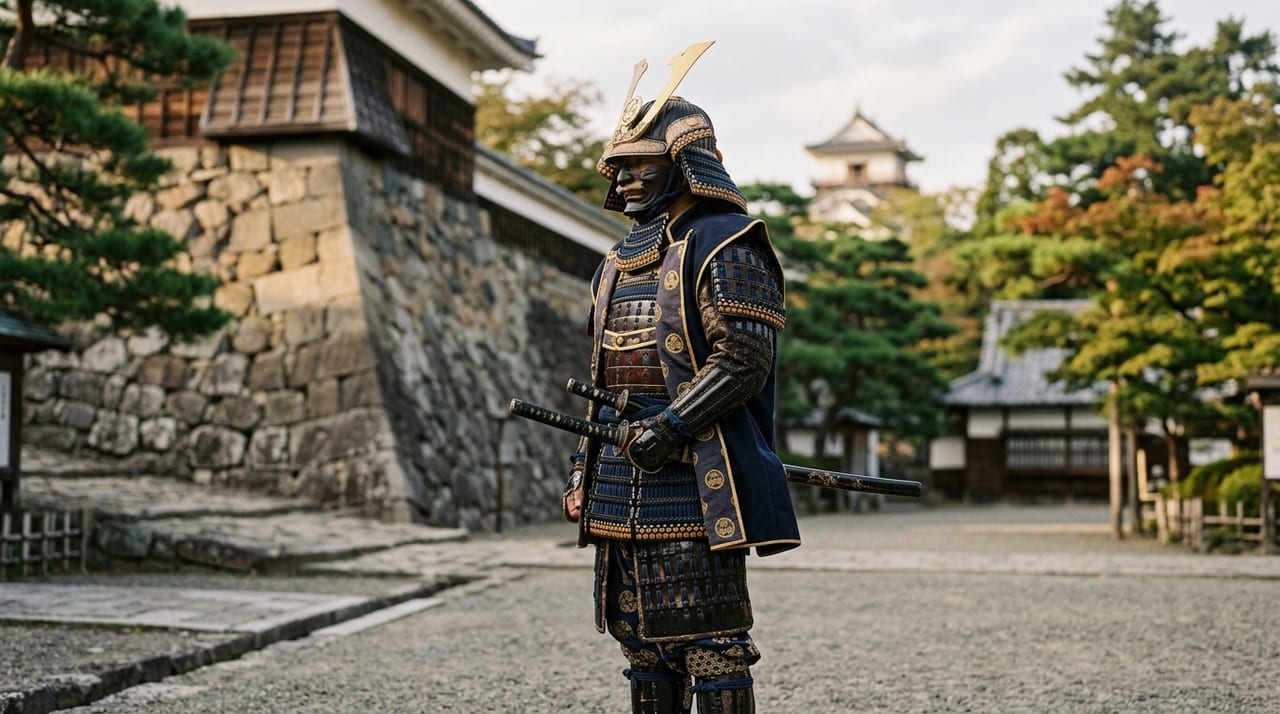
 * Image is for illustrative purposes only.
Tokugawa Mitsukuni
徳川光圀
Mito Kōmon—The Treasure of the Mito Tokugawa Family, Who Began Compiling the Dai Nihon-shi
Description
A Lord of Learning
Born in Kan'ei 5 (1628) as the third son of Tokugawa Yorifusa, lord of the Mito domain, Tokugawa Mitsukuni is an enlightened lord renowned for both learning and virtue, widely remembered in later times by the name 'Mito Kōmon'. As the second lord of the Mito domain, he managed domain affairs while also making a great contribution to the promotion of scholarship and culture in the Genroku era. In particular, the compilation of the Dai Nihon-shi (Great History of Japan) led by Mitsukuni is one of the largest scholarly projects in the history of Japanese historical research. Even after Mitsukuni's death, compilation continued at the Shōkōkan of the Mito domain, and it took about 250 years to complete. Mitsukuni also devoted great effort to the study of classical texts and to the preservation of cultural properties.
Dai Nihon-shi and the Collection of Sources
To collect the materials needed for compiling the Dai Nihon-shi, Mitsukuni dispatched his retainers to provinces across the country. The historical scholarship of the Mito domain blossomed in the late Edo period as the Mito school (Mitogaku), and it became the theoretical foundation of the sonnō jōi ideology. Its source, however, lies in the path of scholarship that Mitsukuni opened up.
The Sword Collection of the Mito Tokugawa Family
The Mito Tokugawa family, as one of the Gosanke, was a daimyō house ranking just below the shogun's family. Of particular note is its connection with the Shokudaikiri Mitsutada. This famous sword, known as the beloved blade of Date Masamune, is said to have passed from Masamune to the Mito Tokugawa family. The sword register Buko Tōsan, compiled in the late Edo period, records that Mitsukuni forcibly took away this sword, which Masamune had been reluctant to part with. However, a theory also holds that his father Yorifusa requested it and received it. The Bizen Osafune blade by Mitsutada has been highly valued since ancient times for its splendid chōji-midare and the beauty of its jigane. This Shokudaikiri Mitsutada continued to be handed down in the Mito Tokugawa family and was burned in the Great Kantō Earthquake of 1923. Its existence was confirmed in 2015, and it is now held by the Tokugawa Museum in Mito. The history of this famous sword, which connects Date Masamune of Sendai with Tokugawa Mitsukuni of Mito, holds a special meaning for TOUKENZA as well.
The Reality Behind the Tales of Kōmon's Travels
The tale of Mitsukuni's travels through the provinces, known as 'Mito Kōmon', is in fact not historical but a later invention and exaggeration. In reality, Mitsukuni inspected the domain's territories and traveled to places such as Nikkō, Kamakura and Bōsō, but he went almost nowhere beyond the Kantō region and did not undertake anything like a tour of the whole country. However, the influence that this image of 'Lord Kōmon' had on ordinary people was great, and he became a symbol of justice correcting wrongs as the 'Vice-Shogun of the Realm'. The true image of Mitsukuni is that of a scholar-lord who remained shut in a place of study surrounded by books and continued to pursue the truth of history.
Confucianism and the Spirit of the Japanese Sword
Mitsukuni was deeply devoted to Zhu Xi learning (Shushigaku) and placed Confucian ethics, which prize righteousness and propriety, at the foundation of his politics and scholarship. This Confucian spirit and the spiritual character of the Japanese sword resonate deeply. The sword of a warrior embodies the five constant virtues of benevolence, righteousness, propriety, wisdom and trustworthiness. It is not merely a weapon but a spiritual pillar for loyalty to one's lord and for the realization of justice. This view of the sword took deep root in warrior society in Mitsukuni's era, together with the spread of Confucianism. Mitsukuni also invited Zhu Shunshui, a Confucian scholar who had fled from the Ming, and received his teaching. He possessed a broad perspective that relativized Japanese culture within the context of East Asia. This international perspective also connects with the contemporary challenge of presenting the beauty and spirit of the Japanese sword to the world.
Final Years and Legacy
Mitsukuni retired in Genroku 3 (1690) and moved to Seizansō the following year. He died on 14 January 1701 (Genroku 13/12/6), aged 73. In accordance with his wishes, compilation of the Dai Nihon-shi continued, and the scholars of the Shōkōkan carried on historical research in keeping with Mitsukuni's spirit. The Mito school had a great influence on the sonnō jōi movement of the late Edo period and became one of the ideological foundations of the Meiji Restoration.
Notable Swords
- Shokudaikiri Mitsutada (made by Mitsutada of Bizen Osafune. Said to have passed from Date Masamune to the Mito Tokugawa family. Burned in the Great Kantō Earthquake; now held by the Tokugawa Museum in Mito)
- Famous swords handed down in the Mito Tokugawa family (more than 160 blades, including Konotegashiwa, which was considered the foremost treasure of the Mito house, were burned in the Great Kantō Earthquake of 1923)