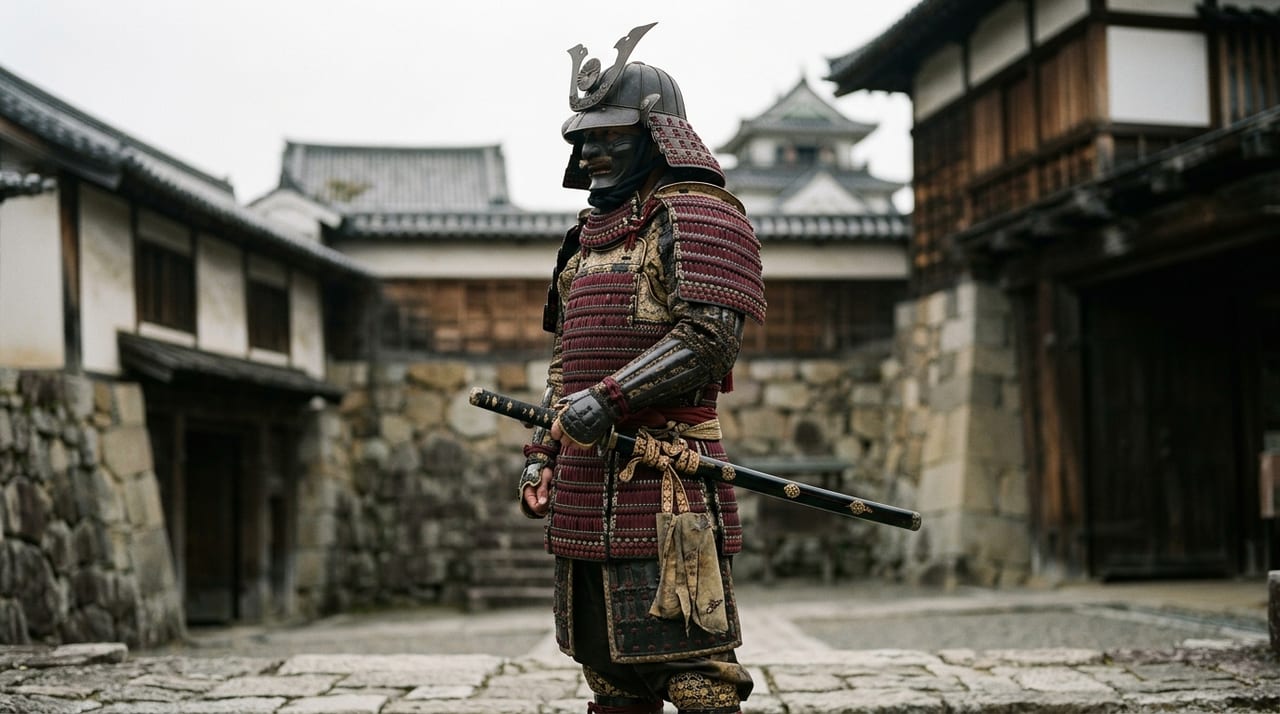
 * Image is for illustrative purposes only.
Shimazu Takahisa
島津貴久
The Sengoku daimyo who unified Satsuma and is credited with the first documented combat use of firearms in Japan
Description
Shimazu Takahisa (1514-1571) was a Sengoku-period daimyo of Satsuma Province. As the eldest son of Shimazu Tadayoshi, head of the Ijuin branch (and later also the Sōshū branch) of the Shimazu clan, he unified Satsuma and transformed the Shimazu into a full-fledged Sengoku power.
Origins and a Contested Succession
Takahisa was born at Kamegajō Castle in Tabuse, Satsuma Province. In 1526, because the head of the main Shimazu line, Shimazu Katsuhisa, had no biological heir, Takahisa was adopted as his successor, formally inheriting the family headship at Kiyomizu Castle in 1527. That same year, however, Katsuhisa reneged on the adoption, and Takahisa was driven from the position of Satsuma shugo.
Struggle with the Sasshū Branch and Consolidation of Power
A protracted conflict followed with the Sasshū branch, which backed Katsuhisa. With his father Tadayoshi's support, Takahisa counterattacked, recapturing Ijuin Castle in 1536, taking Kaseda Castle in 1538-1539, and defeating his rivals at the Battle of Murasakibaru. By 1552 the Ashikaga shogunate and imperial court formally recognized him as shugo.
The First Combat Use of Firearms in Japan
Takahisa is particularly noted for his early adoption of the arquebus. Shortly after firearms were introduced to Japan at Tanegashima in 1543, the Shimazu clan acquired matchlock guns and are recorded as having used them against the Irikiin clan — regarded as among the earliest documented instances of firearms used on a Japanese battlefield.
The Ōsumi Campaigns and Later Years
Between 1554 and 1556, Takahisa waged campaigns against the Gamō clan in western Ōsumi, extending Shimazu influence eastward. In 1566 he retired in favor of his eldest son Yoshihisa, though he is said to have continued exercising real authority as regent. He died in 1571 at Kaseda, aged 58, while conflict with the Kimotsuki clan of Ōsumi was still ongoing.
Legacy
The foundation Takahisa laid became the base from which his sons — Yoshihisa, Yoshihiro, Toshihisa and Iehisa, the "Four Shimazu Brothers" — built the power that nearly unified Kyūshū. He is regarded as the effective founder of the early modern Shimazu clan, and his early adoption of firearms is frequently cited in Sengoku-era military history.