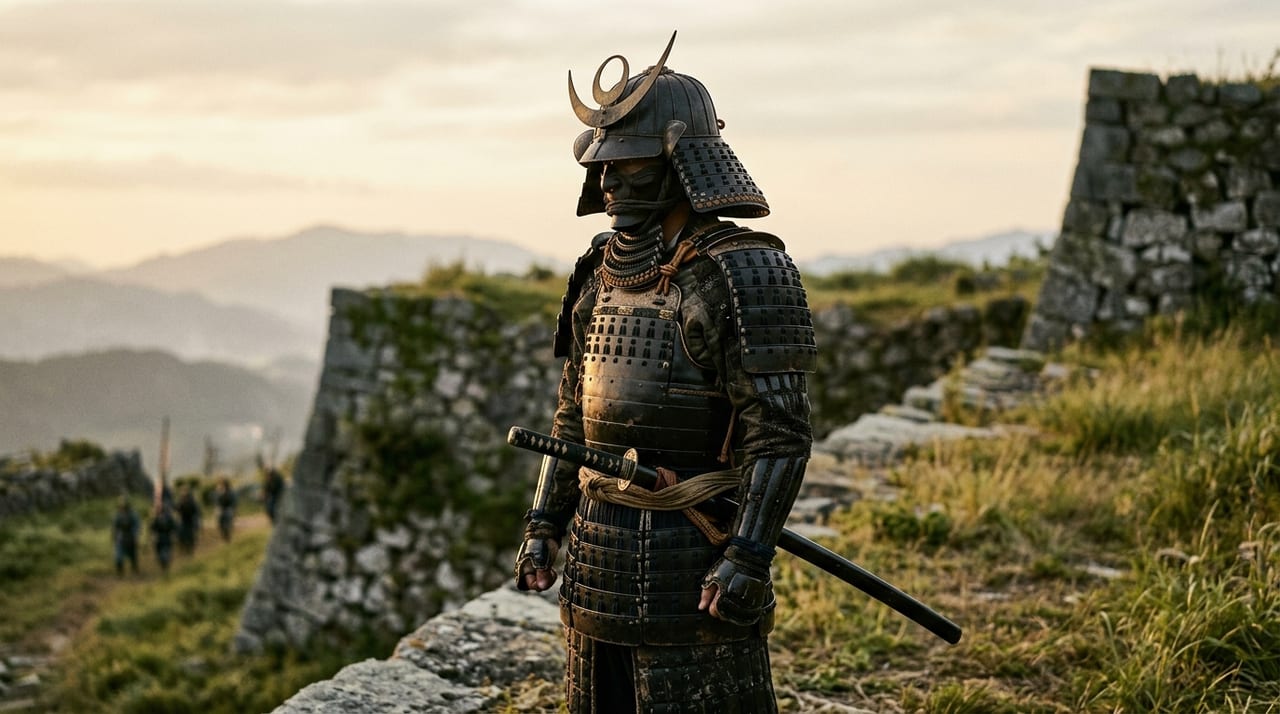
 * Image is for illustrative purposes only.
Sakai Tadatsugu
酒井忠次
Head of the Four Heavenly Kings of Tokugawa — Fierce General Who Supported Tokugawa Ieyasu Throughout His Life as a Model of Mikawa Warriors
Description
Sakai Tadatsugu (1527–1596) was a samurai commander from Mikawa Province (present-day eastern Aichi Prefecture) and one of Tokugawa Ieyasu's most trusted senior retainers. He is known as the foremost of the Four Heavenly Kings of the Tokugawa (Sakai Tadatsugu, Honda Tadakatsu, Sakakibara Yasumasa, and Ii Naomasa), and he supported Ieyasu for many years. A commander of both martial prowess and strategic judgment, he fought in many battles.
Tadatsugu was born in Daiei 7 (1527), the second son of Sakai Tadachika, a hereditary retainer of the Matsudaira clan. He served the Tokugawa family (then the Matsudaira family) from a young age and showed his talent early. In Kōji 2 (1556), he repulsed the forces of Shibata Katsuie, who attacked Ukigai Castle. At the Battle of Anegawa in Genki 1 (1570), he charged into the Asakura army together with the unit of Ogasawara Nobuoki, opening the fighting.
At the Battle of Nagashino in Tenshō 3 (1575), Tadatsugu's successful surprise attack on the Takeda army's Tobigasuyama fort is worthy of special mention, as it decided the course of the battle. In this action he led elite troops in a sudden assault on a key Takeda position, contributing to the decisive victory of the combined Tokugawa and Oda forces in the main battle at Shitaragahara. In Tenshō 16 (1588), Tadatsugu handed the headship of the family to his eldest son, Ietsugu, and retired. Hideyoshi gave him a residence at Sakurai in Kyoto and a stipend of 1,000 koku for residing in Kyoto, and he lived in seclusion there. He died at the age of 70 in Keichō 1 (Bunroku 5, 1596).
In connection with Japanese swords, Tadatsugu is said to have favored an uchigatana by Masazane of the Mikawa Monju school called "Inoshishigiri" (Boar Cutter). It is currently owned by Okazaki City and housed at the Mikawa Bushi no Yakata Ieyasu-kan. The sword is said to have been named because Tadatsugu, who accompanied Ieyasu on a hunt, cut down a boar with it and inscribed "Inoshishigiri" in gold inlay on the tang. It is passed down as a sword that symbolizes the fierce valor of the Mikawa warriors. The sword was handed down through the family of Tadatsugu's seventh son, Matsudaira Jinzaburō. Tadatsugu's favorite sword, which embodies the upright spirit of the Mikawa warriors, is still told of today as a valuable testimony to the bond between Japanese swords and their commanders in the Sengoku period.
Notable Swords
- Inoshishigiri (uchigatana by Masazane; gold inlay reading "Inoshishigiri" on the tang; housed at Mikawa Bushi no Yakata Ieyasu-kan)