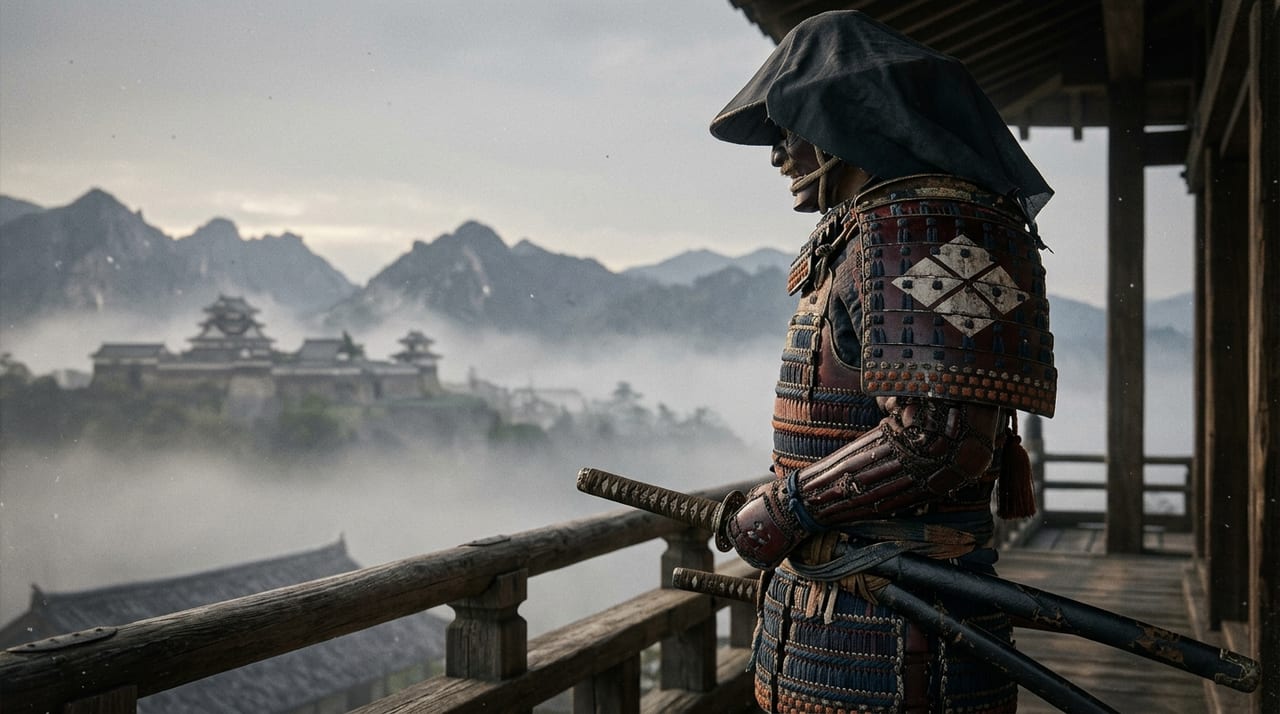
 * Image is for illustrative purposes only.
Obata Kagenori
小幡景憲
Founder of the Kōshū School of Military Science, Embodiment of Takeda Bushido
Description
Obata Kagenori (1572-1663) was a military commander and military scholar who was active from the late Sengoku period into the early Edo period. He is remembered in the history of Japanese military science as the founder of the Kōshū school of military science (Kōshū gungaku). Born the son of Obata Masamori, a former retainer of Takeda Shingen, he systematized the military laws and tactics of the Takeda school and widely taught them to the Edo shogunate and various daimyō.
In Tenshō 10 (1582), shortly before the fall of the Takeda clan, his father Masamori died of illness, and it is said that Kagenori, then 11 years old, was summoned into the service of the Tokugawa in the 12th month of that same year. He then became a page (koshō) to Tokugawa Hidetada, but in Bunroku 4 (1595) he left his post and wandered through various provinces. At the Battle of Sekigahara (1600), he is said to have served under Ii Naomasa and distinguished himself in battle. At the Siege of Osaka, he is said to have ingratiated himself with Ōno Harufusa on the Toyotomi side while secretly communicating with the Tokugawa side. After the war he again served the Tokugawa, and later became a hatamoto with a stipend of 1,500 koku.
The Kōshū school of military science that Kagenori founded was systematized on the basis of Takeda Shingen's tactics, battle formations, and troop-deployment techniques, with the addition of Confucian ethical ideas and the theories of Eastern military strategy. Kagenori is known as an editor (and in some accounts also an author) involved in the compilation of the Kōyō Gunkan, which was widely read by samurai of the Edo period. His disciples included Hōjō Ujinaga (founder of the Hōjō school) and Yamaga Sokō, and he also taught military science to various daimyō.
In connection with the Japanese sword, Kagenori also studied swordsmanship, and in Keichō 12 (1607) he received a certificate of mastery (inka-jō) in the Ittō-ryū from Ono Tadaaki. He died in Kanbun 3 (1663) at the age of 92.
Related Warriors
大久保忠隣
Sengoku to early Edo periodŌkubo Tadachika
The de facto first rōjū who supported Tokugawa Ieyasu — first daimyo of Odawara domain, later stripped of his lands
榊原康政
Sengoku Period to Early Edo PeriodSakakibara Yasumasa
Wise General Among Tokugawa's Four Heavenly Kings — Outstanding Commander Who Supported Ieyasu's Military Strategy and Founded the Tatebayashi Domain
前田利長
Sengoku period through early Edo periodMaeda Toshinaga
Eldest son of Maeda Toshiie who inherited Kaga Hyakumangoku; a wise commander who sided with the Tokugawa at the Battle of Sekigahara
酒井忠次
Sengoku Period to Early Edo PeriodSakai Tadatsugu
Head of the Four Heavenly Kings of Tokugawa — Fierce General Who Supported Tokugawa Ieyasu Throughout His Life as a Model of Mikawa Warriors