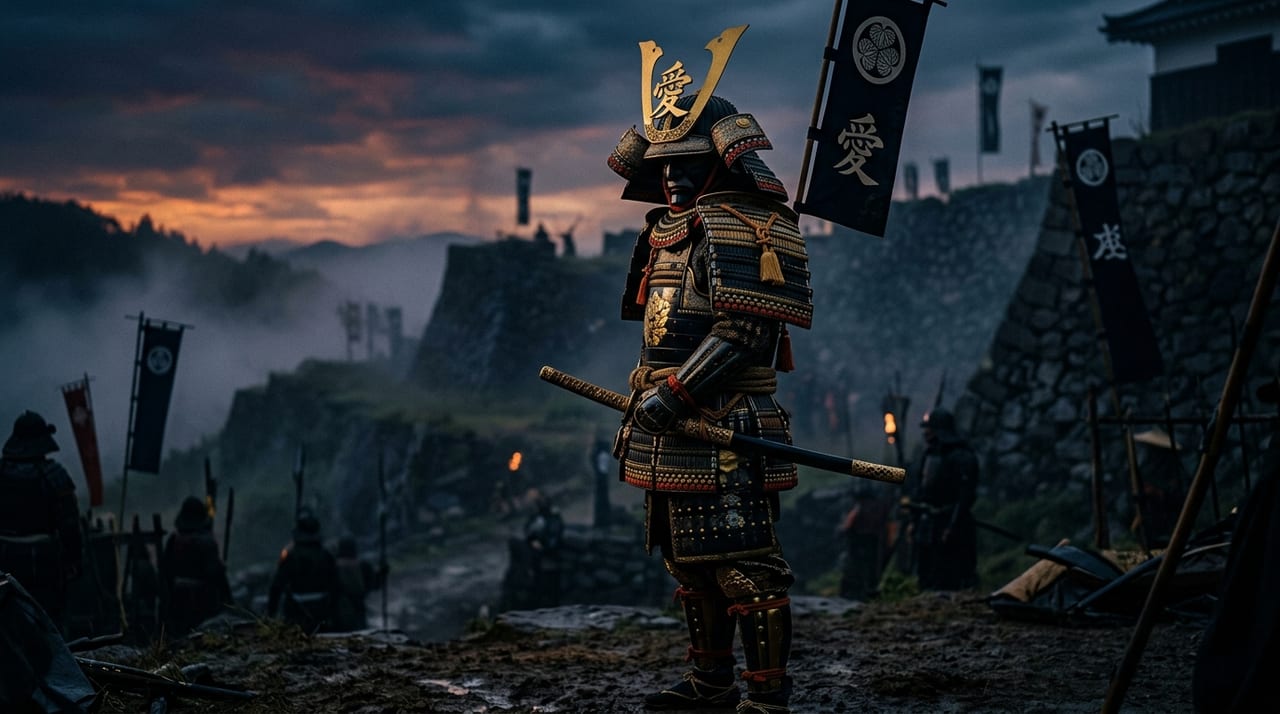
 * Image is for illustrative purposes only.
Saito Yoshitatsu
斎藤義龍
Daimyo of Mino, the Son Who Slew His Father Dosan
Description
Life and Origins
Saito Yoshitatsu was born in Kyōroku 2 (1529) as the eldest son and heir of Saitō Dōsan, a Sengoku-period daimyō of Mino Province. His childhood name was Toyotamaru. After his coming-of-age ceremony (genpuku), he changed his name to Toshihisa and then to Takamasa, and later took the name Yoshitatsu. Because the shogunate recognized him as head of the Isshiki clan, he was also called Isshiki Yoshitatsu.
Rupture with His Father and the Battle of Nagaragawa
Besides Yoshitatsu, Dōsan had other sons, Yoshitatsu's younger brothers, including the second son Magoshirō and the third son Kiheiji. In his later years Dōsan doted on Magoshirō and came to intend to strip Yoshitatsu of his position as heir. Sensing this, Yoshitatsu invited his younger brothers Magoshirō and Kiheiji in Kōji 1 (1555), had them murdered, and rallied the anti-Dōsan faction within the household.
In the 4th month of Kōji 2 (1556), Dōsan and Yoshitatsu finally clashed head-on in open military conflict. In the Battle of Nagaragawa, Yoshitatsu overwhelmed his father with a vastly superior force, and Dōsan was slain on the banks of the Nagara River. The unusual event of a son killing his own father is discussed in contrast with Dōsan himself having embodied gekokujō, and Yoshitatsu too is remembered by later generations as a man who embodied the ruthlessness of the Sengoku age.
Rule of Mino and Opposition to Nobunaga
After killing his father, Yoshitatsu quickly organized the governing system of Mino Province. He employed capable retainers known as the 'Six' (Rokuninshū) and introduced a council of senior retainers. By actively confirming fiefs based on the kandaka system, he sorted out the landholding disputes that had been thrown into confusion by many years of internal strife. The shogunate appointed him Shōbanshū, Jibu-no-taifu and Sakyō-no-daibu, establishing his house's standing as a distinguished family of Mino.
On the other hand, he consistently opposed Oda Nobunaga of neighboring Owari. Yoshitatsu waged a war of intrigue, carrying out inducements and assassinations within enemy territory, and kept Nobunaga from approaching Mino. The fact that Nobunaga could not subjugate Mino during Yoshitatsu's lifetime demonstrates the strength of Yoshitatsu's rule as well as his military ability.
Swords and Armour
Mino Province has been known since ancient times as a sword-producing region under the 'Mino tradition' (Mino-den), and during the period of Yoshitatsu's rule, swordsmiths of Seki were active. Mino-den swords are said to trace their origin to Shizu Saburō Kaneuji and were known for their practical sharpness and sturdiness.
Later Assessment
In the 5th month of Eiroku 4 (1561), Yoshitatsu died suddenly at the young age of 33 as his chronic illness worsened. This early death is said to have given Nobunaga the opportunity to attack Mino. Because he killed his father, he has sometimes been described as an example of 'inga ōhō' (retribution), but in recent research the mainstream view is to fairly assess Yoshitatsu as a capable daimyō who stably governed Mino Province.