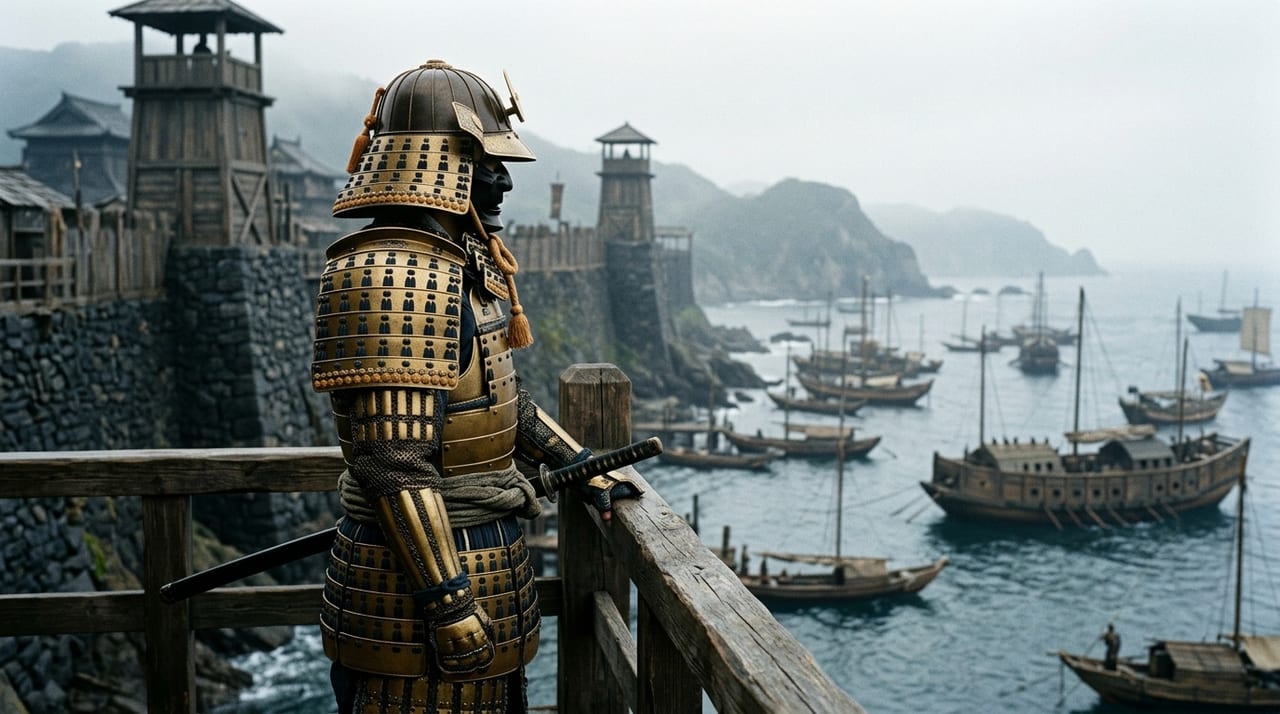
 * Image is for illustrative purposes only.
Kuki Yoshitaka
九鬼嘉隆
Warlord of the Sengoku Navy Who Led the Ironclad Ships: Commander of the Kuki Navy, Also Known as the "Pirate Daimyo"
Description
Sengoku Warlord Who Mastered the Seas
In the 11th year of Tenbun (1542), Kuki Yoshitaka was born in Shima Province (present-day Shima City, Mie Prefecture). He led the Shima Kuki navy and served Oda Nobunaga and Toyotomi Hideyoshi, becoming the strongest naval commander of the Sengoku period. Called a "pirate daimyo" in Edo-period military chronicles, Yoshitaka led naval forces across Ise Bay, the Kumano Sea, and Osaka Bay, and he earned a place in Japanese history as an innovator of naval tactics.
Construction of the Ironclad Ships and the Second Battle of Kizugawaguchi
Yoshitaka's greatest achievement, the one for which he is remembered in history, was the use of ironclad ships in the Second Battle of Kizugawaguchi in the 6th year of Tenshō (1578). After the Oda forces were defeated by the Mōri navy in the First Battle of Kizugawaguchi, Nobunaga ordered Yoshitaka to build, together with Takigawa Kazumasu, large atakebune warships equipped with large-bore guns. They are called "ironclad ships" because their hulls are said to have been covered with iron plates. These ships neutralized the Mōri navy's fire attacks and succeeded in cutting off the supply route to Ishiyama Hongan-ji in Ōsaka. They brought a revolutionary change to naval warfare in the Sengoku period.
Service Under Hideyoshi and the Korean Campaigns
After Nobunaga's death, Yoshitaka served Toyotomi Hideyoshi and was active in naval operations in various regions. In the Bunroku campaign (first Japanese invasion of Korea), which began in 1592, he led the Kuki navy in operations along the Korean coast and played an important role as a naval commander. However, he faced hardships in battles against the Korean navy led by Yi Sun-sin and its turtle ships, and he experienced the difficult side of naval warfare.
The Tragedy of Sekigahara: A Father and Son Divided
In the Battle of Sekigahara in the 5th year of Keichō (1600), Yoshitaka sided with the Western Army (led by Ishida Mitsunari), while his son Moritaka sided with the Eastern Army (led by Tokugawa Ieyasu). After the Eastern Army won, Yoshitaka fled to Tōshi Island, but he took his own life before word arrived that Moritaka had secured a pardon for him. The tragedy of Sekigahara, in which father and son were on opposing sides, became a sad story of the Kuki family that was passed down to later generations.
Naval Commander and Swords
Jōan-ji (Toba, Mie Prefecture), Yoshitaka's family temple, holds items including a short sword said to have been used by Yoshitaka when he took his own life.