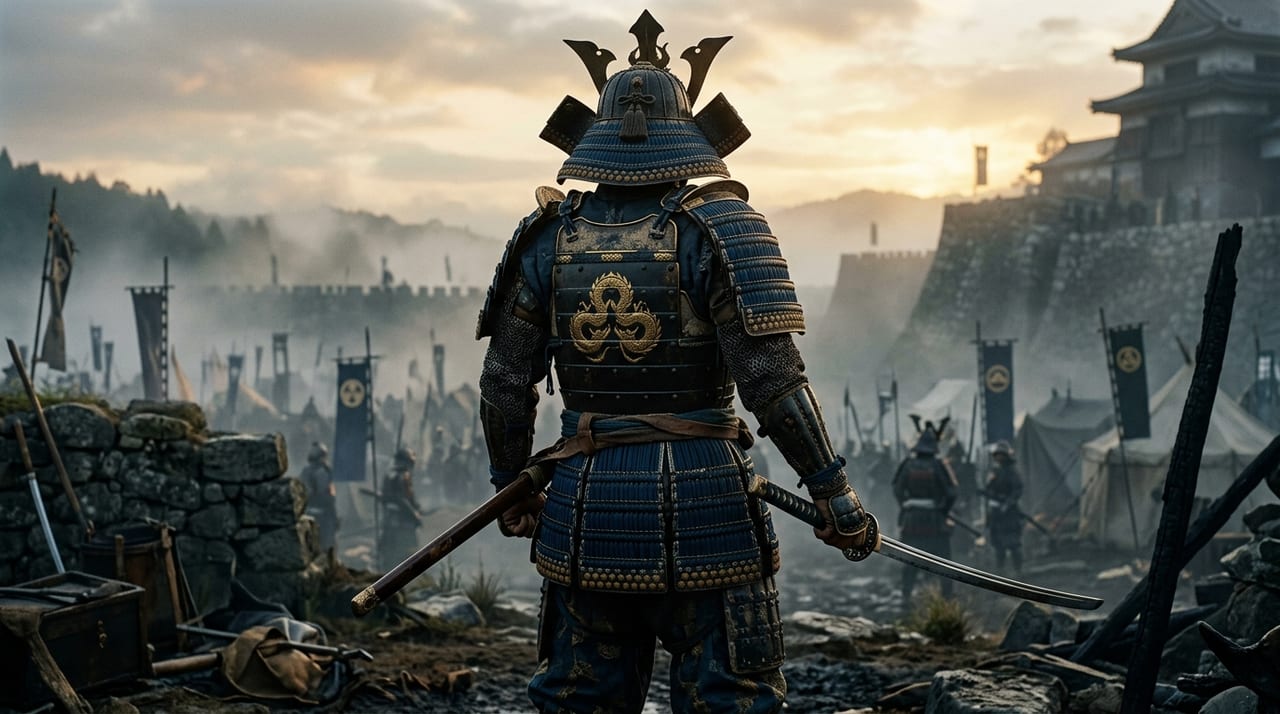
 * Image is for illustrative purposes only.
Kakizaki Kageie
柿崎景家
Vanguard Commander of the Uesugi Army and One of Its Foremost Warriors
Description
Life and Origins
Kakizaki Kageie is said to have been born in 1513 (Eishō 10), the son of Kakizaki Toshiie, a local lord of Echigo Province. He served as lord of Kakizaki Castle and Saruge Castle and was a warrior of exceptional ability even within Echigo Province.
Rise as a Retainer of the Nagao Family
He first served Nagao Tamekage, and after Tamekage's death he served Tamekage's son, Nagao Harukage. When Harukage and his younger brother Nagao Kagetora (later Uesugi Kenshin) contested the family headship, Kageie supported Kagetora, and this choice came to decisively shape his later standing. Under the Kagetora (Kenshin) administration, he was valued as a commander leading a vanguard corps of 300 horsemen, and in 1558 (Eiroku 1) he also served as castle caretaker (rusui-yaku) of Kasugayama Castle during the lord's absence.
Military Exploits at the Battle of Kawanakajima
The Fourth Battle of Kawanakajima in 1561 (Eiroku 4) made Kageie's martial reputation imperishable. As the vanguard of the Uesugi army, he charged at Takeda Shingen's headquarters at Hachimanbara and achieved the great feat of killing Takeda Nobushige, Yamamoto Kansuke, and other senior Takeda retainers, driving the Takeda army to the brink of annihilation. Kenshin is said to have described Kageie as follows: "If Kageie had sound judgment, no one in the seven districts of Echigo could rival him." This remark, together with his valor, speaks to the immense trust Kenshin placed in him.
A Diplomatic Side
Kageie was not merely a fierce warrior. Owing to his high house status, his deep knowledge of ancient customs, and his witty and cultivated learning, he was also entrusted with weighty duties such as receiving envoys from other houses and handling diplomatic protocol. In the early period of Kenshin's administration, as the foremost retainer of the house, he supported the Uesugi family in both military and diplomatic affairs.
Various Accounts of His Death
As for the year of Kageie's death, the historical record states that he died of illness on the 22nd day of the 11th month of Tenshō 2 (1574). Because his heir, Sukeie, had been seriously wounded in the previous year's campaign against Etchū, Haruie, his eldest son, who had been sent as a hostage to Odawara Castle, returned to Echigo and succeeded to the family headship. His grave is at Ryōgon-ji (Kakizaki-ku, Jōetsu City, Niigata Prefecture), where a portrait depicting Kageie and his wife is preserved.
On the other hand, the account that is widely known holds that in the 12th month of Tenshō 3 (1575), Kageie, while on campaign at Mizushima in Etchū, was suspected of colluding with Oda Nobunaga and was executed on Kenshin's orders. This account rests on the Kagekatsu-kō Ichidai Ryakki. It has been passed down to the present day and treated somewhat as established opinion, but it is regarded as a folk tale (zokusetsu). Points raised as doubts about this execution account include the fact that his son Haruie was not implicated in this charge of treachery, and the fact that the Uesugi and Oda houses were not yet at war with each other at that time.
Later Reputation
Counted as one of the Four Heavenly Kings of the Uesugi, Kakizaki Kageie is regarded as one of the fiercest warriors of the Uesugi army, owing to his exploits as vanguard at the Battle of Kawanakajima, and he is still spoken of today as a commander representing the Uesugi army.