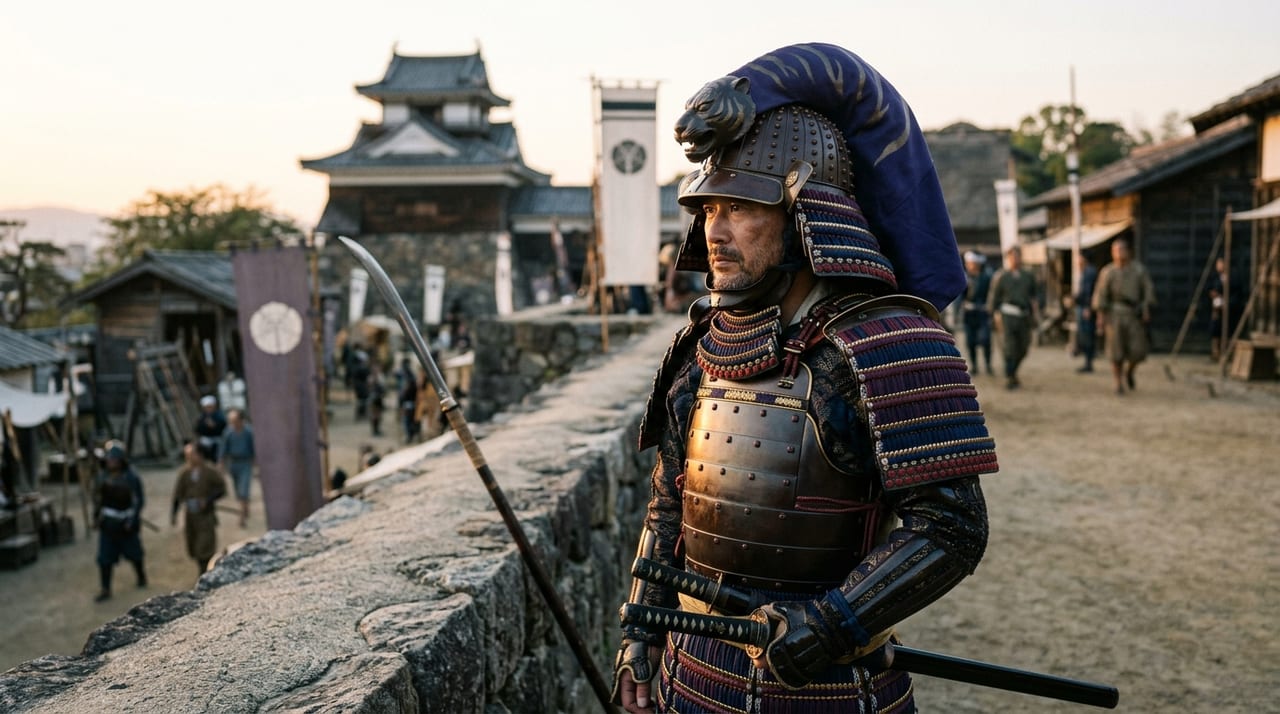
 * Image is for illustrative purposes only.
Hatano Hideharu
波多野秀治
Description
Hatano Hideharu (birth year unknown – 1 July 1579 (Tenshō 7/6/8)) was a Sengoku daimyō of Tanba Province and the last head of the Hatano clan. He succeeded Hatano Motohide (also called Harumichi) and made Yakami Castle (present-day Tamba-Sasayama, Hyōgo Prefecture) his main base.
The Hatano clan supported Hosokawa Harumoto and contended with Miyoshi Nagayoshi. Around Eiroku 2 (1559), Yakami Castle was seized by the Miyoshi side, but in Eiroku 9 (1566), Motohide recaptured it. Hideharu, who succeeded him, became a Sengoku daimyō controlling central Tanba Province. After Oda Nobunaga's entry into Kyoto in Eiroku 11 (1568), he submitted to the Oda clan. Although for a time he was absorbed into Nobunaga's camp, when Akechi Mitsuhide's pacification of Tanba became full-scale in Tenshō 3 (1575), he suddenly raised the banner of revolt the following year, Tenshō 4 (1576). He put up fierce resistance, including repelling Mitsuhide's army's attack on Kuroi Castle, and caused Mitsuhide great trouble.
From Tenshō 6 (1578), Yakami Castle came under a large-scale siege by Mitsuhide's army, and Hideharu held out for about a year and a half, even amid shortages of provisions. But in the 6th month of Tenshō 7 (1579), betrayal by his own side led to his capture, together with his brothers Hatano Hidenao and Hatano Hidetaka, and he was sent to Azuchi. Nobunaga had the three brothers crucified at Azuchi (the edge of the Jion-ji quarter) on the 8th day of the 6th month. Hideharu's death poem is recorded as 'Yowarikeru / kokoro no yami ni / mayowaneba / ide mono misen / nochi no yo ni koso,' which translates as 'Since I do not stray in the darkness of a faltering heart, I shall show what I am made of in the world to come.'
When the remaining troops of Yakami Castle learned of this execution, they are said to have crucified Mitsuhide's mother (or, by some accounts, his aunt). It is also handed down that this treatment deepened Mitsuhide's resentment toward Nobunaga and was a remote cause of the Honnō-ji Incident of Tenshō 10 (1582).
Related Warriors
板垣信方
Sengoku PeriodItagaki Nobukata
One of Takeda's Twenty-Four Generals, Trusted Right-Hand of Shingen Who Led the Conquest of Shinano
寿桂尼
Sengoku PeriodJukei-ni
Principal Wife of Imagawa Ujichika and the 'Ama-midai,' the 'Female Sengoku Daimyo' Who Assisted Imagawa Governance Across Four Generations
お市の方
Sengoku PeriodOichi no Kata
Younger Sister of Oda Nobunaga, Renowned as the Greatest Beauty of the Sengoku Era, Who Experienced the Fall of Two Castles
武田義信
Sengoku PeriodTakeda Yoshinobu
Heir of Takeda Shingen, the Disinherited Tragic Successor