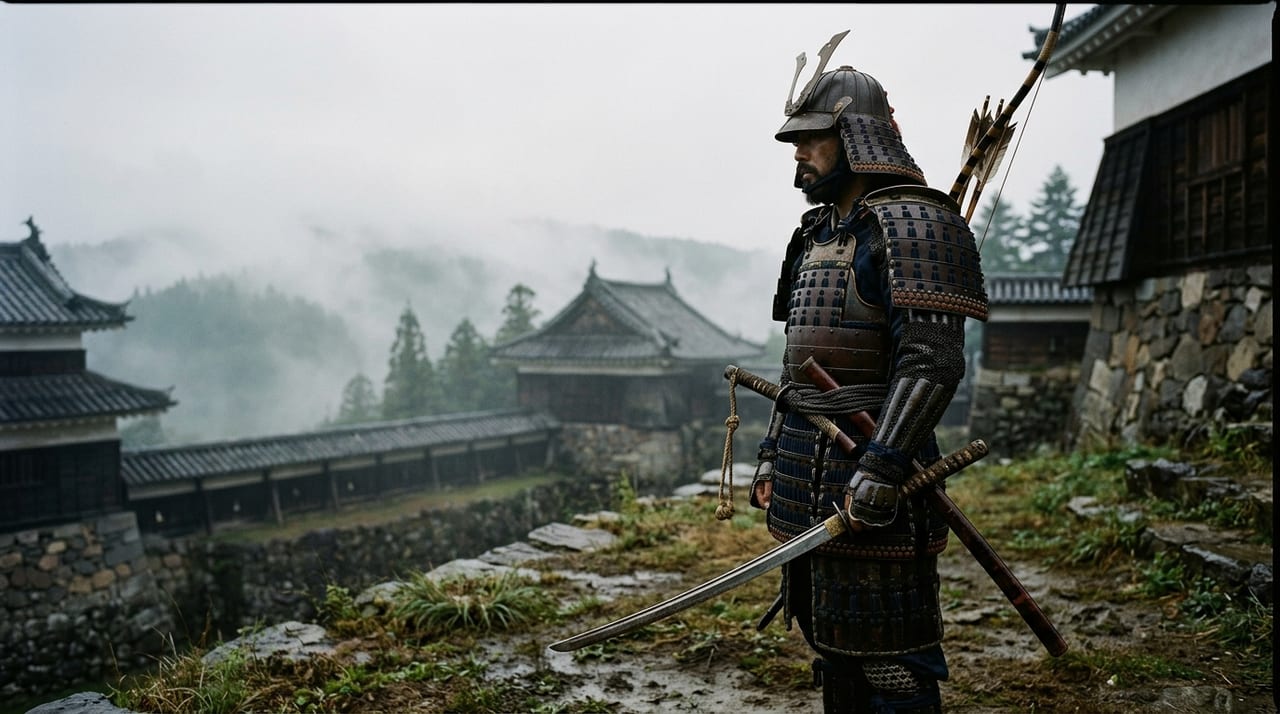
 * Image is for illustrative purposes only.
Amakasu Kagemochi
甘粕景持
One of the Four Heavenly Kings of Uesugi Who Held the Rearguard at Kawanakajima
Description
Life and Origins
Amakasu Kagemochi is said to have been born in Kyōroku 2 (1529) into the family that held Masugata Castle in Iizuka, Echigo Province. The family is said to descend from the Nitta line of the Kawachi Genji, which descends from Minamoto no Yoshikuni. Kagemochi was a senior retainer of Uesugi Kenshin, entrusted with governing several castles.
Exploits at the Battle of Kawanakajima
What established Kagemochi's martial reputation was the Fourth Battle of Kawanakajima in Eiroku 4 (1561). In the Uesugi army, which is said to have seen through the “woodpecker” (kitsutsuki) strategy devised by Yamamoto Kansuke, Kagemochi led over a thousand troops separately from the Uesugi main force that crossed the Chikuma River, to guard against the Takeda detached force. On the morning of the battle, the 10th day of the 9th month, he is said to have used a small force to hold back the Takeda detached force of 12,000, which was rushing toward Hachimanbara, at the Chikuma River and buy time. The Kōyō Gunkan records that many on the Takeda side mistook Kagemochi's small Amakasu unit for Kenshin's main force, and it emphasizes the fierceness of his fighting.
Services as Rearguard
Late in the battle, when the Uesugi army withdrew, Kagemochi served as rearguard (shingari) and secured the retreat route for the entire army. According to the Kōyō Gunkan, he then crossed the Sai River, remained on the opposite bank for three days to gather the soldiers who had fled in defeat, and only then returned to camp. Kagemochi fought fiercely even after his helmet crest was shot down in this battle. He is said to have received a golden sickle helmet crest from Kenshin after the battle, together with a letter of commendation.
After the Otate Disturbance
When Kenshin died in Tenshō 6 (1578), the Otate Disturbance broke out over the succession. Kagemochi sided with Uesugi Kagekatsu and contributed to his victory. In Tenshō 10 (1582) he became castellan of Sanjō Castle. Under Kagekatsu's government he continued to play a key role in military affairs. In the campaign against Shibata Shigeie, who rebelled against Kagekatsu over rewards, he bore the heavy responsibility of guarding the logistics base for the siege of the castle.
Later Years
Kagemochi followed Kagekatsu's transfer to Aizu in Keichō 3 (1598) and his transfer to Yonezawa in Keichō 6 (1601), after the Battle of Sekigahara. His final stipend is said to have been 1,100 koku. He died on July 22, 1604 (Keichō 9/6/26) at the age of 76.
Relationship with Swords
In Eiroku 2 (1559), when Nagao Kagetora (Uesugi Kenshin) returned from a trip to the capital, the Echigo lords presented him with swords. Kagemochi, as one of the “Hirō-tachi no shū” (lords presenting swords), presented a tachi with gold-rimmed (kinpukurin) mountings.
Posthumous Reputation
Counted among the Four Heavenly Kings of the Uesugi, Amakasu Kagemochi is highly regarded for his rearguard achievements at the Battle of Kawanakajima. He is valued as a warrior who combined the wisdom and resolve to deceive a large army with a small force.