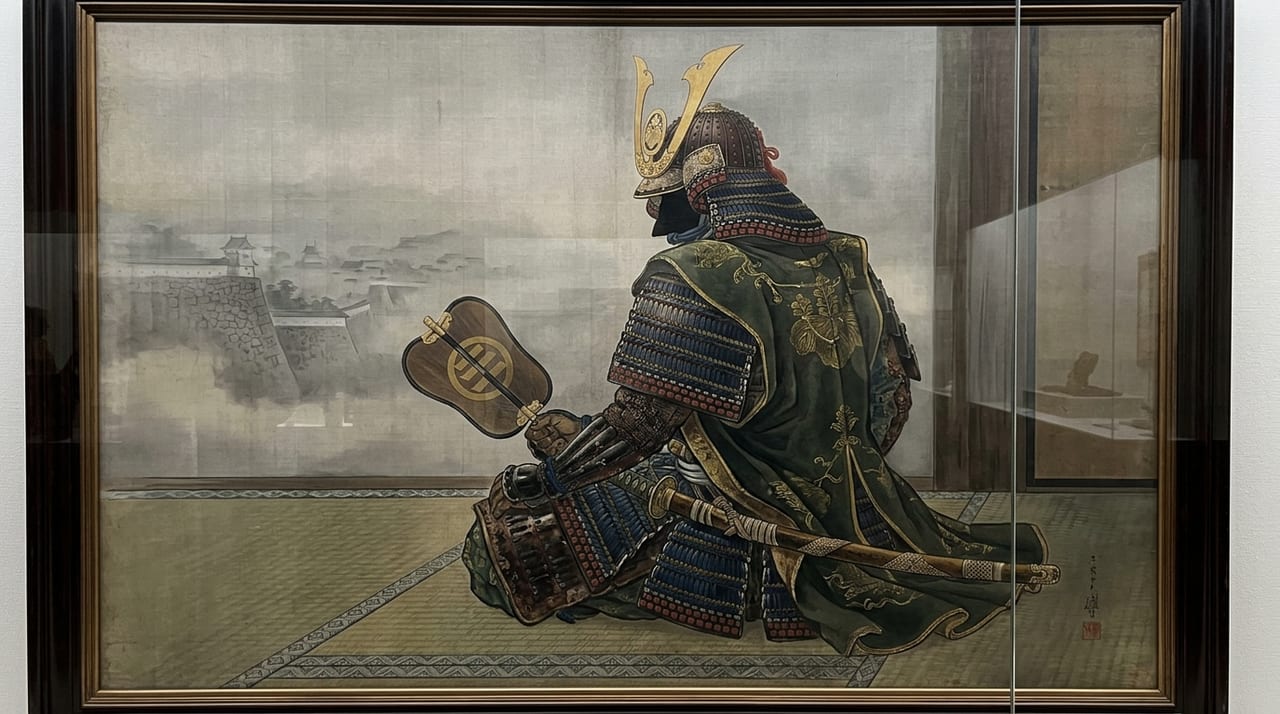
 * Image is for illustrative purposes only.
Akechi Hidemitsu
明智秀満
Son-in-law of Akechi Mitsuhide, Keeper of Fukuchiyama Castle in Tanba
Description
Akechi Hidemitsu (birth year unknown (possibly Tenbun 5, 1536); died on the night of Tenshō 10/6/14 (July 3, 1582)) was a Sengoku-period warrior who served Akechi Mitsuhide. His common name was Samanosuke. He is said to have initially gone by the name Miyake Yaheiji. Several traditions exist regarding his origins: one holds that he came from the Miyake clan, while another, recorded in the Akechi Gunki, holds that he was the son of Akechi Mitsuyasu, Mitsuhide's uncle, and thus Mitsuhide's cousin. The matter has not been settled. However, it is recorded that after Tenshō 6 (1578) he took one of Mitsuhide's daughters as his wife, and that he ranked among the senior retainers as Mitsuhide's son-in-law is considered certain.
As Castle Keeper (jōdai) of Fukuchiyama
In Tenshō 9 (1581) he was entrusted with Fukuchiyama Castle in Tanba Province and is said to have remained there until Tenshō 10. He was treated as the closest of Mitsuhide's close confidants and was counted among the five senior retainers of the Akechi.
The Battle of Yamazaki and the End of Sakamoto Castle
Hidemitsu took part in the Honnō-ji Incident of June 21, 1582 (Tenshō 10/6/2). At the time he was in charge of guarding Azuchi Castle. However, when he learned that Mitsuhide had been defeated by Hashiba Hideyoshi in the Battle of Yamazaki on July 2 (Tenshō 10/6/13), he left Azuchi before dawn the next day (the 14th) and headed for Sakamoto Castle. That same night, Hidemitsu killed Mitsuhide's wife and children as well as his own wife, then took his own life, and Sakamoto Castle fell (according to the Kawasumi Taikōki). It is said that at this time he packed up the celebrated treasures kept in the castle (such as the sword by Kuniyuki, the wakizashi by Yoshimitsu, and the calligraphy by the Chinese monk Kidō (Xutang)) so they would not be lost to the flames of war, attached an inventory, and sent them to Hori Naomasa, a member of the Hori Hidemasa family who was surrounding Sakamoto Castle. This act of protecting his lord's treasures to the very end conveys a portrait of Hidemitsu that goes beyond that of a mere commander of a defeated army.
The Legend of the “Lake Crossing”
As Hidemitsu fled from Azuchi to Sakamoto, he is said to have crossed Lake Biwa on horseback, and the anecdote of “Akechi Samanosuke's Lake Crossing” is widely known. However, its earliest appearance is in the Kawasumi Taikōki, which was compiled in later times, and there is no historical evidence to support it. It is thought that what actually happened was that he galloped along the road between the town of Ōtsu and the lakeshore, and that this was embellished later.
Alternate Names and Identification of the Figure
Hidemitsu is attested in contemporary sources, for example through the signature “Akechi Yaheiji Hidemitsu.” In military chronicles of the Edo period, such as the Akechi Gunki, however, he is also referred to by the alternate names Mitsuharu, Mitsutō, Mitsutoshi and Mitsumasa. The anecdotes of the warrior “Akechi Mitsuharu,” who followed Mitsuhide to his death at Sakamoto Castle, are for the most part treated by historians as referring to the same person as Hidemitsu.
Notable Swords
- A sword by Kuniyuki, a wakizashi by Yoshimitsu, and calligraphy by the monk Kidō (famed treasures Mitsuhide left in Sakamoto Castle—not Hidemitsu's own blades but heirlooms of his lord's house. Tradition holds that as the castle fell, Hidemitsu, loath to see them burn, had them packed with an inventory and handed over to Hori Naomasa, a kinsman of Hori Hidemasa, on Hideyoshi's side)