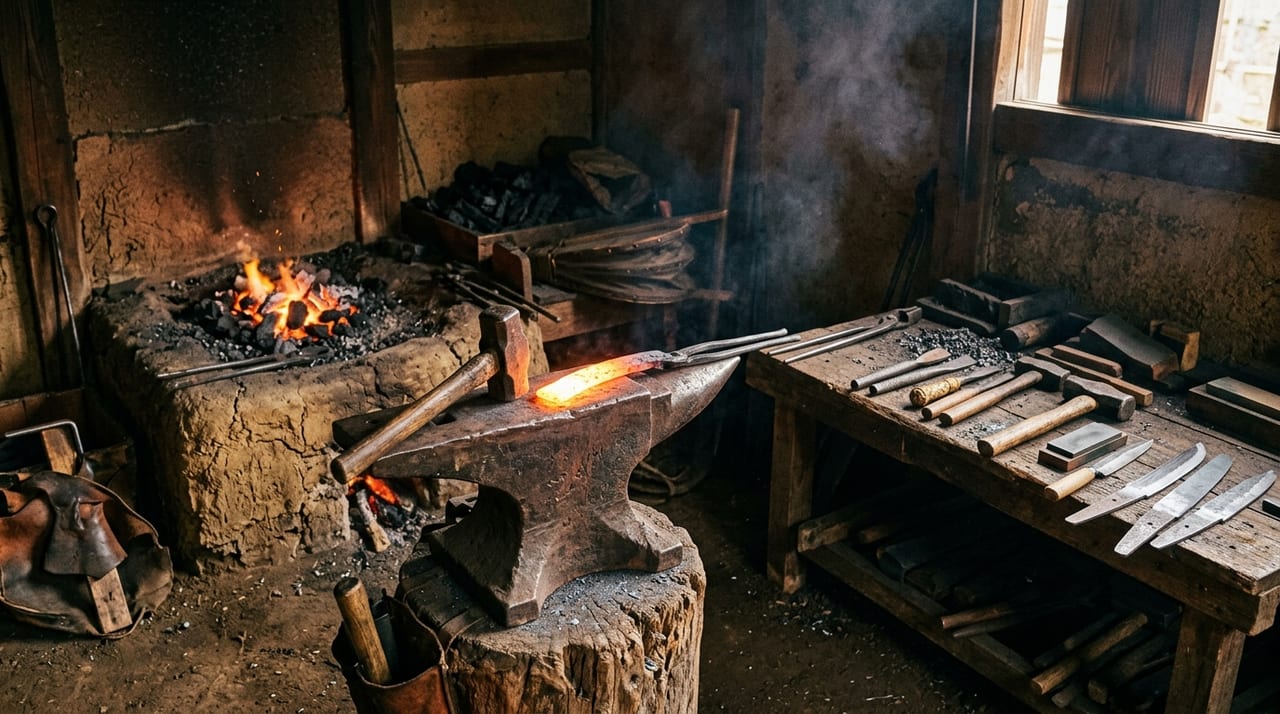
 * Image is for illustrative purposes only.
Hasebe Kuninobu
長谷部国信
Description
Leading smith of the Hasebe school
Hasebe Kuninobu was a Yamashiro swordsmith active in Kyoto during the Nanbokuchō period and a representative figure of the Hasebe school. With Hasebe Kunishige — famed for the "Heshikiri Hasebe" — at the center of the lineage, Kuninobu is said to have been Kunishige's younger brother (or a senior disciple of the school), and he is described, alongside Kunishige, as one of the twin pillars of the Hasebe school.
Style
Kuninobu's work is distinguished by combining the brilliance of the Sōshū tradition with the refinement of Yamashiro. The hamon is fundamentally hitatsura, with active tobiyaki and yubashiri throughout the blade producing a profound, mysterious scene as if flames were rising. He is highly valued for developing a Sōshū-influenced idiom, under the influence of the Masamune Jittetsu, atop the refinement of Kyoto jigane.
Surviving works and designations
Among Kuninobu's signed works is the wakizashi "Atsuta Kuninobu," transmitted at Atsuta Shrine and designated an Important Cultural Property. He is also known as the maker of the tachi "Karakashiwa" (Important Art Object), handed down in the Uesugi family, and signed works survive at the Tokyo National Museum and elsewhere. As a master of hitatsura, he is a smith who embodies the idiom of the Hasebe school.
Famous Works
- Atsuta Kuninobu (Important Cultural Property, Atsuta Shrine)
- Karakashiwa (Uesugi family heirloom, Important Art Object)