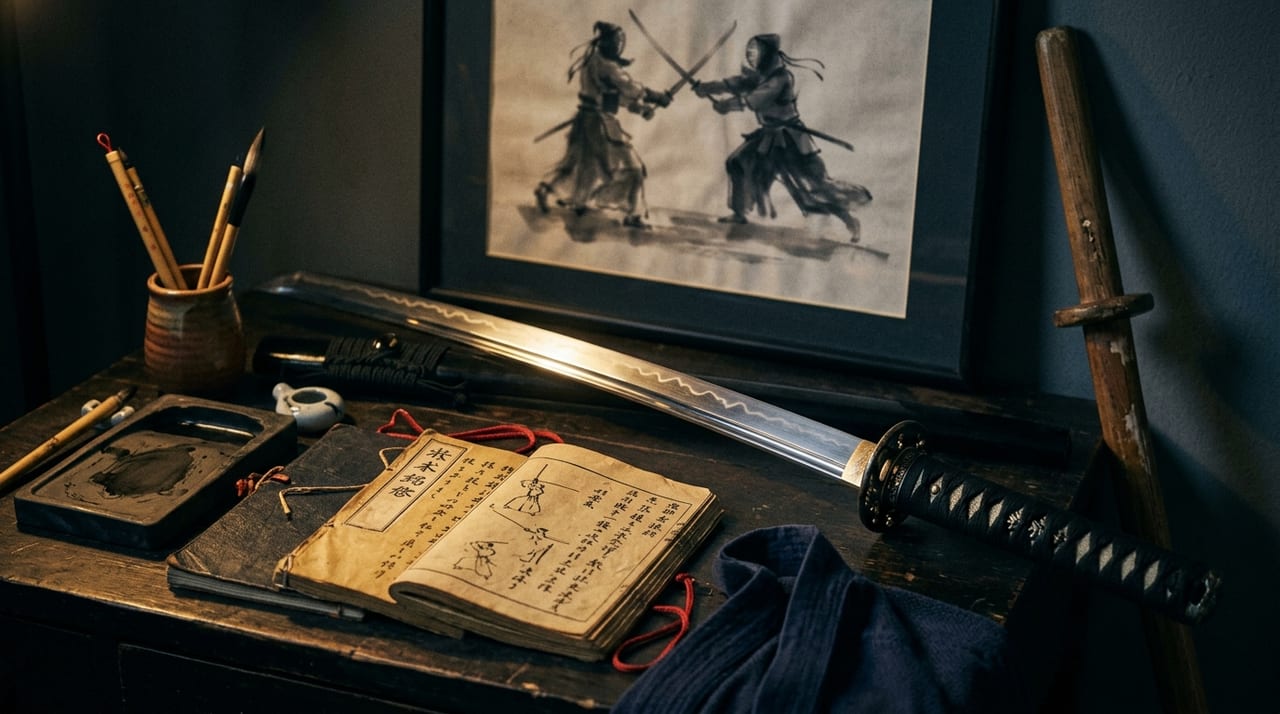
 * Image is for illustrative purposes only.
YAIBA
Gosho Aoyama's masterpiece of sword-action gag manga, serialized from 1988 and winner of the Shogakukan Manga Award. The protagonist, Yaiba Kurogane, is raised by his samurai father and fights his archenemy Takeshi Onimaru, who was turned into an oni by the sword's magic, along with various other strong opponents. Depicting the appeal of Japanese swords and the spirit of kendo and kenjutsu in a bright, youth-oriented style, it fostered a longing for swords in many children.
Description
Gosho Aoyama and His Love of Swords
YAIBA is a sword-action gag manga that Gosho Aoyama, who would later gain worldwide fame with "Detective Conan," serialized in Weekly Shōnen Sunday from 1988 to 1993. The protagonist, Yaiba Kurogane, was raised by his samurai father, Kenjūrō Kurogane, and is an unconventional young swordsman who grew up in the jungle almost like a wild man. After he bursts out into the big city, he clashes with various strong opponents to test his rugged swordsmanship. This work won the Shogakukan Manga Award (38th Children's Division), and its achievement in conveying the appeal of Japanese swords and kendo to the children of its time is extremely great.
The Appearance of Miyamoto Musashi: A Link to the Sword Saint
One of the greatest attractions of this work is that Miyamoto Musashi appears as an important character in the story. Musashi himself, who has survived for many long years, appears and trains the protagonist Yaiba. Although it is a manga for young readers, it functioned as a gateway to Japan's swordsman culture and the legends of the sword saint. Through this work, core episodes of the history of Japanese swordsmanship reached many children, including Musashi's two-sword style, the philosophy of "The Book of Five Rings (Gorin no Sho)," and the duel at Ganryūjima.
The Spirit of Kendo and Boys' Manga
The philosophy underlying YAIBA is the spirit of kendo: courtesy, fair play, and single-minded training. The process by which Yaiba grows as he fights various enemies overlaps with the kendo training experiences of "accumulating dan ranks" and "learning from stronger opponents." Gosho Aoyama himself continued kendo from fourth grade of elementary school through second year of high school, and it is said that this influence appears in his works, such as sword-master characters appearing in them.
Discovering the "Coolness" of Japanese Swords
The most important message YAIBA conveyed to children is the pure "coolness" of Japanese swords. Beyond historical and cultural context, this work used the direct expression of boys' manga to convey the visual appeal of drawing a sword, the single flash of a slash, and the moment light runs along the blade. For many readers it was their first experience and a gateway to Japanese swords. The development in which Yaiba successively obtains legendary swords, the Raijin Sword, Fūjin Sword, Ryūjin Sword, and Haō Sword, also fostered interest in the swords themselves.
Continuity with Conan: The Sword Culture of Aoyama's World
In Gosho Aoyama's flagship work "Detective Conan" as well, episodes involving kendo and swords appear. It can be confirmed that the attachment to swords nurtured in YAIBA has continued to reach readers through his later works. In the OVA "Detective Conan: Conan vs. Kid vs. Yaiba – The Great Battle for the Treasured Sword," characters from both works appear together.
Real Swords Featured
Uchigatana of the Young Swordsman
The Japanese sword used by the protagonist of YAIBA, Yaiba Kurogane, widely conveyed the standard form of the Japanese uchigatana through the medium of boys' manga. The blade length of an uchigatana (2 shaku 3–4 sun, about 70–75 cm), its hilt gripped with both hands, and the style of wearing it sheathed at the waist were the basic equipment of samurai from the Edo period onward. It is also the prototype of the shinai used in modern kendo.
Miyamoto Musashi's Two Swords (Long Sword and Short Sword)
The two-sword style of Miyamoto Musashi that appears in YAIBA originates from the Niten Ichi-ryū established by the historical Miyamoto Musashi. Musashi's stance of holding the long sword (uchigatana) and short sword (wakizashi) at the same time is one of the most famous styles in the history of swordsmanship. In modern kendo, the two-sword stance is also a formally recognized stance.
This page is intended to introduce Japanese sword culture and is not affiliated with any of the works mentioned.