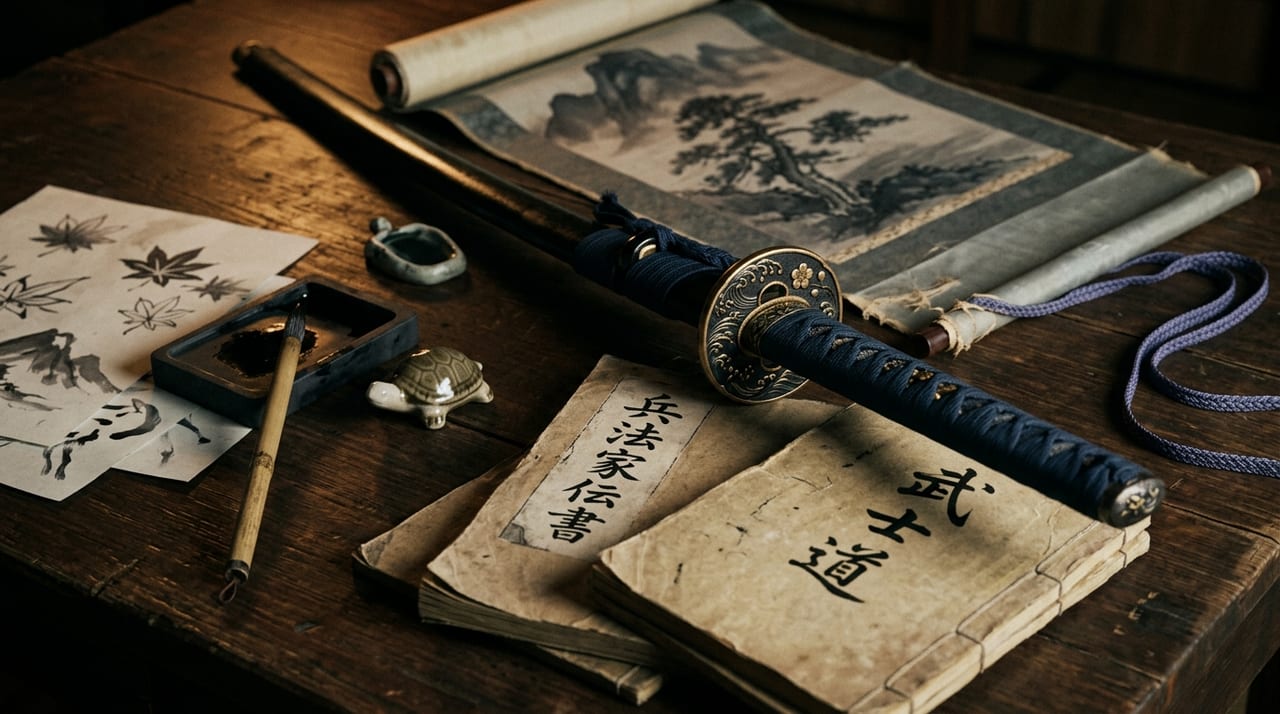
 * Image is for illustrative purposes only.
The Yagyū Conspiracy
柳生一族の陰謀
A 1978 jidaigeki film directed by Kinji Fukasaku, depicting the power struggle over the Tokugawa shogunate's third successor and the conspiracy of the Yagyū clan — sword masters to the shogun. Featuring stunning sword action by Shin'ichi Chiba.
Description
Overview of the Work
"The Yagyū Conspiracy" is a grand period film produced by Toei in 1978 and directed by Kinji Fukasaku. It is a historical fiction in which the Yagyū family, sword instructors to the shogun's household, deeply intervenes in the power struggle within the shogunate, centered on the succession dispute between the third shogun, Tokugawa Iemitsu, and his younger brother Tadanaga. Kinnosuke Yorozuya plays Yagyū Tajima-no-kami Munenori, and Sonny Chiba plays Yagyū Jūbei. Its sword action scenes were highly praised as the finest sword choreography of the era. The film featured an all-star cast from Toei, including Hiroki Matsukata and Mikio Narita, and it was also a major box-office success.
The Real Yagyū Shinkage-ryū and Its Screen Adaptation
The Yagyū family was a real and renowned family of swordsmen. Yagyū Munenori, the successor of the Shinkage-ryū, served three generations of shoguns, Tokugawa Ieyasu, Hidetada, and Iemitsu, in the early Edo period, and he served as martial arts instructor to Hidetada and Iemitsu. The Shinkage-ryū is known for mutō-dori, the technique of seizing an opponent's sword with bare hands, and for the philosophy of katsujinken, which applies the principles of the sword to the conduct of human life and politics. It developed as a spiritual system that went beyond mere combat technique. This film builds a bold fiction around this historical Yagyū family and depicts the dark side of an era in which swordsmanship was inseparably tied to power.
Sonny Chiba's Action and the Japanese Sword
Sonny Chiba's sword fighting in this film embodied the pinnacle of Japanese period-film swordplay of its time in speed, precision, and stylized beauty. As a cinematic rendering of Shinkage-ryū techniques, the deflection of blows, body movement, and the sharpness of a single strike are expressed as refined action, allowing audiences to appreciate the "aesthetics of technique" in Japanese sword combat. It had a major influence on later sword-fighting action films.
The Intersection of Swordsmanship and Politics
The central theme of "The Yagyū Conspiracy" is the question of whether the sword can become a tool of power. The position of sword instructor to the shogun's household required not only skill with the blade but also an integrated form of power that combined intelligence gathering, personal networks, and the capacity for intrigue. This setting is grounded in the historical fact that the real Yagyū Munenori concurrently served as ōmetsuke (shogunal inspector), which gives historical realism to the theme of the dual nature of swordsman and statesman.
Series Development and Influence on Later Works
Thanks to the film's success, many works about the Yagyū family were produced afterward. These include the television drama "The Yagyū Conspiracy" (1978–79), Yagyū Abare Tabi, and the film Makai Tenshō, which also starars Sonny Chiba, and the Yagyū brand became an important pillar of period drama in the 1980s. Fukasaku's directing style also had broad influence on later period and action films, and this film is positioned in film history as one of its representative achievements.
Real Swords Featured
Wooden swords and fukuro-shinai of the Yagyū Shinkage-ryū
In Shinkage-ryū training, the Yagyū used not only wooden swords but also a practice implement called fukuro-shinai, made of split bamboo wrapped in a leather bag. It is said to have been devised by Kamiizumi Nobutsuna. Because it allowed committed strikes with little risk of serious injury, it was a safe tool for training. This concept of practical training with a tool close to the real form is an important precursor to the lineage that developed into the modern kendo shinai, and it demonstrates the progressive nature of the Yagyū family's swordsmanship.
Daimyō swords of the early Edo period (Masamune and Gō Yoshihiro copies)
In the early Edo period, when Yagyū Munenori served as the shogun's martial arts instructor, the highest-ranking swords were works by the master smiths of the Kamakura and Nanboku-chō periods, Masamune and Gō Yoshihiro, or excellent copies (imitations) of them. These were prized as symbols of samurai honor.
See authentic Japanese swords
See authentic Japanese swordsThis page is intended to introduce Japanese sword culture and is not affiliated with any of the works mentioned.