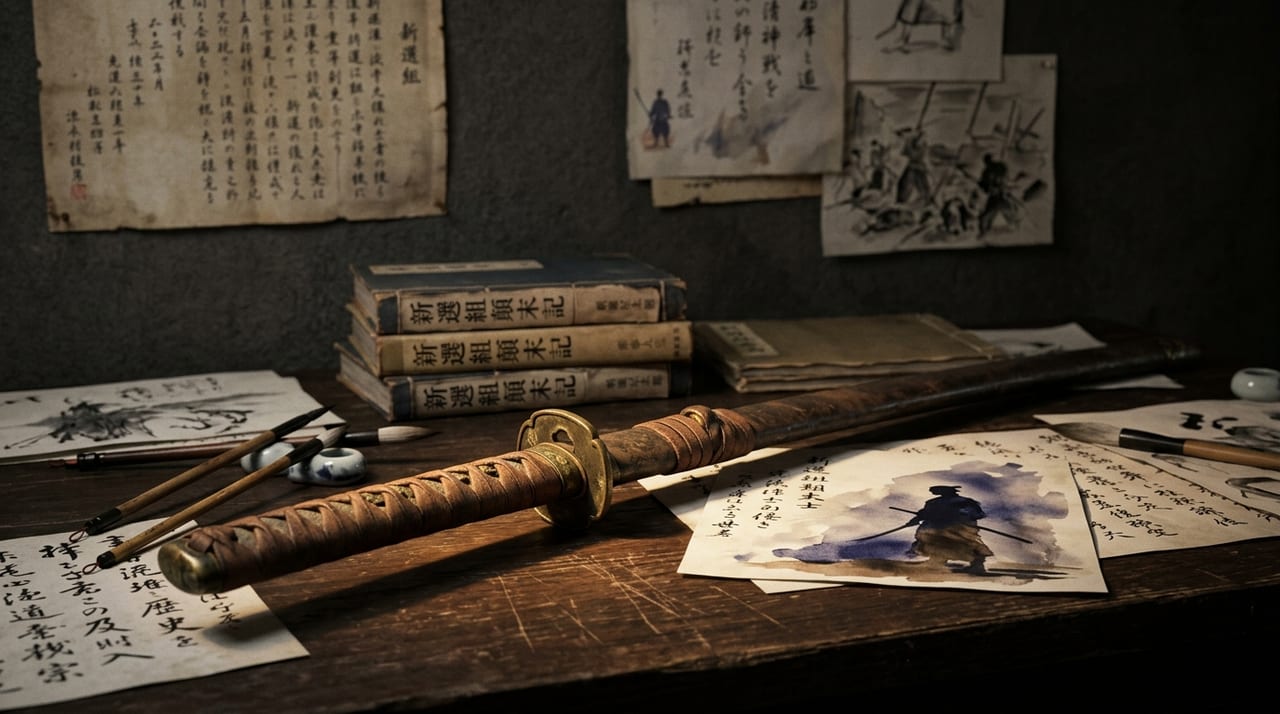
 * Image is for illustrative purposes only.
Taiga Drama: Takeda Shingen (NHK, 1988)
大河ドラマ 武田信玄
The 26th NHK Taiga Drama, based on the novel by Jiro Nitta, aired in 1988 and starred Kiichi Nakai as Takeda Shingen, depicting the Sengoku-era warlord's life and the Battles of Kawanakajima. Its peak rating of 49.2% remains among the highest in the genre's history.
Description
Overview
"Takeda Shingen" is the 26th NHK Taiga Drama, broadcast throughout 1988. Based on the novel by Jiro Nitta, it starred Kiichi Nakai in his first Taiga Drama role as the titular Sengoku-period warlord. The series recorded a peak rating of 49.2% and an average of 39.2%, making it one of the highest-rated Taiga Dramas in the genre's history.
Story and the Role of the Sword
The drama follows Takeda Shingen, who flew the banner "Furinkazan," from his succession after exiling his father Nobutora, through his rise as a Sengoku-period warlord of Kai Province. The rivalry with Uesugi Kenshin, culminating in the Battles of Kawanakajima, is the series' central highlight, remembered for its dramatic single-combat clash between the two commanders. Sword and spear combat in the battle scenes are essential to sustaining the drama's tension.
Swords Featured (Fictional vs. Real)
Takeda Shingen's historically documented favored sword, the Sosa Samonji (also known as Yoshimoto Samonji), is a real, extant blade. Originally owned by Miyoshi Masanaga, it was given to the Takeda clan as a wedding gift when Shingen married his second wife, Lady Sanjo, and later passed through the hands of Imagawa Yoshimoto, Oda Nobunaga, Toyotomi Hideyoshi, and Tokugawa Ieyasu. While the props used on screen are dramatizations, the sword that inspired them is a historically verified artifact.
Cultural Impact and Reception
Alongside its record ratings, the drama is praised for the performances of Nakai and co-star Kyohei Shibata, and for its grand depiction of the Battle of Kawanakajima, cementing its place as one of the definitive Sengoku-period Taiga Dramas.
Related Media
The series was released on DVD box sets by NHK Enterprises and remains a landmark work of Sengoku-era period drama.
Real Swords Featured
Sosa Samonji (Yoshimoto Samonji)
A real, historically documented blade said to have been Takeda Shingen's favored sword. It passed from Miyoshi Masanaga to the Takeda clan (as a wedding gift for Shingen and Lady Sanjo), then to Imagawa Yoshimoto, Oda Nobunaga, Toyotomi Hideyoshi, and Tokugawa Ieyasu.
See authentic Japanese swords
See authentic Japanese swordsRelated Content
Nobunaga's Ambition
Game信長の野望
Japan's longest-running historical simulation game series by Koei Tecmo (1983–). Players control Sengoku warlords including Oda Nobunaga in a quest for national unification. The series systematically parameterizes warriors' swords and equipment, providing one of the most comprehensive frameworks for learning about Japanese sword history, distribution, and connections to historical figures.
Seven Samurai
Film七人の侍
Akira Kurosawa's timeless masterpiece that introduced the world to Sengoku-era warriors and swords, influencing all subsequent action cinema.
Legend & Butterfly (Film, 2023)
Filmレジェンド&バタフライ(映画・2023年)
Toei 70th Anniversary commemorative work (directed by Otomo Keishi, screenplay Furusawa Yoshita, released January 2023). Kimura Takuya portrays Oda Nobunaga and Ayase Haruka portrays his primary consort Nōhime (Kicho), depicting the unknown bond between Nobunaga and Nōhime. A large-scale historical film with a total production cost of 2 billion yen and cumulative attendance exceeding 1.8 million. Rooted in the historically documented famous swords of Nobunaga — Sozan Samonji (Yoshimoto Samonji) and Heshikiri Hasebe — this is an important work from the perspective of sword culture, in which Nobunaga's sword aesthetics under the banner of 'Tenka Fubu' (Rule the Realm Through Arms) intersect with Nōhime's strength.
Blue Exorcist
Anime and Manga青の祓魔師
A shonen manga where exorcists who banish demons battle with swords. The protagonist's holy sword is central to the story.
This page is intended to introduce Japanese sword culture and is not affiliated with any of the works mentioned.