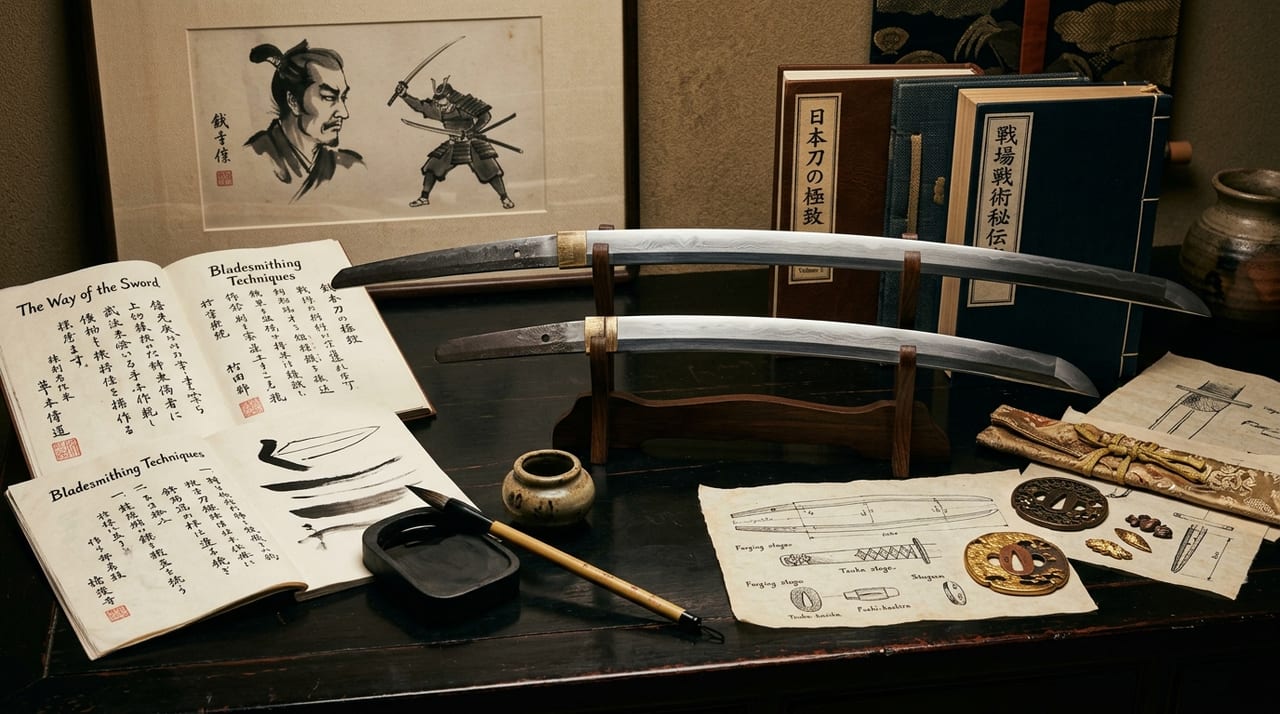
 * Image is for illustrative purposes only.
Taiga Drama: What Will You Do, Ieyasu? (Dōsuru Ieyasu)
大河ドラマ どうする家康
NHK Taiga Drama No. 62 (2023), written by Kosawa Ryōta and starring Matsumoto Jun. The drama reinterprets Tokugawa Ieyasu's life through a new perspective of 'a weak man surviving the warring age.' Okada Junichi portrayed Oda Nobunaga, reinterpreting the Sengoku period with a modern comedic touch. The nationwide average viewership across all episodes (household) was approximately 11.2%. The historically documented anecdote of the "Monoyoshi Sadamune"—Tokugawa Ieyasu's beloved sword said to guarantee victory whenever worn in battle, known as the "sword of victory"—is an important symbol of early Edo-period sword culture.
Description
NHK Taiga Drama Dōsuru Ieyasu (What Will You Do, Ieyasu?)—Tokugawa Ieyasu, the 'Weak Hero,' and the Foundation of Edo-Period Sword Culture Embodied by Monoyoshi Sadamune
Dōsuru Ieyasu (What Will You Do, Ieyasu?) (2023, NHK Taiga Drama, 62nd installment; written by Kosawa Ryōta; starring Matsumoto Jun) is a Taiga drama that depicts the life of Tokugawa Ieyasu (1543–1616) through a fresh interpretation of a timid, fearful young man who survives the age of chaos and becomes the ruler of the realm. The core of the work lies in the strong personality of Oda Nobunaga, played by Okada Junichi, and in the growth of the 'weak Ieyasu' embodied by Matsumoto Jun. Kosawa Ryōta's screenplay, with its contemporary comedic touch (Legal High, The Confidence Man JP), reinterprets the Sengoku period in a pop style. From the perspective of Japanese sword culture, the notable point of this work is the historical fact that Tokugawa Ieyasu was a warlord with a side as a 'sword collector,' and that his emblematic beloved sword, Monoyoshi Sadamune, is deeply tied to Ieyasu's strategic and spiritual character.
Tokugawa Ieyasu and Japanese Swords—Founder of the 'Sword Collection of the Ruler of the Realm'
Tokugawa Ieyasu is known as an especially prominent 'sword enthusiast' among the warlords of the Sengoku period, and records show that he collected a large number of swords owned by powerful warlords, led by Oda Nobunaga and Toyotomi Hideyoshi. After his death, Ieyasu's personal effects were distributed as the Sunpu Owakemono (the distribution of Ieyasu's estate) to the Gosanke (three senior Tokugawa branch houses) and others, and pieces that passed to the Owari Tokugawa family are now held by the Tokugawa Art Museum (Nagoya, Aichi Prefecture). In the sense that this cultural accumulation of a 'sword collection of the ruler of the realm' forms one of the foundations of today's collections in Japanese sword museums and art museums, Ieyasu also played an important historical role as a warlord who preserved and transmitted Japanese sword culture.
Monoyoshi Sadamune—Ieyasu's Beloved Sword with a Legend of Certain Victory When Worn
The most famous of Tokugawa Ieyasu's beloved swords is Monoyoshi Sadamune, a wakizashi made by Sōshū Sadamune. Sōshū Sadamune was a master smith of the Nanboku-chō period (14th century), and the works of Sadamune, known as a disciple of Masamune, are paired with those of Masamune in the phrase 'Masamune and Sadamune,' occupying one of the foremost places in the history of Japanese swords. The name Monoyoshi derives from the fact that in the battles in which Ieyasu went to war wearing this wakizashi, he was always victorious, so the name 'Monoyoshi' was given to it as a sword 'whose matters turn toward good fortune.' The legend that 'a sword that, when worn, ensures victory' embodies a core aspect of Japanese sword culture: the sense in which the sword functions, beyond its practical value as a weapon, as a symbol of spiritual protection.
The Growth of the 'Weak Ieyasu' and Swords—A Philosophy of the Sword as Defender
The protagonist of Dōsuru Ieyasu, Tokugawa Ieyasu, is depicted through a new interpretation—unlike the conventional hero narrative in which 'the weak become strong'—of 'surviving through wisdom and strategy while remaining weak.' This image of Ieyasu as 'the wisdom of the weak' resonates with a philosophy in Japanese sword culture of the 'sword of defense' rather than the 'sword of attack'—'fighting to protect, winning with the minimum necessary force.' Just as Monoyoshi Sadamune has been transmitted not as a 'sword for winning' but as a 'sword toward which victory comes,' Ieyasu's 'relationship between sword and strategy' shows a view of the sword not as 'rule by force' but as a 'symbol of wisdom that draws in good fortune.' This also deeply resonates with the swordsmanship idea that 'the sword is not for killing but for winning without killing,' namely katsujinken (the life-giving sword), and with the philosophy of 'setsunintō (the death-dealing sword) and katsujinken' in Yagyū Shinkage-ryū.
Contrast with the Sword Culture of Oda Nobunaga (Okada Junichi)
In Dōsuru Ieyasu, Oda Nobunaga, played by Okada Junichi, is depicted with overpowering presence. Nobunaga (1534–1582) was one of the foremost sword collectors of the Sengoku period, possessing many famous swords. Headed by Heshikiri Hasebe, a famous sword (currently a National Treasure, held by Fukuoka City Museum) with the anecdote of having 'pushed through' a tea attendant together with his food-tray stand, he owned many historically renowned swords, including Sōza Samonji (Yoshimoto Samonji) and Daihannya Nagamitsu. The contrast between Nobunaga (Okada Junichi) and Ieyasu (Matsumoto Jun) in this work can be understood as a contrast between two Japanese forms of power: a Nobunaga-type leadership that displays authority through overwhelming military force and sword collections, and an Ieyasu-type leadership that waits for the realm through strategy and patience.
The Edo Shogunate and the Institutionalization of Japanese Sword Culture
The Edo shogunate, which Tokugawa Ieyasu founded in 1603, brought a decisive institutional transformation to Japanese sword culture. Through the sword hunt (katanagari) of 1588 under Hideyoshi, the disarming of peasants advanced, and in the Edo period, nihonzashi (wearing the long and short swords together) took hold as the emblem of samurai status. This establishment of the sword-wearing system is the decisive turning point at which the Japanese sword shifted from a practical battle weapon to a symbol of samurai status, and it is also the institutional origin of the contemporary cultural image of 'the Japanese sword = the soul of the samurai.' As the story of the person who became the starting point of this cultural transformation, Dōsuru Ieyasu embodies an important context in the history of Japanese sword culture.
Perspectives for Sword Collectors
From four perspectives—'the legend and historical significance of the famous Sōshū Sadamune-made sword Monoyoshi Sadamune,' 'the historical fact that the sword collection of Tokugawa Ieyasu, a ruler of the realm, became the foundation of today's collections in Japanese sword museums,' 'the decisive influence of the Edo shogunate on Japanese sword culture through the establishment of the sword-wearing system,' and 'the philosophical differences between two sword cultures and forms of power shown by the contrast of Nobunaga and Ieyasu'—the Taiga drama Dōsuru Ieyasu is an important work that helps Japanese sword collectors and enthusiasts understand the institutional and spiritual origins of sword culture.
Real Swords Featured
Monoyoshi Sadamune
The beloved sword of Tokugawa Ieyasu. A wakizashi made by Sōshū Sadamune. It is said that whenever it was worn, victory was assured, earning it the name "Monoyoshi" (Good Fortune). Housed at the Tokugawa Art Museum (Designated Important Cultural Property).
Daihannya Nagamitsu
A tachi said to have been possessed by Nobunaga and later given to Ieyasu. Made by Bizen Nagamitsu. During the Muromachi period, it received an extraordinary appraisal of 600 kan of coins, a valuation alluding to the 600 scrolls of the Daihannya-kyo (Great Prajnaparamita Sutra), thus receiving its name. The mei reads simply "Nagamitsu" in two characters. Now a National Treasure, housed at the Tokyo National Museum.
See authentic Japanese swords
See authentic Japanese swordsThis page is intended to introduce Japanese sword culture and is not affiliated with any of the works mentioned.