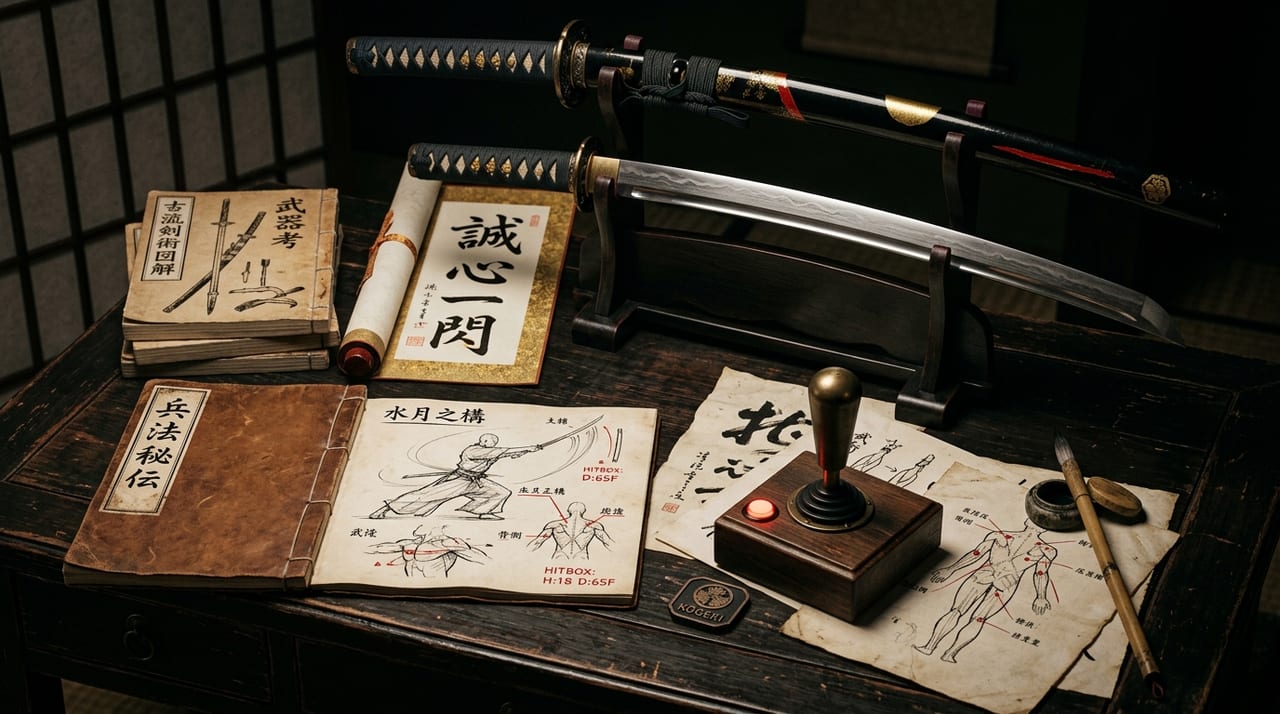
 * Image is for illustrative purposes only.
Soul Calibur
ソウルキャリバー
A weapon fighting game series developed by Namco (now Bandai Namco). It depicts a battle over the evil sword Soul Edge and the holy sword Soulcalibur, and features characters who wield Japanese swords, such as the Sengoku-period mercenary swordsman Heishiro Mitsurugi.
Description
Series Overview and History
Soulcalibur is a weapon fighting game series that began with "Soul Edge" in 1996. Its premise is that swordsmen and weapon users from around the world fight over "soul swords." It is set in real places and cultures from the late 16th to early 17th century, and features a wide range of characters. Japanese-sword characters include Mitsurugi, Yoshimitsu, and Taki, and the aesthetics of Japanese swordsmanship form the core of the game.
Design of the Japanese Sword Characters
The most important Japanese-sword character in the series is "Mitsurugi" (English name: Mitsurugi). He is a mercenary swordsman living at the end of the Sengoku period, and he is obsessed with "proving the superiority of the sword" in an age when matchlock guns (hinawajū) were overtaking swords. His swordsmanship, which combines iai, chūdan-gamae, and battōjutsu, was highly praised as an embodiment of the essential strength and beauty of the Japanese sword within the context of a fighting game.
Soul Edge and the Mystique of Japanese Swords
Another important Japanese-sword element of the series is the holy sword Soulcalibur, which stands in opposition to Soul Edge. The setting, in which a cursed blade devours its wielder's soul and a holy sword exists to oppose it, deeply resonates with Japan's legends of cursed blades (yōtō) and famous blades (meitō). The foundation of the series' worldview includes mythic thinking about real swords, such as the legend that Muramasa was a cursed blade that brought misfortune upon the Tokugawa family, and the legend that Dōjigiri Yasutsuna was said to possess mystical power.
Gameplay and Weapon Aesthetics
The greatest feature of the Soulcalibur series is the weapon fighting genre, in which each character wields a variety of weapons, including swords, axes, spears, and kusarigama. In the case of Mitsurugi, who uses a Japanese sword, the basic concepts of swordsmanship, such as changes in distance, timing, and the certainty of a single strike, are reflected in the game mechanics.
International Spread and the Export of Japanese Culture
The Soul series has shipped more than 15 million units worldwide in total (as of 2018), and became a medium that conveys the concepts of Japanese swords, swordsmanship, and samurai to game fans around the world. In particular, the guest characters in II and IV, including Link (The Legend of Zelda), Darth Vader, and Yoda, drew attention and succeeded in conveying the appeal of Japanese-sword characters to a broader audience. Throughout the series, the beautiful form of the Japanese sword and its one-hit-kill feel have spread around the world, and this is one of the reasons foreigners admire Japanese swords.
Real Swords Featured
Dōjigiri Yasutsuna (National Treasure)
Dōjigiri Yasutsuna, counted as the foremost of the Tenka Goken (Five Swords Under Heaven), is a National Treasure said to have been made by the swordsmith Yasutsuna in Hōki Province (present-day Tottori Prefecture) during the Heian period. It has the legend that Minamoto no Yorimitsu used it to slay an oni named Shuten-dōji, and it symbolizes the mystical and mythological side of the Japanese sword. Legendary famous blades like this one are cited as one of the prototypes of the "sacred sword versus evil sword" worldview of Soulcalibur. It is now held by the Tokyo National Museum.
Muramasa (cursed blade)
The Muramasa school of swordsmiths in Kuwana, Mie Prefecture, produced blades of outstanding sharpness from the late Muromachi to the Sengoku period. Stories that several relatives of the Tokugawa family were injured by these blades spread during the Edo period, giving rise to the legend of a cursed blade that cursed the Tokugawa. The Soul Edge concept of "a cursed blade that leads its wielder to madness and death" could be seen as a modern reinterpretation of this Muramasa legend. Surviving Muramasa blades are characterized by a finely honed hamon (temper line) and distinctive jigane (base steel), and are highly regarded as works of a master smith.
This page is intended to introduce Japanese sword culture and is not affiliated with any of the works mentioned.