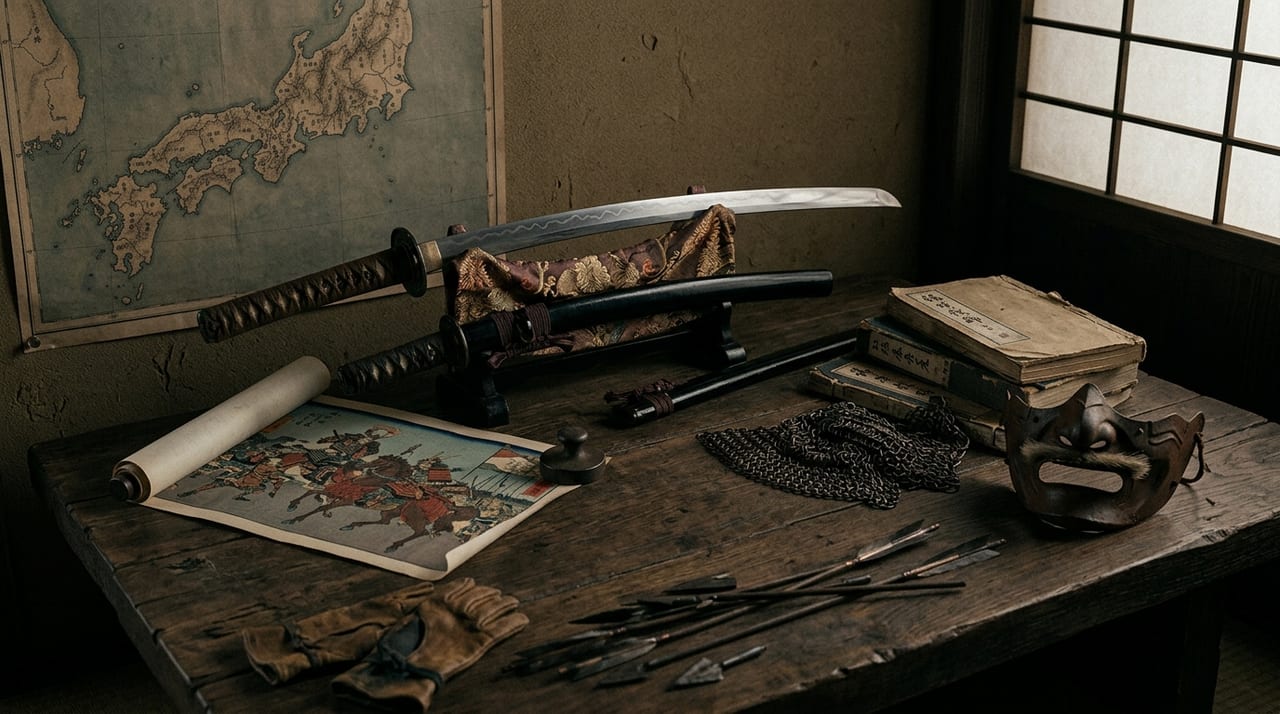
 * Image is for illustrative purposes only.
Samurai Warriors
戦国無双
A long-running action game series by Koei Tecmo (2004–present) in which players wield real historical Sengoku-period warlords — each with distinct weapons and combat styles — mowing down hundreds of enemies. The series engages deeply with the real blade culture of the era.
Description
Samurai Warriors and the Sword Culture of Sengoku Warlords
Samurai Warriors (Sengoku Musou) is an action game released in 2004 for the PlayStation 2 by Koei (now Koei Tecmo Games) as part of its Musou series. It was developed as a sister title to the Dynasty Warriors (Shin Sangoku Musou) series, which is based on the Three Kingdoms period of China. Set in Japan's Sengoku period (15th to 17th centuries), the game features dozens of characters, including real historical warlords, warlords' wives, ninja and swordsmen. Each has their own unique weapons and special moves, and players use Musou swordsmanship to fight large armies on the battlefield.
Historical Warlords and Their Signature Weapons
One of the most notable features of Samurai Warriors is that each character has a signature weapon, and some of these are based on the images or anecdotes of real historical figures. Oda Nobunaga wields a Western-style sword (yōtō, or 'demon sword'). Date Masamune uses a bokken (wooden sword) in the first game and a sabre and pistol in games 2 to 4. Sanada Yukimura (Nobushige) uses a jūmonji-yari (cross-bladed spear), which is famous as a weapon of the Sanada clan. Uesugi Kenshin uses a shichishitō (seven-branched sword), or an ōdachi in 'Samurai Warriors 5'. Some weapon settings derive from historical imagery, while others prioritize the game's own originality. These weapon depictions stimulate interest in the actual weapon culture of Sengoku warlords and encourage interest in museum collections and historic sites.
Swords, Spears and Naginata: The Weapon Systems of the Sengoku Era
Samurai Warriors does not only feature Japanese swords. It also covers a range of Sengoku-era weapons, including spears, naginata, bows, firearms, whips and kusarigama (sickle and chain). Through play, it conveys the historical fact that warlords of the time mastered many weapons beyond swords. In the actual Sengoku period, samurai constantly wore swords (uchigatana and wakizashi) as their everyday weapons, but the main weapon on the battlefield was often the spear. Swords were used in grappling, close combat and for delivering finishing blows. The game expresses this diversity through the weapon settings of multiple characters, promoting a general understanding of Japanese weapon culture.
Educational Value of History
The Samurai Warriors series has fostered broad interest in Japan's Sengoku history by featuring historical battle settings, such as the Battle of Sekigahara, the Siege of Osaka and the Honnōji Incident, along with warlords' episodes. Many younger players have learned the names of Sengoku warlords, battles and weapons through the series, which has served as an entry point to historical awareness. Real, existing famous swords have also been linked to warlords. These include the Shokudaikiri Mitsutada associated with Date Masamune (also famous through Touken Ranbu), swords said to have been owned by Toyotomi Hideyoshi, and swords handed down to Tokugawa Ieyasu. This has stimulated younger generations' interest in Japanese swords.
Contribution of the Musou Series to Japanese Sword Culture
Taken as a whole, the Koei Tecmo Games historical action franchises, including Samurai Warriors, Dynasty Warriors, Warriors Orochi and the Nioh series, have built a franchise with many fans in Asia, North America and Europe. Through these games, familiarity with Japanese and Chinese history and weapon culture has spread around the world. In particular, Dynasty Warriors and Samurai Warriors are enormously popular in China, Taiwan, South Korea and Southeast Asia, and have played an important role in conveying Japanese sword culture across East Asia.
Real Swords Featured
Date Masamune's tachi and katana (Shokudaikiri Mitsutada, etc.)
Date Masamune, who is depicted in Samurai Warriors wielding a bokken, a sabre and a pistol, was also a sword enthusiast who owned several famous blades in real life. The most famous of them is 'Shokudaikiri Mitsutada', a work of Osafune Mitsutada. This famous blade also appears in Touken Ranbu and is currently held in the Tokugawa Museum.
Sanada Yukimura's jūmonji-yari (cross-bladed spear)
The jūmonji-yari (cross-bladed spear), which is also depicted in Samurai Warriors as the weapon of Sanada Yukimura (Nobushige), is a special spear whose blade tip is cross-shaped. It is widely known as a weapon of the Sanada family. Spears, too, are steel art objects forged by swordsmiths and are inseparable from Japanese sword culture.
See authentic Japanese swords
See authentic Japanese swordsThis page is intended to introduce Japanese sword culture and is not affiliated with any of the works mentioned.