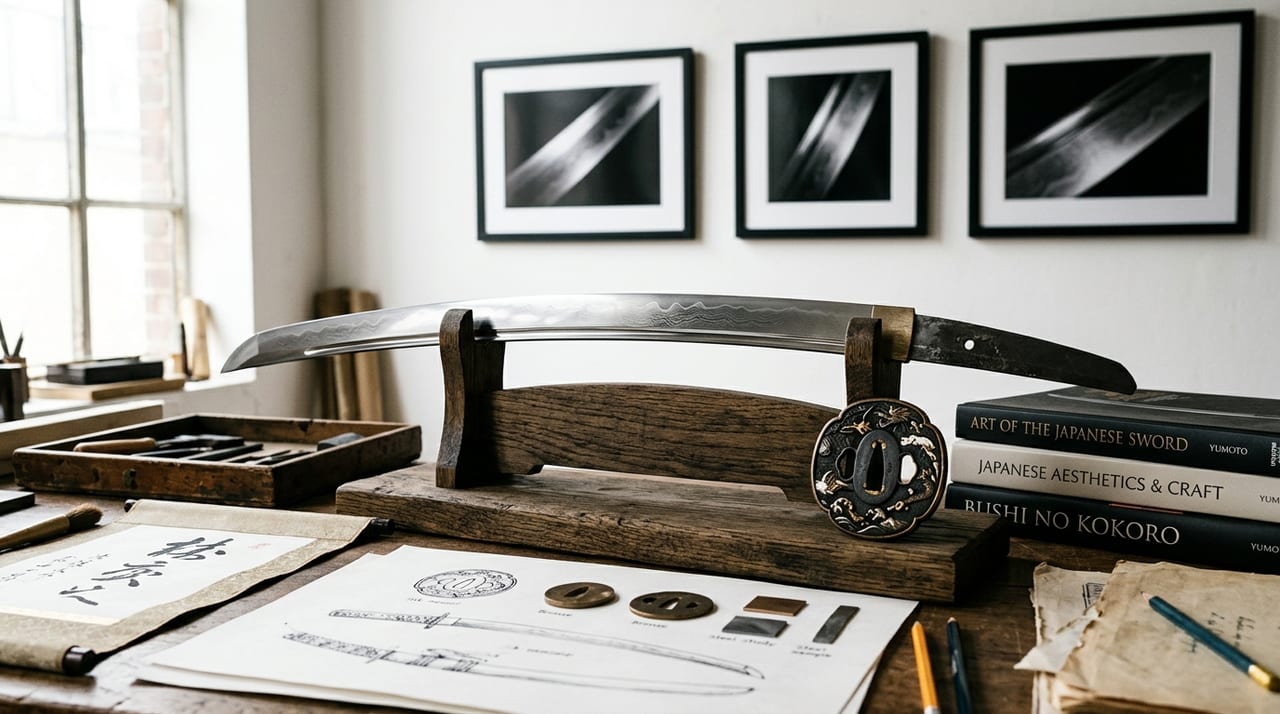
 * Image is for illustrative purposes only.
Samurai Time Slipper (A Samurai in Time, film, 2024)
侍タイムスリッパー(映画・2024年)
A jidaigeki comedy film released in 2024, directed by Yasuda Junichi and starring Yamaguchi Makiya. A Bakumatsu-era Aizu domain samurai, Kōsaka Shinzaemon, is struck by lightning and time-slips to a modern-day Kyoto period-drama film set, where he begins life as a 'kirare-yaku' (the one who gets cut down). Despite a production budget of only 26 million yen as an independent production, the film won the 48th Japan Academy Award for Best Picture and the 67th Blue Ribbon Award for Best Film, expanded from single-theater release to over 340 nationwide, and recorded box office revenue exceeding 1 billion yen — an exceptional achievement. With authentic tate choreography by tate master Seike Kazuto (Toei Sword Society) and its paradoxical structure of 'the sword of a real samurai shining on the modern period-drama set,' the film makes a resounding declaration of the value of jidaigeki and tate culture in the contemporary era.
Description
Samurai Time Slipper—When a Real Samurai's Sword Shines in a Modern Jidaigeki Studio
Samurai Time Slipper (released August 17, 2024; directed by Yasuda Junichi; starring Yamaguchi Makiya) is a 2024 “cinematic miracle.” Despite being an extremely low-budget independent film with a production budget of 26 million yen, it won major film awards: the Best Film award at the 48th Japan Academy Film Prize, the Best Film award at the 67th Blue Ribbon Awards, and the Media Division of the 56th Seiun Award. It also made an unusual expansion from a single-screen release at Cinema Rosa (Ikebukuro, Tokyo) to over 340 theaters nationwide, and it recorded a box-office gross of over 1 billion yen. The work's notable significance for Japanese swords and tate culture lies in how, through the approach of comedy, it paradoxically illuminates a two-layer structure: tate within a period drama as performance (fiction), and the practical swordsmanship of real samurai (reality). In doing so, it lets viewers simultaneously experience the depth of tate as an art and the weight of authentic Japanese sword culture.
Story Structure—The Paradox of a “Real Samurai” Becoming a kirare-yaku
The protagonist of this film, Kōsaka Shinzaemon, is a samurai of the Aizu domain in the late Edo period. On the night he tried to cut down a samurai of the Chōshū domain, he is knocked unconscious by a lightning strike. When he wakes, he finds himself in a modern jidaigeki studio in Kyoto. There, learning that the Tokugawa shogunate had already fallen 140 years earlier, Shinzaemon resolves to knock on the studio gate, relying on his polished swordsmanship, and to live as a kirare-yaku. This paradoxical premise, in which a samurai who has experienced real sword duels of the bakumatsu is cut down as an actor in a modern jidaigeki, places the question “What is tate?” at the core of the work. Tate is acting that sublimates the movements of real swordsmanship into art. The process by which Shinzaemon, a “real swordsman,” learns this acted tate explores, in a lightly comedic form, the deep theme of the relationship between the sword in fiction and the sword in reality. In Japanese sword culture, this includes the relationship between kata and real combat, and the relationship between kendō as performance (the sword to be shown) and practical swordsmanship (the sword to be used).
Tate Master Seike Kazuto and Toei Kenkai—Passing Down Orthodox Tate Culture
Seike Kazuto, who handled the tate for this film, is a tate master affiliated with Toei Kenkai (Toei Sword Society). His father is Seike Mitsuhiko, a tate master at Toei Kyoto Studio. Toei Kenkai is an orthodox specialist group in swordsmanship and tate that carries on the tate culture of “Toei jidaigeki,” from the golden age of Japanese jidaigeki (the 1950s–1970s). Its techniques are positioned as the orthodoxy of jidaigeki tate, having rendered on film the aesthetics of Japanese sword martial arts such as kabuki, kendō, and iaidō. The swordsmanship scenes choreographed by Seike Kazuto for this film place the aesthetics of orthodox jidaigeki tate against the weight of bakumatsu practical swordsmanship (the practical swordsmanship embodied by the Shinsengumi). In this way, the work embodies tate as an art form: a formal beauty distilled from Japanese swordsmanship culture.
The Aizu Domain and Late-Bakumatsu Sword Culture
The Aizu domain, to which the protagonist Kōsaka Shinzaemon belongs, occupies a special position in late-Edo history. The domain is known for upholding its loyalty to the Tokugawa shogunate to the very end, and it engaged in fierce fighting with the new government forces in the Aizu War of 1868 (one phase of the Boshin War). The swordsmanship of Aizu samurai centered on the “five Aizu schools” (Ittō-ryū Mizoguchi-ha, Yasumitsu-ryū, Taishi-ryū, Shinten-ryū, and Shintō Seibu-ryū), taught at the domain school Nisshinkan, and it has the aspect of being a bearer of bakumatsu practical swordsmanship. The swords carried by Aizu samurai were uchigatana of the late-Edo shin-shintō period. Works by bakumatsu master smiths such as Koyama Munetsugu and Minamoto no Kiyomaro (Yamaura Kiyomaro) were prized as practical swords for the samurai of the time. Setting Kōsaka Shinzaemon as an Aizu domain samurai gives the work a context of a samurai embodying the final form of bakumatsu sword culture, the practical swordsmanship of shin-shintō. It also creates a profound cultural theme: the historical tragedy that Japanese sword culture, refined throughout the Edo period, was severed by the Meiji Restoration intersects with the modern jidaigeki studio, a place that passes down sword culture through film.
The Culture of kirare-yaku—The Unsung Backbone of Japanese Jidaigeki
The kirare-yaku are actors and stunt performers whose role in jidaigeki films and television drama is to be cut down by the protagonist, and they are an important cultural role in Japanese jidaigeki. Actors specializing in kirare-yaku established their own professionalism throughout the golden age of jidaigeki at Toei and Shochiku. The “aesthetics of ukemi,” meaning how one is cut down and the movement aesthetics designed to enhance the protagonist's tate, developed as an independent art form. This art of kirare-yaku forms, as a whole, the aesthetics of Japanese sword movement. It includes not only the movement of cutting with a Japanese sword (the striking side) but also the movement of being cut (the receiving side). Through the setting of a real samurai playing a kirare-yaku, Samurai Time Slipper rediscovers this artistic depth of kirare-yaku as a modern film.
The Miracle of Indie Film—The Vitality of Japanese Sword and Tate Culture Today
The production background of Samurai Time Slipper is an independent film in which director Yasuda Junichi sold his beloved Honda NSX to raise the production budget. Its unusual spread, starting from a single-screen release at Cinema Rosa (Ikebukuro, Tokyo) and growing through word of mouth to over 340 theaters nationwide, proves that audiences today were seeking a story of sincere tate and sword culture. The Japan Academy Film Prize for Best Film at the 48th ceremony, the industry's highest honor, carries significance as a cultural declaration: Japan's film world highly praised the orthodox passing down and modern reinterpretation of tate and sword culture. The fact that an independent, self-produced film revived Japanese sword and tate culture in the present day should be remembered as one of the most symbolic events in the Japanese sword and jidaigeki culture of 2024.
Perspective for Sword Collectors
Samurai Time Slipper is a work that represents Japanese sword culture in cinema in 2024. It views the film from four perspectives: the cinematic embodiment of orthodox tate culture by Toei Kenkai and Seike Kazuto; the historical depth of bakumatsu and shin-shintō culture conveyed by the setting of an Aizu samurai; the duality of Japanese sword aesthetics shown by the contrast between tate (art) and practical swordsmanship (reality); and the proof of the vitality of sword and jidaigeki culture in the present day, as shown by an independent self-produced film winning the Japan Academy Film Prize for Best Film. It is an important work that lets sword collectors and enthusiasts experience the depth and breadth of Japanese sword culture today.
Real Swords Featured
Uchigatana (bakumatsu, shin-shintō)
A practical uchigatana carried by Aizu domain samurai in the late Edo period. Shin-shintō blades by master smiths such as Koyama Munetsugu and Minamoto no Kiyomaro (Yamaura Kiyomaro) were prized by the samurai of the time.
See authentic Japanese swords
See authentic Japanese swordsThis page is intended to introduce Japanese sword culture and is not affiliated with any of the works mentioned.