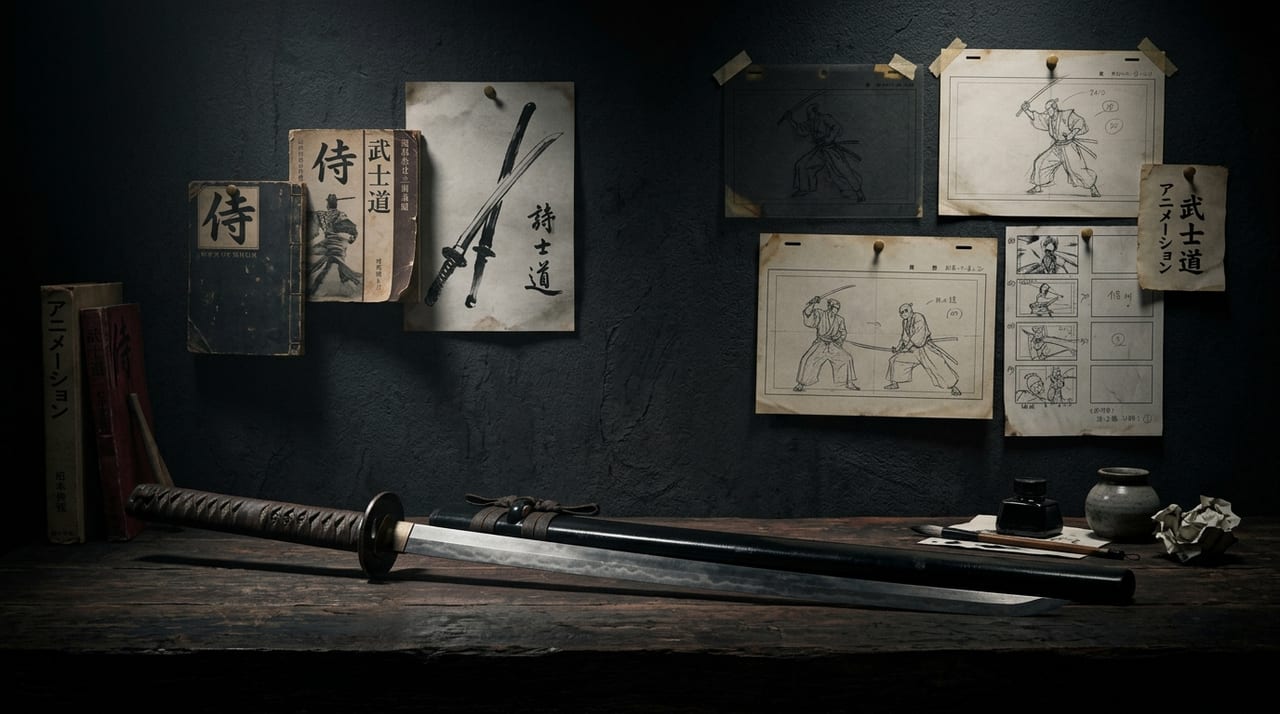
 * Image is for illustrative purposes only.
Samurai Jack
サムライジャック
An American animated series by Genndy Tartakovsky (2001–2017). Its protagonist, Jack, a Japanese prince, is sent into the future by the demon Aku. After a long journey through time, he defeats the evil demon, wielding the sacred Japanese sword he inherited from his father. As a work that reinterprets Japanese period dramas, Kurosawa films, and the aesthetics of bushidō through American animation techniques, its cultural contribution in conveying the sanctity of the Japanese sword and the spirit of the samurai to children around the world is immeasurable.
Description
Origins of the Series
Samurai Jack is an American animated series that aired on Cartoon Network from 2001 and concluded with a final season on Adult Swim in 2017. It was created by Genndy Tartakovsky, known for Dexter's Laboratory and The Powerpuff Girls. The protagonist is an unnamed Japanese prince (later called 'Jack') who, after being sent into the future by the demon Aku, continues his journey to return to the past, helping those he meets along the way.
Japanese Aesthetics and American Animation
The series' most distinctive feature is its visual style, which independently sublimates the aesthetics of Japanese traditional art, period dramas, and Akira Kurosawa's films through American animation techniques. The use of ma in scene transitions, the minimalist panel compositions that make effective use of empty space, and the extreme contrast between stillness and motion in fight scenes are deliberate references to Kurosawa's films and the gekiga Lone Wolf and Cub. These visual characteristics embody perfectly the Japanese aesthetic of the tension of the moment of drawing the sword: in iai, the stillness of waiting for ki (the right moment) and the single flash of motion.
The Sacred Sword Passed from Father to Son
The Japanese sword Jack carries is depicted as a sacred weapon inherited from his father, the Emperor. The setting that only this sword can wound the demon Aku directly quotes Japanese legends of famous swords: swords forged by gods and wielded only by heroes. In Japan, legends of sacred swords tied to particular owners, such as the Tenka Goken (the Five Great Swords under Heaven) and the Three Sacred Treasures, have been passed down since ancient times. In warrior society, the act of 'inheriting' a sword came to signify the legitimacy of a lineage and the transmission of spirit. Jack's sword functions as a link to his lost homeland and his father's teachings, and this story of the inherited sword is among the purest forms in which the core of Japanese sword culture can be conveyed to foreign viewers.
The Teachings of Bushidō
Jack's code of conduct (helping the weak, prioritizing duty over emotion, not giving up even in defeat, and never using his sword for improper ends) is an animated rendering of the code of bushidō. In the fifth season (the Adult Swim version), fifty years have passed since the previous installment. Jack, who does not age physically due to the effects of time travel, becomes mentally exhausted and begins to lose sight of his mission. This narrative depicts the length and depth of 'mental training' in Zen and bushidō, making it a rare example of that idea expressed through story.
Legacy for Children
Samurai Jack won multiple Emmy Awards and is regarded as one of the greatest works in the history of American animation. Countless foreign viewers first encountered samurai, the Japanese sword, and bushidō through this series, and later deepened their interest in Japanese culture in earnest. As a work that conveyed the theme of the Japanese sword to the world so purely and in such a universal narrative language, the cultural significance of Samurai Jack is extremely great.
Real Swords Featured
Mythical divine swords (Kusanagi no Tsurugi and others)
The sacred sword that Jack inherits from his father is rooted in the tradition of sacred swords represented by the Kusanagi no Tsurugi, one of the Three Sacred Treasures of Japanese mythology. The Kusanagi no Tsurugi is still enshrined as a divine object at Atsuta Jingū in Nagoya and is a secret sword never shown to the public, which places it at the spiritual source of Japanese sword culture. The setting of a sword that derives from the gods and can be wielded only by heroes is a universal expression of the sanctity of the Japanese sword as a concept.
Tachi (Heian to Kamakura style)
The design of the sword used by Samurai Jack is closer in its curvature and form to the tachi of the Heian to Kamakura periods than to the uchigatana of the Edo period. The tachi was worn suspended from the waist with the edge facing down, since it was used by mounted warriors on horseback, and its gracefully curved form is the original shape of Japanese sword art. Many of the extant tachi designated as National Treasures date from the Kamakura to Nanbokuchō periods and are held by the Tokyo National Museum, the Kyoto National Museum, and others. They are highly valued at home and abroad as the most refined form of Japanese sword beauty.
This page is intended to introduce Japanese sword culture and is not affiliated with any of the works mentioned.