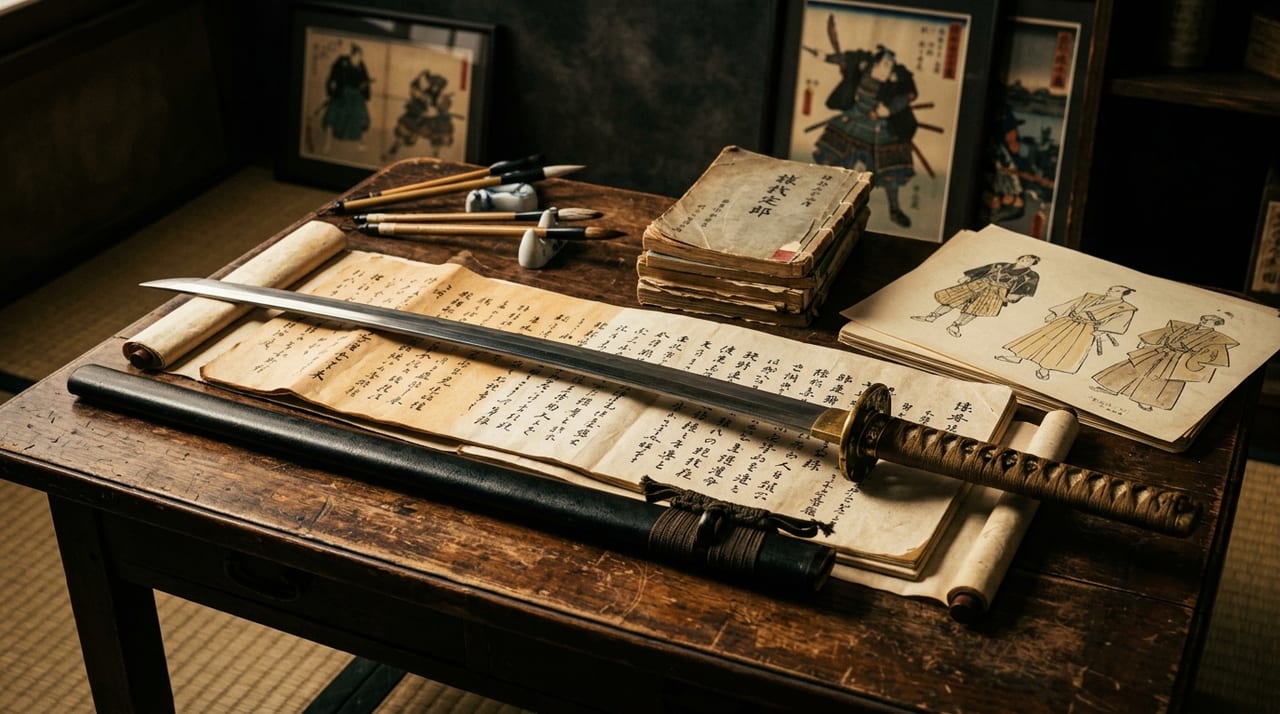
 * Image is for illustrative purposes only.
Samurai Deeper Kyo
SAMURAI DEEPER KYO(サムライディーパーキョウ)
A manga by Akimine Kamijyo serialized in Kodansha's Weekly Shōnen Magazine from 1999 to 2006 (38 volumes), adapted into a TV anime in 2002. The protagonist Kyo wields a legendary blade named Tenrō, forged in-story by a smith called Muramasa — a name drawn from the real swordsmith Sengo Muramasa.
Description
Work Overview
Samurai Deeper Kyo is a manga by Akimine Kamijyo. It was serialized in Kodansha's Weekly Shōnen Magazine from 1999 to 2006, and the tankōbon volumes numbered 38 in total. A television anime adaptation was produced in 2002. The story is a swordplay action series about Kyo, a samurai feared as the strongest and known as Demon Eyes Kyo, whose soul was sealed into the body of his arch-rival, Kyoshiro Mibu, and who travels on in order to regain his own body.
Kyo and the "Tenrō"
The weapon wielded by the protagonist Kyo is a legendary ōdachi called the "Tenrō" (Heavenly Wolf). In the work, this blade is depicted as one made by Muramasa, a smith who is also a sword-fighting teacher. It plays a central role throughout the story as a symbol of Kyo's overwhelming fighting power.
The Real Swordsmith Sengo Muramasa
The real swordsmith Sengo Muramasa, on whom the Muramasa in the work is based, is the name of a lineage of swordsmiths who were active in Kuwana, Ise Province (present-day Kuwana, Mie Prefecture), during the Muromachi period. They are known as makers of gyōmono (blades prized for their cutting ability) that are ranked alongside the works of Masamune. However, reliable primary sources recording the personal origins or real name of Muramasa himself are scarce, and much of his image was shaped by later traditions.
The Tokugawa Family and the Legend of the 'Cursed Blade Muramasa'
During the Edo period, Muramasa blades were feared by the Tokugawa shogunate as ominous swords. A series of anecdotes accumulated stating that several people connected to the Tokugawa family were injured or killed by Muramasa blades, and the legend that 'Muramasa is a cursed blade that brings ruin to the Tokugawa family' spread widely. A record also survives stating that 24 Muramasa wakizashi were found at the residence of Takenaka Shigeyoshi, the Nagasaki magistrate who committed seppuku in 1634 for misconduct. The fact that Tenrō, the sword Kyo wields in the work, is depicted as 'a blade possessing dangerous and overwhelming power' reflects, to a great extent, the accumulation of these historical anecdotes and traditions.
Cultural Influence
Samurai Deeper Kyo holds a firm fan base in Japan and abroad as one of the works that defined the shōnen manga and anime of the 2000s. By turning the legend of the cursed Muramasa blades into entertainment, the work played a role in spreading interest in Japanese sword lore and swordsmithing culture among younger generations.
Real Swords Featured
Sengo Muramasa (Ise Kuwana Swordsmith Lineage)
A lineage of swordsmiths active in Kuwana, Ise Province (present-day Kuwana, Mie Prefecture), during the Muromachi period. They are said to have produced many blades ranked alongside those of Masamune, but reliable primary sources recording the personal origins or real name of Muramasa himself are scarce, and much of his image was shaped by later traditions.
The Muramasa Cursed Blade Legend and the Tokugawa Family
The legend that Muramasa blades brought ruin to the Tokugawa family spread throughout the Edo period. It is based on anecdotes that the sword with which a retainer cut down Matsudaira Kiyoyasu, grandfather of Tokugawa Ieyasu, and the wakizashi with which a retainer stabbed Matsudaira Hirotada, Ieyasu's father, were both Muramasa, together with the record that 24 Muramasa wakizashi were found at the residence of Takenaka Shigeyoshi, the Nagasaki magistrate who committed seppuku in 1634 for misconduct. Although the anecdotes mix historical fact with tradition, the legend is known as the background that made the name Muramasa a byword for 'a blade with dangerous power.'
See authentic Japanese swords
See authentic Japanese swordsThis page is intended to introduce Japanese sword culture and is not affiliated with any of the works mentioned.