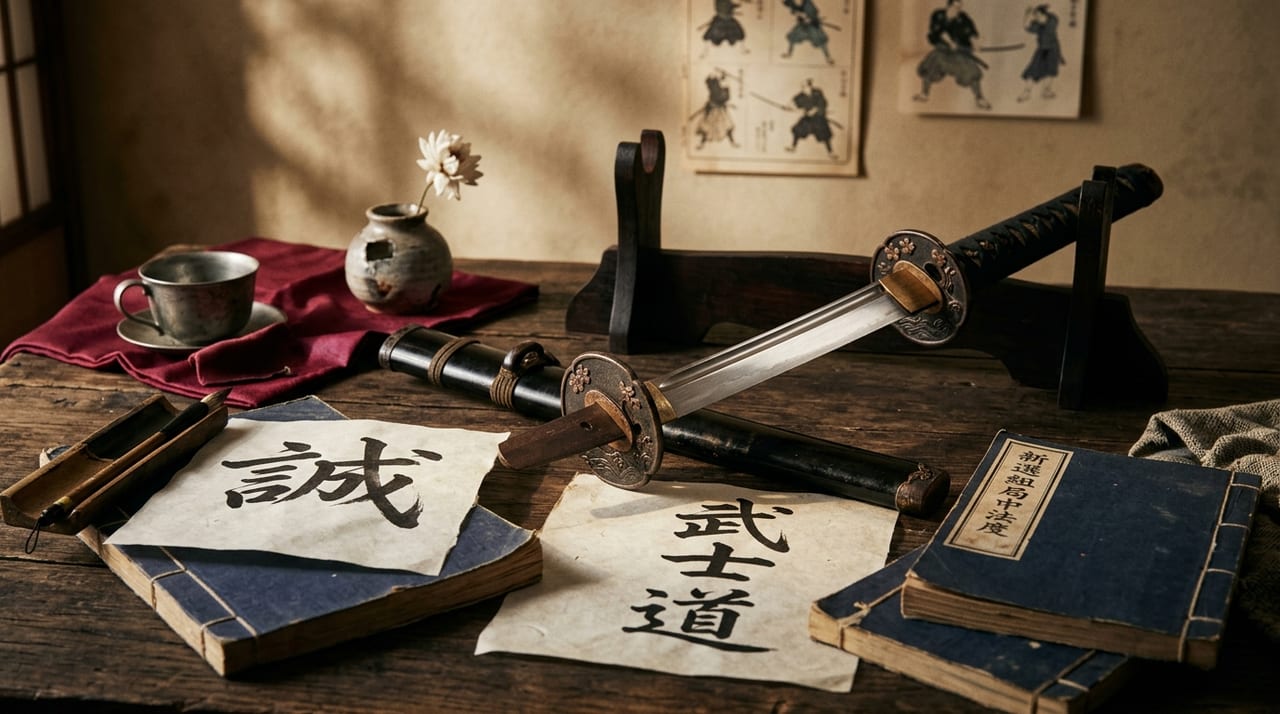
 * Image is for illustrative purposes only.
Samurai 8: Hachimaru-den
サムライ8 八丸伝
A manga with story by Kishimoto Masashi and art by Ōkubo Akira, serialized in Weekly Shōnen Jump from 2019 to 2020 and collected in five volumes. It follows the frail boy Hachimaru, who gains the power of the samurai.
Description
Overview
Samurai 8: Hachimaru-den is a manga with story by Kishimoto Masashi and art by Ōkubo Akira. It was serialized in Shueisha's Weekly Shōnen Jump from 13 May 2019 to 23 March 2020 (issues 24 of 2019 to 17 of 2020). The Jump Comics edition is five volumes and 43 chapters.
Hachimaru and the Samurai Soul
The protagonist, Hachimaru, is a frail boy who cannot live without life-support equipment and spends his time playing online games. Inside his body is a "samurai soul" (Samurai-kon). Hachimaru himself was born as an "irregular existence" in the process of making the keys to a clone; he was originally thought to be one of the keys, but the story reveals that he is in fact the "Pandora's box" itself. Hachimaru's father is Dr. Furuta.
How One Becomes a Samurai
A program device left by Fudō Myōō, called the "Rocker Ball," is buried underground. A person is stabbed with a short blade to test compatibility, and a person who is compatible becomes a samurai. Samurai do not die when cut, and they can manipulate subatomic particles to repair and reshape their bodies and their key holders.
How the Weapons Work
The samurai soul is a spherical, spirit-like mass generated inside the body when someone becomes a samurai; it is said to be a concentration of high energy rather than something that carries a mind. The "kara-kotsu" (handle bone) is a shape-changing device built into the key holder, and it is combined with the samurai soul to make a weapon. The key holder appears to be a machine life-form that can be used as battle armor or as a vehicle.
See authentic Japanese swords
See authentic Japanese swordsRelated Content
Seven Samurai
Film七人の侍
Akira Kurosawa's 1954 enduring masterpiece, one of the most influential works in the history of world cinema. Set in the late Sengoku period, its story of seven masterless samurai gathered to protect a village from bandits vividly depicts the social role of the samurai and the practical side of the sword. It is a monumental work that made Japanese swordcraft known to the world, and it influenced countless films, including The Magnificent Seven, Star Wars, and Mad Max.
Nioh 2
Video Game仁王2
A Sengoku-period action RPG released in 2020, developed by Team Ninja and published by Koei Tecmo Games. As a prequel to the earlier "Nioh," it stars a half-yokai protagonist with yokai blood, who crosses swords with demons while encountering real Sengoku-period warlords.
Lupin III (Goemon Ishikawa & Zantetsuken)
Anime & Mangaルパン三世(石川五ェ門・斬鉄剣)
A franchise created by Monkey Punch in 1967 that has spread worldwide as a long-running anime series. The Zantetsuken sword carried by Goemon Ishikawa XIII—capable of cutting through anything—became an iconic symbol of Japanese swords in pop culture. Ranked 3rd in a 2025 anime sword popularity poll.
Nobunaga's Ambition
Game信長の野望
A historical simulation game series developed and sold by Koei Tecmo Games since 1983. It is a national-favorite series in which players control Sengoku daimyo, including Oda Nobunaga, in pursuit of unifying the country. Depending on the title, famous swords also appear as items, making it a historical game series that touches on the bond between Japanese swords and warlords.
This page is intended to introduce Japanese sword culture and is not affiliated with any of the works mentioned.