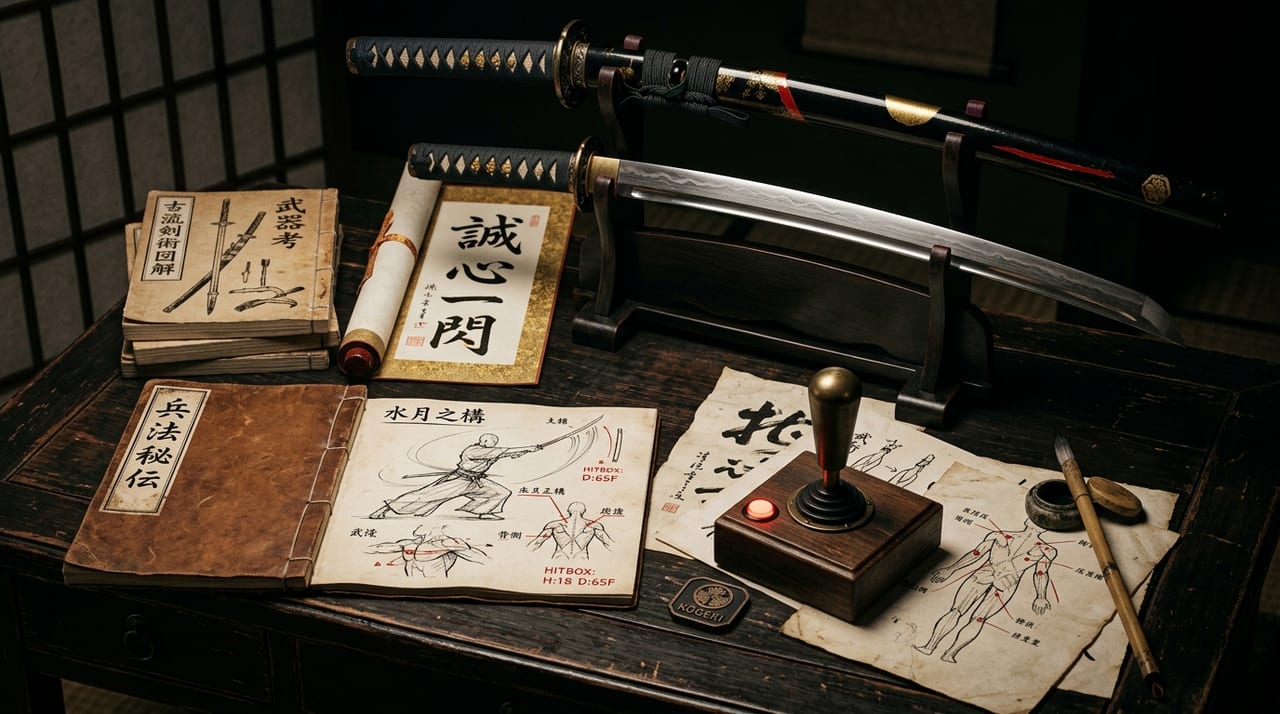
 * Image is for illustrative purposes only.
Sakura Wars Series
サクラ大戦シリーズ
A multimedia franchise launched by Sega in 1996 as a dramatic adventure game for the Sega Saturn. Set in an alternate Taisho-era Japan, the story follows the Imperial Assault Force — Flower Division, an all-female unit of warriors who pilot steam-powered armored mechs called Koubu that channel their spiritual power through Japanese-sword-derived sacred blades. The franchise has sold over 5.8 million copies as of 2022 and spans games, anime, OVAs, and stage shows.
Description
Overview
The Sakura Wars series (サクラ大戦, Sakura Taisen) is a multimedia franchise created by Oji Hiroi and developed and published by Sega (formerly Sega Enterprises). The original game launched on the Sega Saturn on September 27, 1996, as a dramatic adventure and tactical RPG hybrid. Successive mainline entries — Sakura Wars 2 through 5 (Dreamcast/PS2) and Shin Sakura Wars (PS4, 2019) — were accompanied by OVA series, a 25-episode TV anime (2000), a theatrical film (2001), and live stage performances by the cast of voice actresses under the banner "Imperial Floral Assault Corps, Yume-gumi." As of 2022 the franchise has sold over 5.8 million copies.
The Imperial Assault Force and the Sacred Blades
The setting is an alternate Taisho-era Tokyo (the franchise's "Teito," or Imperial Capital). Behind the public facade of the Imperial Grand Theater, a secret unit of spiritually gifted young women — the Imperial Assault Force, Flower Division — defends the capital from demonic entities called Kouma. Their weapons are the Koubu (光武), steam-powered humanoid armored mechs driven by spiritual energy channeled through the pilot's will.
At the heart of each Koubu is a sacred blade (霊刀, reitō) designed on the structural template of the Japanese sword: ha (cutting edge), mune (spine), shinogi (ridge), and hamon (temper pattern) are all represented. The pilot's spiritual power (霊力, reiryoku) flows into the blade and becomes the force that slays demons. Outside the Koubu, protagonist Ichiro Ohgami and several squad members carry standard Japanese swords for close-quarters combat — a deliberate nod to the sword-carrying traditions of the Meiji and Taisho military.
Connection to Japanese Sword Culture
The franchise adopts a counterfactual premise in which swords remain viable weapons in a Japan that in reality had enacted the Sword Abolition Edict in 1876. The Koubu's sacred-blade designs were reportedly developed with input from swordsmiths; the visual treatment of hamon, sori, and kissaki in the mech art reflects genuine Japanese sword aesthetics. The live stage performances by the Imperial Grand Theater ensemble featured staged sword combat (tachimawari), blending theatrical swordplay traditions — related to kabuki fight choreography — with the franchise's identity.
Cultural Impact
Sakura Wars arrived at the height of Sega Saturn's cultural moment in Japan and became one of the platform's landmark titles. Its integration of game, anime, and live theater into a single franchise model was pioneering, earning comparisons to the Takarazuka Revue's blend of performance and fan culture. The series was one of the first Japanese games to present the aesthetic of Taisho-era Japan — together with its sword culture, steampunk machinery, and theatrical tradition — to a Western gaming audience, contributing to sustained international interest in the period.
Real Swords Featured
See authentic Japanese swords
See authentic Japanese swordsRelated Content
Nobunaga's Ambition
Game信長の野望
Japan's longest-running historical simulation game series by Koei Tecmo (1983–). Players control Sengoku warlords including Oda Nobunaga in a quest for national unification. The series systematically parameterizes warriors' swords and equipment, providing one of the most comprehensive frameworks for learning about Japanese sword history, distribution, and connections to historical figures.
Seven Samurai
Film七人の侍
Akira Kurosawa's timeless masterpiece that introduced the world to Sengoku-era warriors and swords, influencing all subsequent action cinema.
Legend & Butterfly (Film, 2023)
Filmレジェンド&バタフライ(映画・2023年)
Toei 70th Anniversary commemorative work (directed by Otomo Keishi, screenplay Furusawa Yoshita, released January 2023). Kimura Takuya portrays Oda Nobunaga and Ayase Haruka portrays his primary consort Nōhime (Kicho), depicting the unknown bond between Nobunaga and Nōhime. A large-scale historical film with a total production cost of 2 billion yen and cumulative attendance exceeding 1.8 million. Rooted in the historically documented famous swords of Nobunaga — Sozan Samonji (Yoshimoto Samonji) and Heshikiri Hasebe — this is an important work from the perspective of sword culture, in which Nobunaga's sword aesthetics under the banner of 'Tenka Fubu' (Rule the Realm Through Arms) intersect with Nōhime's strength.
Blue Exorcist
Anime and Manga青の祓魔師
A shonen manga where exorcists who banish demons battle with swords. The protagonist's holy sword is central to the story.
This page is intended to introduce Japanese sword culture and is not affiliated with any of the works mentioned.