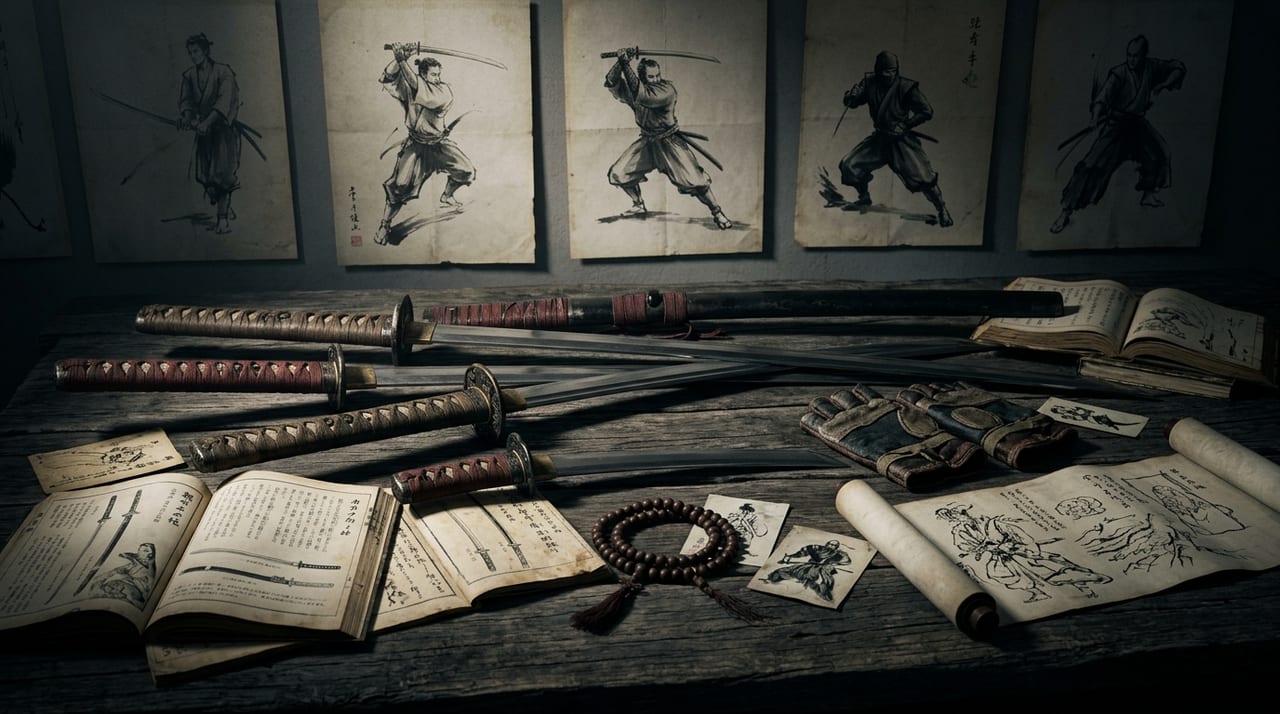
 * Image is for illustrative purposes only.
Ninja Slayer From Animation
ニンジャスレイヤー フロムアニメイシヨン
An anime based on a novel said to be by Bradley Bond and Philip Ninj@ Morzez, produced by TRIGGER (the studio that made Kill la Kill) and streamed in 2015 (26 episodes). Set in the cyberpunk future city of Neo-Saitama, it is a hyper-fast action series in which Ninja wielding Karate and Jitsu (techniques) whirl through chaotic battles. Through lines known as 'Ninja-slang' (ninsatsu-go), such as 'Dōmo' and 'AIEEEE!', and its distinctive low-cost animation, it earned devoted cult popularity. A cyberpunk ninja action story set in a Japan as imagined by foreigners.
Description
Ninja Slayer From Animation — Cyberpunk and "Karate" Intersect in Hyper-Fast Ninja Action
Ninja Slayer From Animation (2015, produced by TRIGGER, 26 episodes in total) is an anime adaptation of the novel "Ninja Slayer," said to be by Bradley Bond and Philip Ninj@ Morzez (serialized in Japanese translation on Twitter from 2010 and later published as a book). The setting is the near-future city of Neo-Saitama, a fictional city where cyberpunk technology and Japanese ninja culture fuse. The focus is hyper-fast action in which beings with superhuman powers called Ninja fight using Karate and Jitsu (art).
Karate and Suriken — Combat in This Work and the Ninja's Sword
The basis of Ninja combat in this work is Karate, an unarmed martial art, and "No Karate, No Ninja" is one of the themes the work puts forward. Projectile weapons such as Suriken (shuriken) are used frequently, and Ninja who use swords also appear. The katana 'Beppin' carried by Dark Ninja, the protagonist's arch-enemy, is a representative example.
Historically, there are various theories about the shape of the swords that Ninja actually used. There is also the view that the straight-bladed ninjatō is an image standardized mainly by kōdan storytelling and fiction from the Edo period onward. A strong theory also holds that actual Ninja, Kōga men, and Iga men used the uchigatana and wakizashi that ordinary samurai used.
TRIGGER's Action Direction — The Aesthetics of "Speed"
TRIGGER (the studio behind Kill la Kill and Promare) demonstrates its "ultra-high-speed, ultra-extreme action direction" in this work. The combat depictions in Ninja Slayer have a distinctive style that combines "low-frame-rate direction resembling frame-by-frame advancement (intentional limited animation)" and "exaggerated expression of spurting blood."
This directing style can be understood as a fusion of the aesthetics of Japanese gekiga, the momentary condensation of movement, and the sense of speed of cyberpunk. By combining the martial arts aesthetic of "defeating with a single blow" with cyberpunk-style sense of speed and information density, the aesthetic of "Ninja Action" unique to this work is formed.
Quasi-Religious Framing of "Ninja" — The Ritual and Spiritual Dimension of Swords
In this work, Ninja are set up to be born when a spiritual being called Ninja Soul (the soul of a ninja) possesses a human. This dualism of Ninja soul and body has a structure that corresponds to the concept in Japanese sword culture of the spirit of the sword (tōrei), a spiritual being dwelling in the sword.
In Japan, the belief that "a soul dwells in a sword (tōrei)" and "the spirit of the swordsmith dwells in a blade forged by an excellent swordsmith" has been widespread, and swords have been treated as "not merely weapons but spiritual vessels." The setting in which this work's Ninja Soul (spiritual being) dwells in a human vessel and grants power can also be read in parallel with the Japanese sword-culture concept of a spirit dwelling in a vessel.
Cross-References Between English-Language Views of "Ninja" and Japanese Sword Culture
The original work of this series is presented as an English novel written by English-language authors (Bradley Bond and Philip Ninj@ Morzez), and it intentionally parodies and sublimates "the Japanese Ninja and Samurai culture as imagined by the English-speaking world." This imaginative representation of Japanese swords and Ninja culture seen from outside provides interesting material from the viewpoint of comparison with actual Japanese sword culture.
"Jitsu (art)," "Suriken (shuriken)," and "Do-mo (Dōmo)": the frequent appearance in this work of Ninja-slang (ninsatsu-go), Japanese words rendered in romaji or in broken, pidgin-like form, shows that Japanese martial arts and Ninja culture function in the English-speaking world as cultural signs with mythic and symbolic meaning.
Perspective for Sword Collectors
Ninja Slayer From Animation is a work that offers sword collectors the perspective of "the international reception of Japanese sword culture and its imaginative transformation." It does so from four viewpoints: the historical background and cultural image of the ninja sword (straight-bladed ninjatō), the aesthetics of speed in action, a cyberpunk adaptation of the concept of a soul dwelling in a vessel, and the imaginative representation of Japanese sword and Ninja culture seen from the English-speaking world.
This page is intended to introduce Japanese sword culture and is not affiliated with any of the works mentioned.