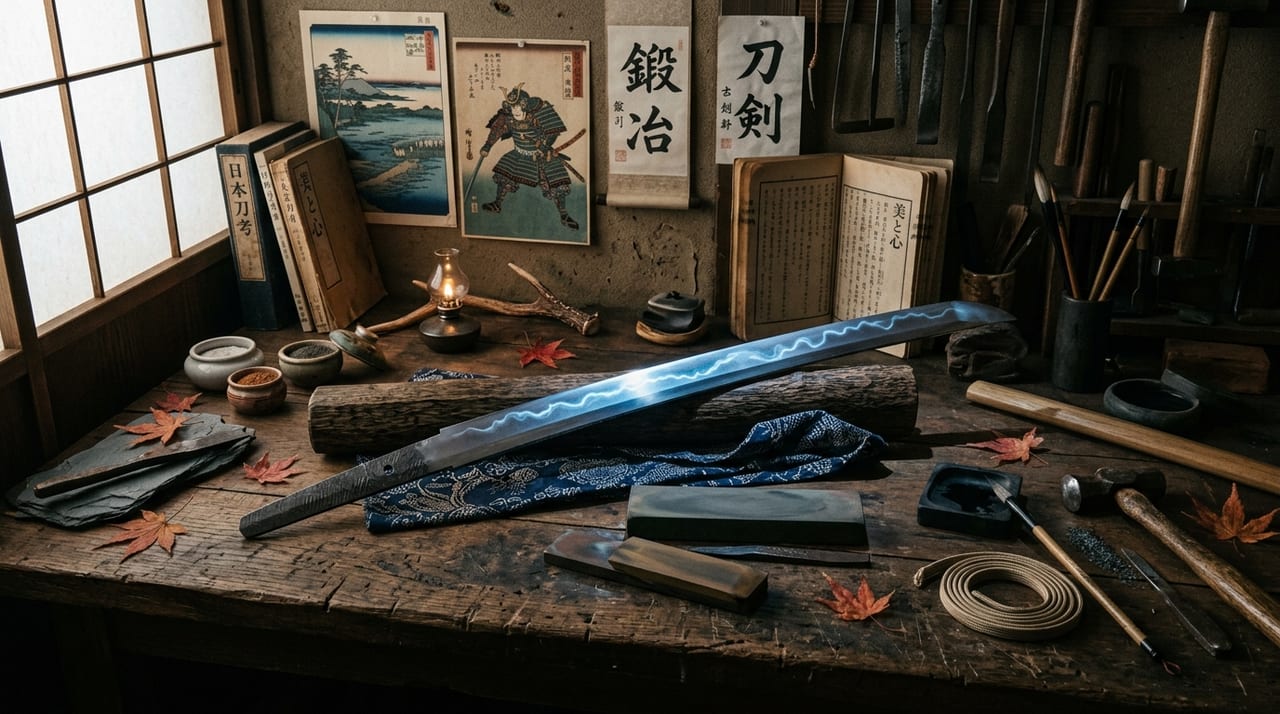
 * Image is for illustrative purposes only.
Muramasa: The Demon Blade
朧村正
An action RPG developed by Vanillaware in 2009. Set in Edo-period Japan, it is characterized by a unique worldview blending the legend of cursed Muramasa swords with Japanese yokai culture. Beautiful hand-drawn animation-style 2D graphics express the slashes of Japanese blades, and a system of forging and collecting over 100 swords deepens understanding of Japanese sword diversity.
Description
Overview of the Work
Muramasa: The Demon Blade is an action RPG developed by Vanillaware (known for Odin Sphere and Grim Grimoire) and released by Marvelous for the Wii in 2009. Set in Edo-period Japan, a world of Tokugawa shogunate rule, ninja, swordsmen, and yōkai, the story follows two protagonists, the escaped ninja Kisuke and the princess Momohime. Each is caught up in their own intertwined fates while they uncover the mystery of the demon blade Muramasa. A PlayStation Vita version with additional content was released in 2013, and both versions drew strong interest in Japanese swords and yōkai culture within Japan and abroad.
Hand-Drawn Animation and the Beauty of the Sword
The greatest feature of Vanillaware's work is its extremely fine 2D graphics, in which every background, character, and effect is finished in a hand-drawn animation style. In Muramasa: The Demon Blade, Edo-era natural scenery, including cherry blossoms, autumn leaves, snowscapes, waterfalls, and sunsets, is beautifully rendered along with the changing seasons. Within that scenery, sword strikes unfold with vivid light and hamon. The visuals are highly praised as a masterpiece that elevates the beauty of the Japanese sword into visual expression. The animations of drawing, sheathing, and cutting faithfully express the basic movements of the blade, and they give a visual impact akin to the beauty of the draw-cut in iaidō.
Sword Forging System and Blade Variety
One of the game's greatest features is a system in which the player forges and collects more than one hundred swords personally. Swords come in types such as tachi and ōdachi, each with different reach, speed, and attack patterns. Players gather materials and forge blades at shrines and forges while expanding their collection. This system is a pioneering attempt to express the morphological diversity of the Japanese sword as game mechanics. It is designed so that players learn, while playing, concepts such as the difference between uchigatana and tachi, the relationship between blade length and handling, and the individual character of the various swordsmith schools.
The Legend of the Demon Blade Muramasa
'Muramasa,' which also gives the work its title, is the general name for swords made by the swordsmith Muramasa (the first and later generations) active in Ise Province (present-day Mie Prefecture) from the late Muromachi to the early Edo period. The legend of the cursed 'demon blade Muramasa' spread during the Edo period. Anecdotes hold that Matsudaira Kiyoyasu, grandfather of Tokugawa Ieyasu, was killed by a Muramasa blade, that his father Matsudaira Hirotada was wounded by one, and that a Muramasa blade was used as the kaishaku sword for his eldest son Matsudaira Nobuyasu. From these stories arose the legend that the Tokugawa shogunate regarded Muramasa swords as ominous and abhorred them. This 'demon blade legend' has developed uniquely within Japanese popular culture and is a core motif of Muramasa: The Demon Blade. However, actual Muramasa swords are famed masterworks known for their superior practicality, and the legend is merely a later creative addition.
Edo Culture and the Aesthetics of the Japanese Sword
The Edo aesthetics that Muramasa: The Demon Blade depicts, namely wabi, sabi, and mono no aware, resonate deeply with the culture of appreciating Japanese swords. Warriors of the Edo period elevated the sword from a tool of battle into an art object. They developed a culture of appreciating the beauty of the hamon, the workings of the jigane (steel base), and the elegance of the sugata (overall form). The collecting and appreciation of diverse swords in this work's game system can be understood as a re-creation, in the medium of a game, of this Edo-era culture of sword connoisseurship.
Real Swords Featured
Muramasa (Ise Muramasa)
A general name for swords made by the swordsmith workshop Muramasa, active in Kuwana, Ise Province (present-day Kuwana, Mie Prefecture), from the late Muromachi to the early Edo period. Real Muramasa blades are known for their boldly turbulent hamon and sharp cutting edge, and they were widely favored by Sengoku-period warlords as superb practical swords. The demon blade legend was formed retroactively in the Edo period. Extant swords bearing the Muramasa signature include many masterpieces, among them Important Art Objects and prefecturally designated Cultural Properties. Their distinctive hamon is also highly valued as an art form, and their fame as historically named swords is by far unrivaled.
Uchigatana (standard form of the Edo period)
The standard sword worn by samurai in the Edo period, with a blade length generally of two shaku three to four sun (approximately 70 to 73 cm). It is the basic sword style that underpins the world of Muramasa: The Demon Blade. As a fully realized form that combines practicality and artistry, the uchigatana embodies the aesthetic sensibility of Edo culture and occupies the mainstream of modern Japanese sword collecting.
See authentic Japanese swords
See authentic Japanese swordsThis page is intended to introduce Japanese sword culture and is not affiliated with any of the works mentioned.