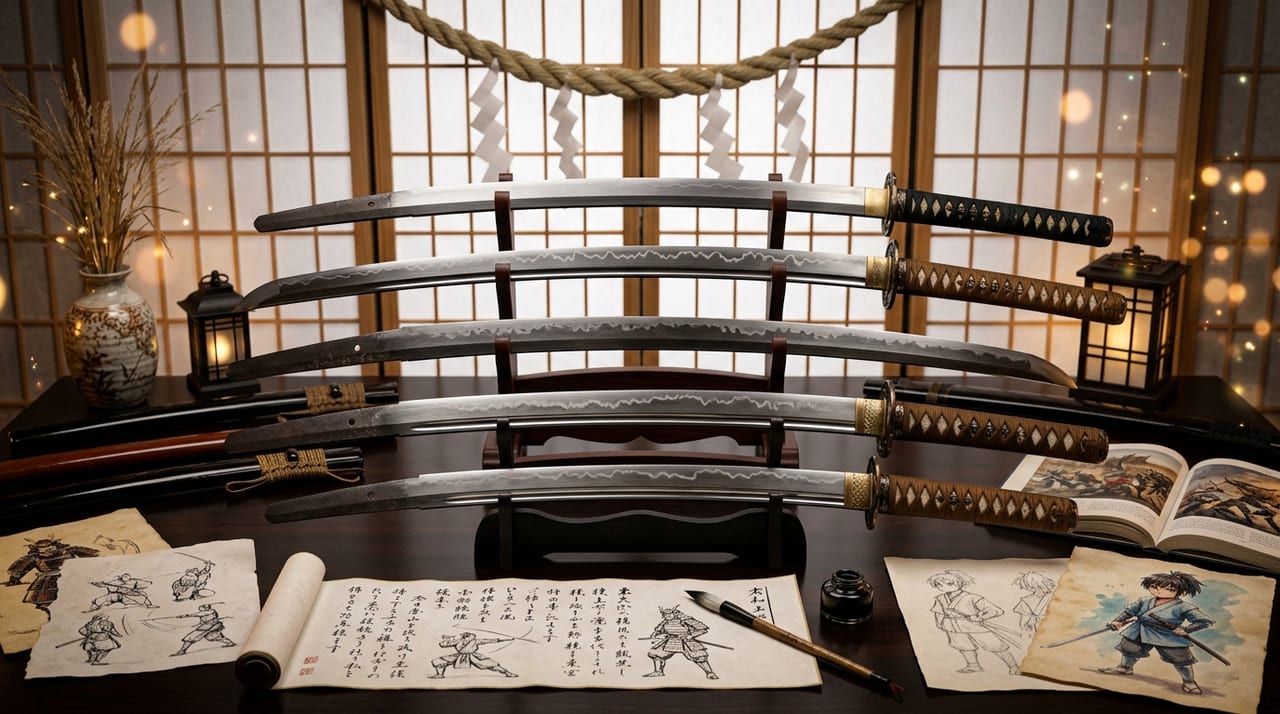
 * Image is for illustrative purposes only.
Ghost Dog: The Way of the Samurai
ゴースト・ドッグ
A 1999 film directed by Jim Jarmusch and starring Forest Whitaker, an international co-production of the United States, France, Germany and Japan. Depicting a solitary hitman who lives by the samurai text Hagakure, it was highly praised by critics as a work that fuses the samurai code with the gangster film.
Description
Overview
Ghost Dog (original title: Ghost Dog: The Way of the Samurai) is a 1999 film written and directed by Jim Jarmusch, an international co-production of the United States, France, Germany and Japan. Forest Whitaker stars as Ghost Dog, a solitary hitman who takes on killings as a subordinate of the mafia.
Bushidō and the Sword
The protagonist takes the 18th-century samurai text Hagakure by Yamamoto Tsunetomo as the norm for his way of life, and quotations from the Hagakure are repeatedly inserted as subtitles in the film. He carries a Japanese sword and never neglects his training, treating the sword as the "soul of the samurai," while maintaining a unique lifestyle of communicating by homing pigeons.
Lineage of Predecessor Works
The character of Ghost Dog has been interpreted by critics as an homage to Jean-Pierre Melville's Le Samouraï (1967), and also includes references to Suzuki Seijun's Koroshi no Rakuin. The film is considered a work that reinterprets the lineage of samurai and crime films from the perspective of hip-hop culture and African Americans.
Music and Reception
The music was composed by RZA of the Wu-Tang Clan and is an important element of the film. After its release, it was highly praised by critics and gained a cult following. It was also included in the Criterion Collection and positioned as a work of high artistic value.
See authentic Japanese swords
See authentic Japanese swordsRelated Content
Seven Samurai
Film七人の侍
Akira Kurosawa's 1954 enduring masterpiece, one of the most influential works in the history of world cinema. Set in the late Sengoku period, its story of seven masterless samurai gathered to protect a village from bandits vividly depicts the social role of the samurai and the practical side of the sword. It is a monumental work that made Japanese swordcraft known to the world, and it influenced countless films, including The Magnificent Seven, Star Wars, and Mad Max.
Nioh 2
Video Game仁王2
A Sengoku-period action RPG released in 2020, developed by Team Ninja and published by Koei Tecmo Games. As a prequel to the earlier "Nioh," it stars a half-yokai protagonist with yokai blood, who crosses swords with demons while encountering real Sengoku-period warlords.
Lupin III (Goemon Ishikawa & Zantetsuken)
Anime & Mangaルパン三世(石川五ェ門・斬鉄剣)
A franchise created by Monkey Punch in 1967 that has spread worldwide as a long-running anime series. The Zantetsuken sword carried by Goemon Ishikawa XIII—capable of cutting through anything—became an iconic symbol of Japanese swords in pop culture. Ranked 3rd in a 2025 anime sword popularity poll.
Nobunaga's Ambition
Game信長の野望
A historical simulation game series developed and sold by Koei Tecmo Games since 1983. It is a national-favorite series in which players control Sengoku daimyo, including Oda Nobunaga, in pursuit of unifying the country. Depending on the title, famous swords also appear as items, making it a historical game series that touches on the bond between Japanese swords and warlords.
This page is intended to introduce Japanese sword culture and is not affiliated with any of the works mentioned.