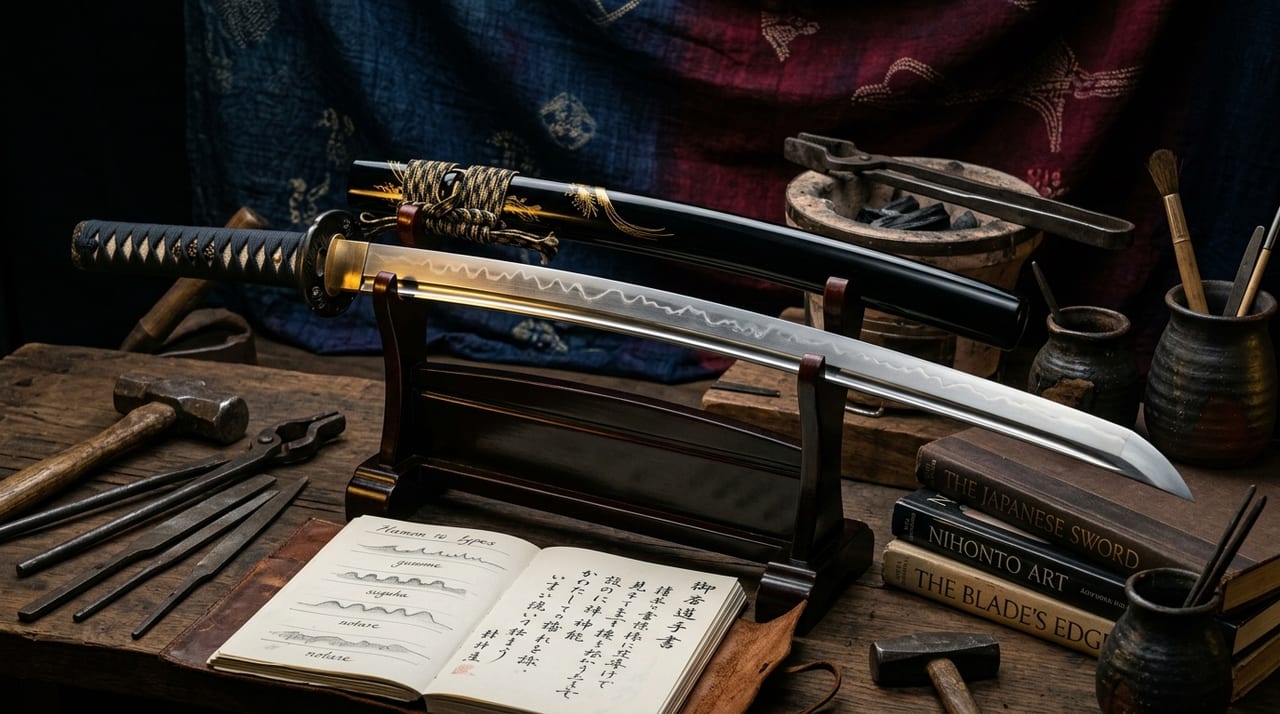
 * Image is for illustrative purposes only.
Age of Samurai: Battle for Japan
Age of Samurai: Battle for Japan
A Canadian-produced historical docudrama series (six episodes) that began streaming on Netflix on 24 February 2021. Starting from the 1551 death of Oda Nobuhide, it traces the 16th-century struggle among Oda Nobunaga, Tokugawa Ieyasu and Toyotomi Hideyoshi to unify Japan, combining expert commentary with dramatic reenactment. It touches on facts such as Hideyoshi's 1588 sword-hunt edict and Ieyasu's sword Sohaya no Tsuruki, showing how swords were bound up with status and belief in samurai society.
Description
Overview
Age of Samurai: Battle for Japan is a Canadian-produced historical docudrama series (six episodes) that began streaming on Netflix on 24 February 2021. Beginning with the turmoil following the 1551 death of the Owari daimyo Oda Nobuhide, it depicts 16th-century Japan as three of its most prominent commanders — Nobuhide's son Oda Nobunaga, Tokugawa Ieyasu and Toyotomi Hideyoshi — fought to unify the country. The series combines commentary from historians and experts with dynamic dramatic reenactment, and holds a solid rating on IMDb.
The Commanders and the Era Depicted
The series follows Oda Nobunaga's rise and his death in the Honno-ji Incident, Toyotomi Hideyoshi's completion of national unification, and Tokugawa Ieyasu's establishment of supremacy after the Battle of Sekigahara. Swords are not the series' central subject in themselves, but the expert-commentary segments repeatedly touch on how deeply swords were bound up with the power, belief and status hierarchy of the commanders of the age.
Relationship to History: The Sword Hunt and the Tokugawa Treasure Blade
As the capstone of his unification of Japan, Hideyoshi issued the Sword Hunt edict (Katanagari) in 1588, confiscating swords, bows, spears and firearms from the peasantry and sharply dividing the samurai class from farmers. Widely recognized as a policy that laid the groundwork for early-modern Japan's status system, it is a clear historical illustration that the sword was not merely a weapon but a symbol of samurai status itself. Separately, the blade traditionally said to be Tokugawa Ieyasu's own sword, Sohaya no Tsuruki, was placed at Kunozan Toshogu Shrine per his will and remains there today, held by the shrine's museum as an Important Cultural Property. Ieyasu is said to have ordered that the blade's tip face west, in anticipation of threats from the western provinces — an example of a sword serving as a symbol bound up with a commander's will and religious belief.
Cultural Impact
As a reenactment-format documentary, the series introduced the lives of Sengoku-era commanders to a global Netflix audience and drew a solid rating on IMDb. Through expert-backed commentary on facts such as the sword hunt and the treasure blade at Kunozan Toshogu, it has served to convey to overseas viewers how inseparably the Japanese sword was bound up with politics and belief.
Real Swords Featured
Sohaya no Tsuruki
A tachi traditionally said to be Tokugawa Ieyasu's own sword. Per his will it was placed at Kunozan Toshogu Shrine, where it remains today, held by the shrine's museum as an Important Cultural Property; Ieyasu reportedly ordered it positioned with its tip facing west.
See authentic Japanese swords
See authentic Japanese swordsThis page is intended to introduce Japanese sword culture and is not affiliated with any of the works mentioned.