New Arrivals — Browse our catalog for the latest authentic Japanese sword arrivals. Browse →
8th month, Tenbun 1 (1532)
Yamashina Hongan-ji (Yamashiro Province, Yamashina; present-day Yamashina Ward, Kyoto City)
Forces
Hosokawa Harumoto / Rokkaku Sadayori / Hokke Ikki Coalition
Jōdo Shinshū Honganji and Ikko-ikki
About 9 min read
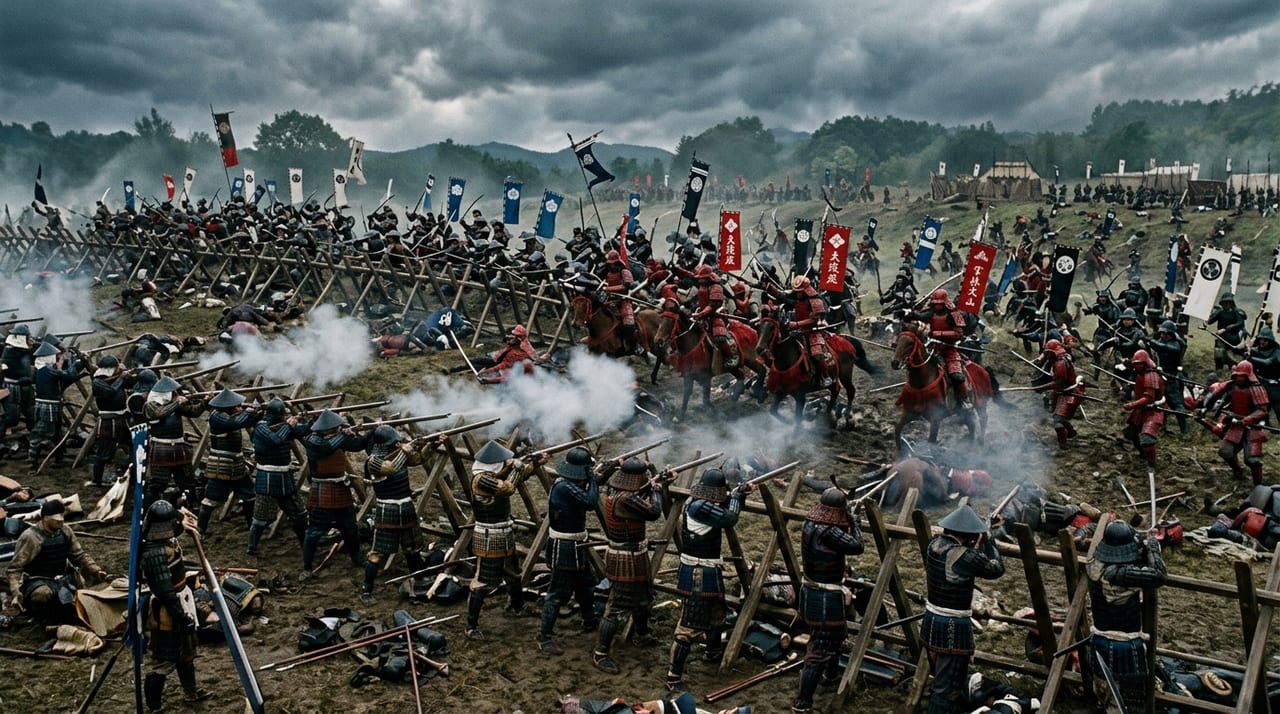
The Battle of Yamashina Hongan-ji was an incident in which, from the 23rd to the 24th day of the 8th month of Tenbun 1 (1532), the combined forces of Hosokawa Harumoto, Rokkaku Sadayori, and the Hokke Ikki (Lotus league) of Kyoto stormed and took Yamashina Hongan-ji, the base of the Jōdo Shinshū Hongan-ji forces (Ikkō Ikki), and reduced it to ashes. Fought as part of the Kyōroku–Tenbun Disturbance (1531–1535), the battle is recorded in history as the collapse of the largest religious city of the medieval era, and it fundamentally redrew the religious and political map of the Sengoku period that followed.
The Jōdo Shinshū Hongan-ji saw its missionary activity expand dramatically in the late Muromachi period under the eighth head abbot, Rennyo (1415–1499). After passing through Yoshizaki Gobō and other sites in Echizen (present-day Fukui Prefecture), Rennyo began building Hongan-ji at Yamashina (present-day Yamashina Ward, Kyoto City) from Bunmei 10 (1478), and he constructed a magnificent temple complex and an approach town (jinaimachi). Yamashina Hongan-ji went beyond being a mere temple; it was a religious city enclosed by earthen ramparts and moats. Within the precincts, numerous halls and buildings stood side by side, including the Amida Hall and the Founder's Hall (Goeidō), and around them a townscape took shape in which merchants, artisans, and farmers who were adherents of the Ikkō sect lived together. For this reason, it functioned as a typical example of a religious self-governing city called the "jinaimachi." The Ikkō Ikki, the armed organization of Ikkō sect adherents, was a power bloc of farmers, merchants, and artisans armed with naginata, tachi, bows and arrows, and spears, and its level of armament was comparable to that of provincial samurai bands.
In the 4th year of Kyōroku (1531), an internal dispute over the authority of the chief abbot broke out within Hongan-ji, known as the Kyōroku Disturbance (Daishō Ikki). After Shōnyo, the 10th chief abbot, established his authority through this internal strife, the power of the Ikkō Ikki further expanded across Hokuriku and Kinai. Hosokawa Harumoto (1514–1563), as the legitimate heir of the kanrei (shogunal deputy) house, served as a backer of shogunal authority. However, in a power struggle with the powerful Miyoshi Motonaga, he made use of the Ikkō Ikki and succeeded in forcing Motonaga to take his own life (Battle of Iimori Castle, 1532). After destroying Motonaga, however, the expansion of the Ikkō Ikki itself became a threat. The Ikkō Ikki advanced into Yamato and Kawachi, showing a momentum that threatened even Kōfuku-ji and Kasuga Taisha. Alarmed, Harumoto rallied the Nichiren-sect adherents (Hokke followers), who were opposed to the Jōdo Shinshū, settled on a policy of subjugating the Ikkō Ikki, and requested military support from Rokkaku Sadayori. On the 28th day of the 7th month of Kyōroku 5 (1532), the Hokke Ikki (armed organization of Hokke followers) rose up, and from the 7th day of the 8th month of that year, it began military operations around Kyoto.
The combined forces of Hosokawa Harumoto, Rokkaku Sadayori, and the Hokke Ikki, with 30,000 to 40,000 troops, completely surrounded Yamashina Hongan-ji from the east, west, south, and north. The besieging army, having completed its deployment on the 23rd day of the 8th month of Tenbun 1 (1532), began its attack in the early morning of the 24th day. It broke in through a place called "Mizuotoshi" and set fires. Based on the account in the Shishinki (diary) of Jitsujū, Shōnyo's great-uncle, it is believed that the main halls were burned to the ground within a short time after the intrusion. Chief abbot Shōnyo escaped by entering Ōsaka Gobō (the predecessor of Ishiyama Hongan-ji). With this, Yamashina Hongan-ji was completely reduced to ashes, and from then on, the main base of the Hongan-ji moved to Ishiyama Hongan-ji in Ōsaka. Through this destruction, the religious, economic, and cultural assets of the Ikkō sect, accumulated over roughly 50 years since Rennyo, were lost in a single night. The residents of the jinaimachi also dispersed.
The war did not end with the burning of Yamashina Hongan-ji. Fighting between the Hongan-ji and Ikkō Ikki and Hosokawa Harumoto and the Hokke Ikki (Tenbun Disturbance) continued afterward in Settsu and elsewhere. The portrait of Shinran was rescued by Jitsujū and others and was enshrined at Ōsaka Gobō in the following year, Tenbun 2 (1533). Through this, Ōsaka Gobō eventually became the new head temple, Ōsaka Hongan-ji (Ishiyama Hongan-ji). About forty years later, the Hongan-ji forces would wage a decade-long conflict with Oda Nobunaga in the Ishiyama War (1570–1580), and the Battle of Yamashina Hongan-ji is positioned as its prehistory.