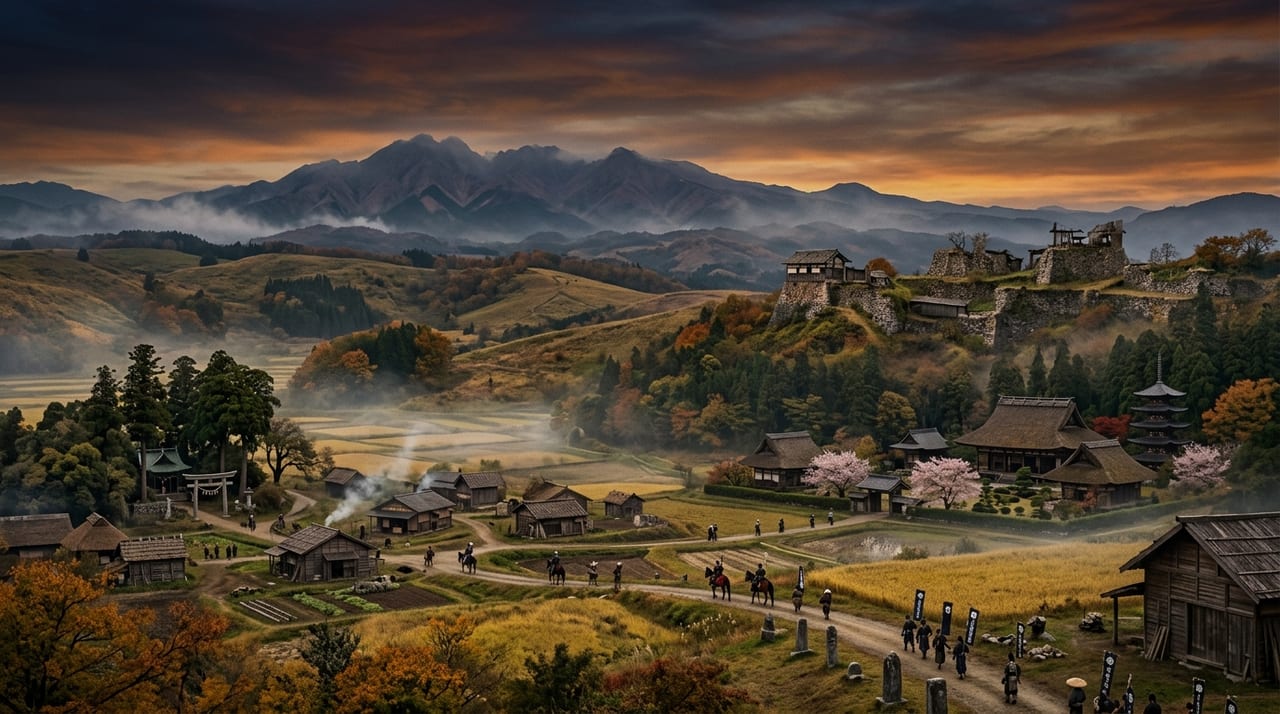
 * Image is for illustrative purposes only.
Wakizashi Culture — The Aesthetic Sensibility and Social Order Cultivated by the Companion Sword
脇差の文化——副刀が育んだ武家の美意識と身分秩序
Born in the Muromachi period as an accompanying blade worn with the tachi, the wakizashi became the formal equipment of samurai in the Edo period as the daishō, paired with the daitō. Going beyond a mere secondary blade, it came to be dressed in elaborate mountings as a symbol of samurai status and honor, and spurred competition among swordsmiths. It also spread widely among non-samurai classes as a means of self-defense.
Description
Historical Background
The origins of the wakizashi go back to the Muromachi period. Initially, short blades called sasuga or koshigatana were used as auxiliary weapons alongside the tachi. After the Sengoku period, when the uchigatana rose as the principal sword, blades with a blade length of 1 shaku (about 30 cm) to under 2 shaku (about 60 cm) came to be clearly defined as wakizashi as their secondary companion.
Under the status system established by the Edo shogunate, the formal manner of wearing swords for samurai was prescribed as the pairing of a daitō (uchigatana of 2 shaku or longer) and a wakizashi, known as wearing the daishō pair. From the first revision of the Buke Shohatto (1635) onward, wearing the daishō pair became the most important institutional device for making samurai status visible.
Function and Meaning as Part of the Daishō
Within the daishō pair, the wakizashi held meaning beyond that of a mere auxiliary weapon. If the daitō displayed a samurai's authority outdoors and in formal settings, the wakizashi had the character of a kaitō (a blade kept close at hand), which could be worn at all times, even indoors, and was a sign of a samurai's everyday self-defense and honor. Within the denchū (inside the shogun's palace), it was courteous to leave the daitō behind, but because the wakizashi remained permitted to be worn even in such places, it was also called denchū-zashi.
Moreover, the fact that the wakizashi was used as the blade with which to cut the belly in seppuku shows that the wakizashi held a special cultural position as an implement embodying the essential meaning of bushidō—death for loyalty to one's lord and for honor.
A Contest of Swordsmiths' Skill and Design
Because of its dimensions, which made it easier to carry than the daitō, the wakizashi also became a field in which swordsmiths and metalworkers competed in skill and design. Edo-period swordsmiths actively adopted decorative hamon on wakizashi as well, such as tōran-ba, sudare-ba, and gunome-midare.
Tsuda Echizen-no-kami Sukehiro, a master of the Osaka Shintō period, frequently used tōran-ba, which imitate surging waves, on his wakizashi as well, and the elegance of its finish had a great influence on swordsmiths of later generations. The sudare-ba of Tanba-no-kami Yoshimichi were especially refined in his wakizashi works, and Edo-period wakizashi became a field of their own aesthetic competition, distinct from that of the daitō.
In sword mountings as well (saya, tsuka, tsuba, menuki, and so on), the daishō-soroi, wakizashi made with mountings matching those of the parent blade (the daitō), became an important element showing samurai rank, and the finest techniques of metalworkers and maki-e artisans came together in them.
Spread to Non-Samurai Classes
The spread of the wakizashi did not stop at the samurai class. Farmers and townspeople were forbidden to carry the daitō, but there were no restrictions on carrying a wakizashi, and a wakizashi worn for self-defense on journeys was called a dōchū-zashi.
Historical Significance
The Haitōrei (Sword Abolishment Edict) of the 9th year of Meiji (1876) banned samurai from wearing swords, and the daishō system came to an end. Yet the technical innovations of swordsmiths and the aesthetic tradition of sword mountings nurtured by the wakizashi have been passed down to the present day. Daishō-soroi koshirae are still valued today as the pinnacle of arts and crafts, and are a flower of sword culture that museums and private collectors vie to preserve.
Characteristics of This Era
- Symbol of samurai status as the auxiliary blade of the daishō pair
- Development of decorative hamon such as tōran-ba and sudare-ba
- Spread to non-samurai classes as dōchū-zashi and similar