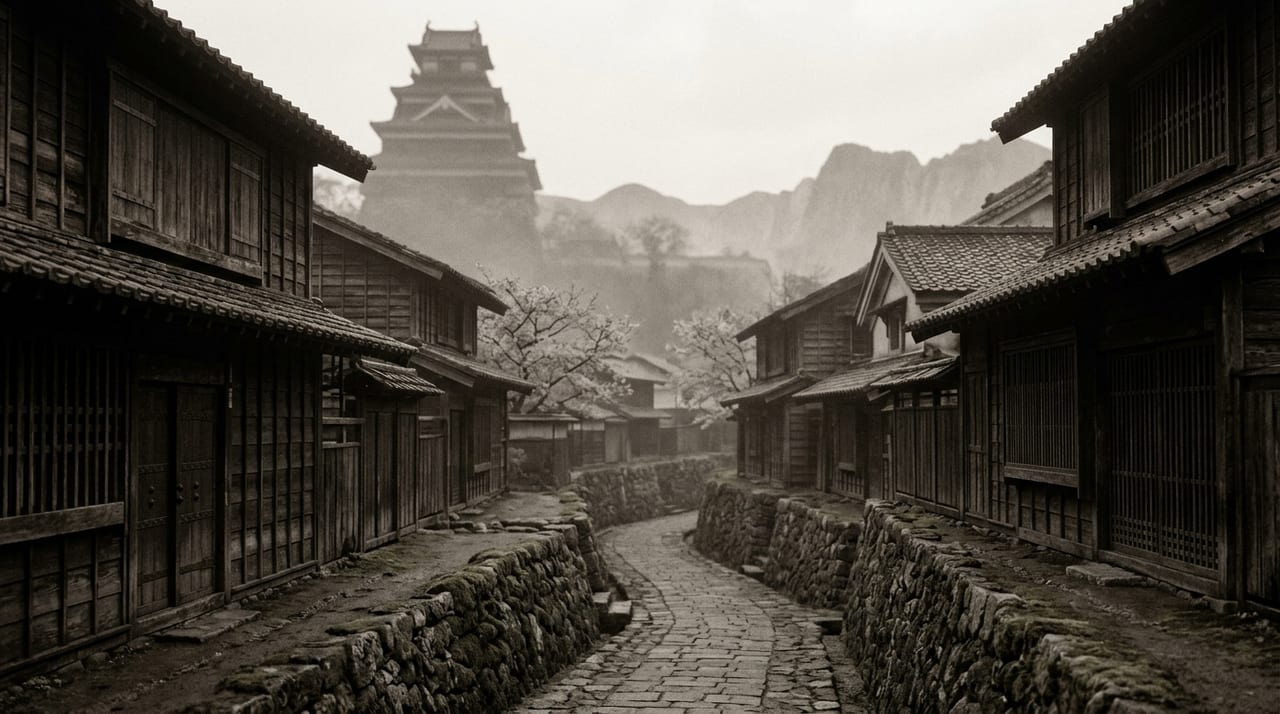
 * Image is for illustrative purposes only.
Tenpō Reform Period
天保改革期
Senior councillor Mizuno Tadakuni's Tenpō Reforms issued strict sumptuary edicts, and the dissolution of the kabunakama threw distribution into confusion. Meanwhile, this was the era when outstanding shinshintō smiths such as Minamoto Kiyomaro and Taikei Naotane reached the peak of the revival of ancient methods.
Description
Overview of the Tenpō Reforms and Sumptuary Prohibitions
In the 12th year of Tenpō (1841), senior councillor Mizuno Tadakuni launched a large-scale reform of the shogunal government known as the Tenpō Reforms. Against a backdrop of social unrest and fiscal deterioration caused by the Great Tenpō Famine (1833–1839), Mizuno issued one radical policy after another, including the dissolution of the kabunakama, the Hitogaeshi-rei, and the sumptuary edicts. The sumptuary edicts were strictly proclaimed throughout the city of Edo as well, and luxury goods adorned with metal decoration were also prohibited, including kiseru pipes fitted with gold and silver metalwork, gold leaf, carving, or inlay.
The Peak of Shinshintō and the Ultimate Expression of Ancient Methods
Ironically, the Tenpō Reform period was also a golden age in the history of Japanese swords, when the highest peaks of shinshintō appeared one after another. Minamoto Kiyomaro (1813–1854) was active from the Tenpō to the Kaei era. He recreated the majestic ō-nie hamon of the Sōshū-den tradition and was praised as the 'Yotsuya Masamune' after the name of the place where he lived. His tantō and katana feature ō-nie hamon with vigorous kinsuji and sunagashi, and the jigane shows chikei, making them powerful works. Even today they are traded at the highest prices and rank among the foremost swords of the late Edo period. Taikei Naotane (1779–1857) remained active even after the final years of Tenpō. As the culmination of the Bizen-den revival, he forged tachi with faint utsuri and chōji-midare, demonstrating the practical achievement of the revival theory of kotō.
Dissolution of the Kabunakama and Disruption of Distribution
The dissolution order for the kabunakama, which Mizuno Tadakuni carried out, disrupted the distribution system that had been built around the kabunakama and instead led to a decline in the economy. After the failure of the Tenpō Reforms (Mizuno Tadakuni was ousted in the 14th year of Tenpō (1843)), the kabunakama were revived.
Sonnō Jōi and the Spiritual Elevation of Swords
In terms of political thought, the Tenpō period was also an era when the sonnō jōi movement gained strength. The sonnō jōi ideology, whose theoretical pillars were the Mito school (Fujita Yūkoku, Aizawa Seishisai, and Fujita Tōko), became deeply connected with the concept of 'the sword as the soul of Japan.' This laid the spiritual foundation for swords to be redefined as symbols of patriotism and the samurai spirit. This intellectual current was also reflected in the world of swordsmiths, and a mood favoring swords suitable for practical use grew stronger.
Failure of the Tenpō Reforms and the Bridge to the Late Edo Period
Mizuno Tadakuni's Tenpō Reforms ended with his dismissal as senior councillor in the 14th year of Tenpō (1843), after which the stability of the shogunal government was lost. The failure of the reforms clearly showed the decline of the authority of the bakufu and became the prelude to the turbulent events that followed, namely Perry's arrival and the opening of the country during the Kaei and Ansei eras. At the same time, the highest-level works left by Minamoto Kiyomaro and Taikei Naotane were passed down to later generations as the 'ideal of Japanese swords,' and they became the spiritual pillars for the elevation of late Edo sword culture from the Kaei and Ansei eras onward. The Tenpō Reform period is one of the most important transitional periods in the history of Japanese swords, in which hardship and creation intersected.
Characteristics of This Era
- The sumptuary edicts of the Tenpō Reforms cracked down even on luxury goods with metal decoration, and the dissolution of the kabunakama also disrupted distribution.
- The simultaneous coexistence of the highest peaks of shinshintō, Minamoto Kiyomaro and Taikei Naotane. In an age of hardship, a paradoxical peak of sword art was achieved.
- The fusion of sonnō jōi thought and swords. The idea of 'the sword as the soul of Japan' was strengthened, and demand grew for swords that combined practicality and spirituality.
- A bridge period from Tenpō to the turmoil of the late Edo period in the Kaei and Ansei eras. Political turmoil and a sense of external crisis brought urgency and elevation to sword culture at the same time.