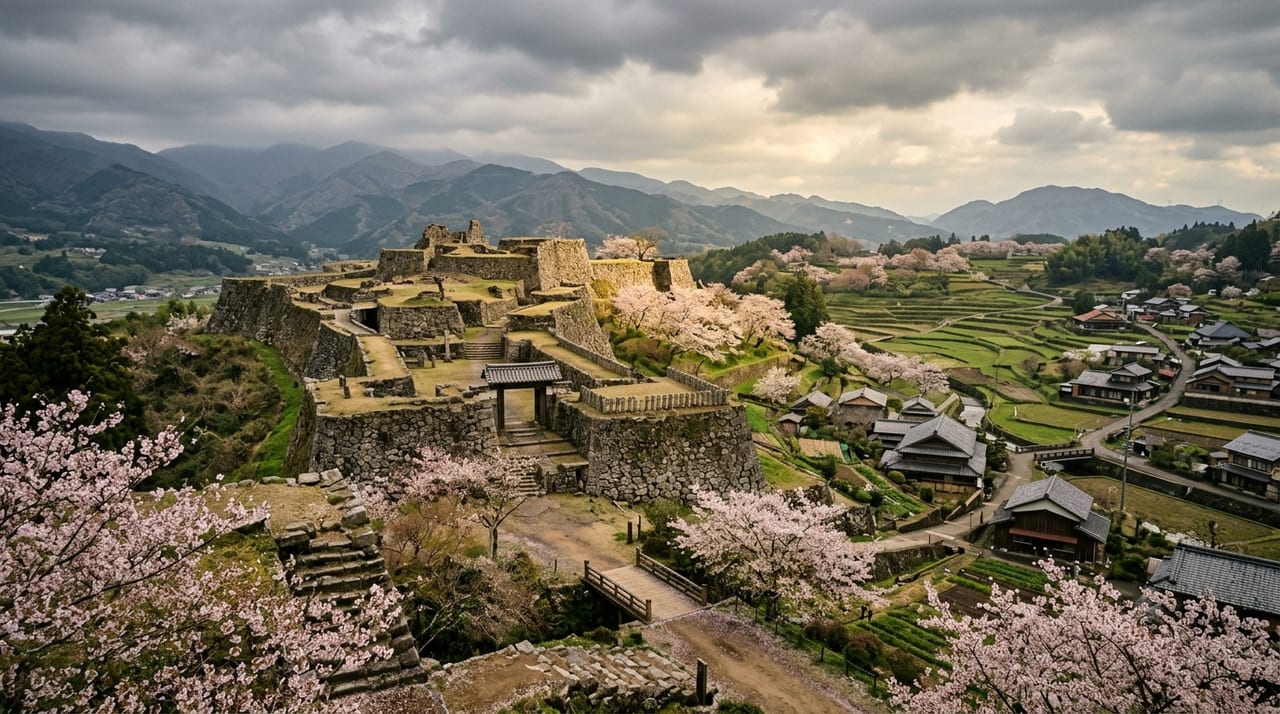
 * Image is for illustrative purposes only.
Shimabara Rebellion Period
島原の乱期
The Shimabara Rebellion of 1637–38 was the last major internal conflict the Tokugawa shogunate faced, mobilizing over 120,000 troops. This uprising of Christian peasants profoundly influenced sword demand, weapons control policy, and the solidification of sakoku isolation — reshaping the early Edo sword world.
Description
Circumstances and Scale of the Shimabara Rebellion
In the 10th month of Kan'ei 14 (1637), farmers in Shimabara in Hizen Province and in Amakusa in Higo Province rose in revolt. They were suffering from excessive nengu land taxes, persecution of Kirishitan, and oppressive han governance. The ikki forces, with Amakusa Shirō (Masuda Tokisada) as commander-in-chief, eventually swelled to more than 37,000 people and holed up in the abandoned Hara Castle. The bakufu dispatched a punitive force under Itakura Shigemasa as commander-in-chief, but it failed to take the castle. After Itakura died in battle, the force was reorganized under Matsudaira Nobutsuna as jōshi (envoy), and more than 120,000 troops besieged the castle. In the general assault on the 27th–28th day of the 2nd month of Kan'ei 15 (11–12 April 1638), Hara Castle fell, and nearly all of the ikki forces who had holed up there were killed in battle or executed.
Demand for Swords as Actual Weapons and the Bakufu's Sense of Crisis
The Shimabara Rebellion was an incident in which demand for swords as actual weapons surged suddenly in the early Edo period, when the country was entering an age of peace (taihei no yo). With the bakufu forces and the armies of the various daimyō mobilized on a large scale, large numbers of swords and weapons were urgently needed. Swordsmiths active at the time in Edo, Ōsaka, and Kyoto were required to produce them in large quantities within a short period. However, this sudden large-scale demand, arising while the country was shifting toward peace, placed a heavy load on the swordsmiths' production systems and exposed the difficulties of quality control and the limits of output.
The Kirishitan Problem and Strengthened Control over Swords
The fact that the Shimabara Rebellion had the character of a Kirishitan ikki instilled in the bakufu a strong wariness of religious rebellion. After the rebellion, persecution of Kirishitan was further enforced, and in step with it, regulations on the circulation of weapons and swords were strengthened. The dedication of swords to shrines and temples (hōnōtō) continued, but surveillance of farmers and the lower classes possessing swords became strict. The awareness that swords were the exclusive possession of the samurai class became institutionally fixed. This strengthening of weapons control, together with the completion of the sakoku system, became a major driving force of the Edo-period transformation in which swords rapidly changed their character from 'tools of actual combat' to 'markers of status and works of art.'
Completion of Sakoku and the Inward Turn of Sword Culture
After the Shimabara Rebellion, in Kan'ei 16 (1639) the bakufu prohibited the arrival of Portuguese ships, completing the sakoku system. This completion had a decisive influence on Japanese sword culture. With exchange with foreign countries cut off, the aesthetics of the Japanese sword began to be refined entirely inward. A direction was set toward the pinnacle of 'purely Japanese' sword aesthetics in the later Shintō and Shin-shintō periods.
Impact on the Swordsmiths After the Shimabara Rebellion
In the Edo period after the rebellion, as peace took hold, the practical role of swords declined rapidly. This brought fundamental change to the swordsmiths' world. Demand for practical swords decreased, and in its place the weight of ceremonial, gift-giving, and appreciative swords increased. Leading swordsmiths of the era, such as Echizen Yasutsugu and Ōsaka shintō's Tsuda Echizen-no-kami Sukehiro, responded to this change by producing works that enhanced the value of the sword as an object to be viewed. They emphasized the beauty of the jigane (steel surface), the artistic expression of the hamon, and the balanced beauty of the sori (curvature). The Shimabara Rebellion, unintentionally, became the final tolling of the bell announcing the historic turning point at which the Japanese sword was transformed from a 'weapon' into a 'work of art.'
Characteristics of This Era
- Sudden practical demand in peacetime exposed production capacity limits, catalyzing the sword world's aesthetic reorientation toward art over utility
- Completion of sakoku and the inward turning of aesthetic sensibility. As exchange with foreign countries was limited, the aesthetics of the Japanese sword were refined independently within the country
- Enhanced weapons controls and social stratification institutionally fixed sword ownership as a samurai-class prerogative
- Accelerated transition from combat tool to art object and status marker following the definitive onset of Pax Tokugawa after Shimabara
- Tsuda Sukehiro's tōran-midare (billowing wave hamon) exemplified the new pinnacle of decorative artistry that became the measuring standard for early Edo sword aesthetics